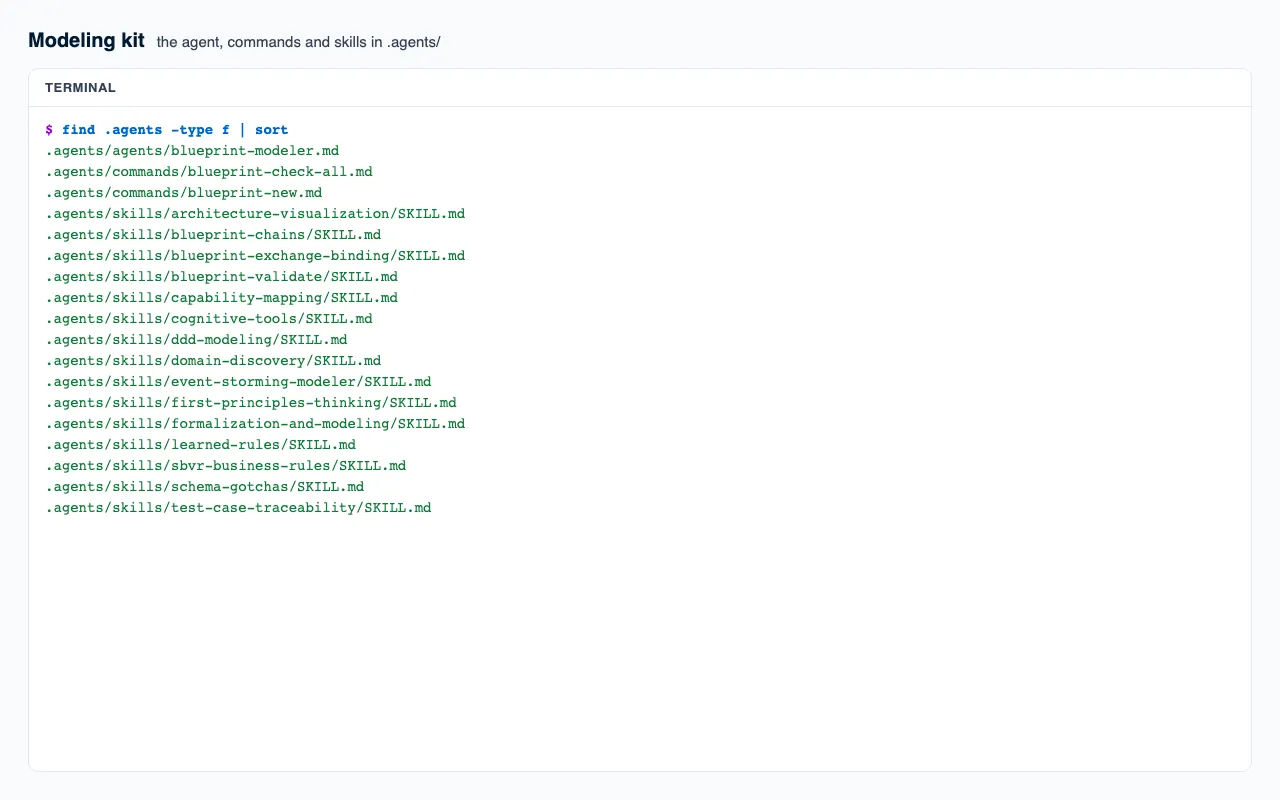
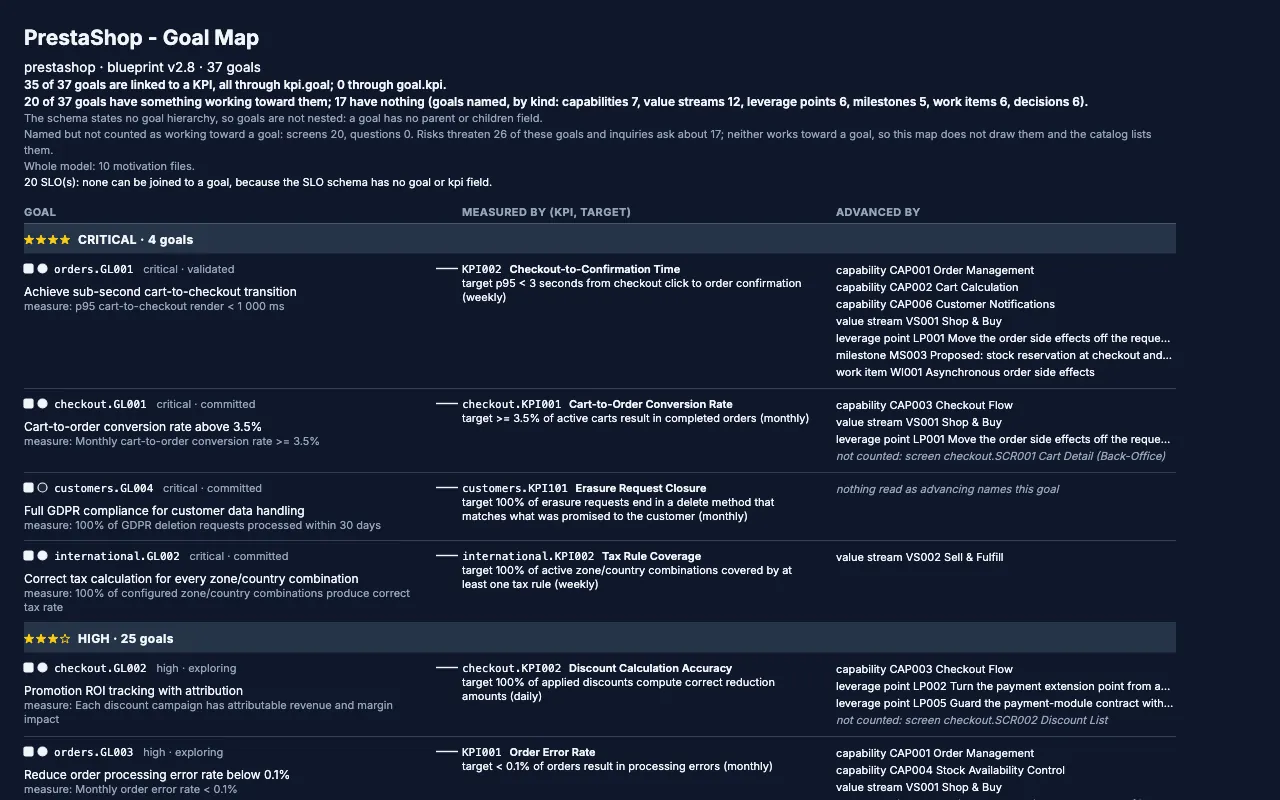
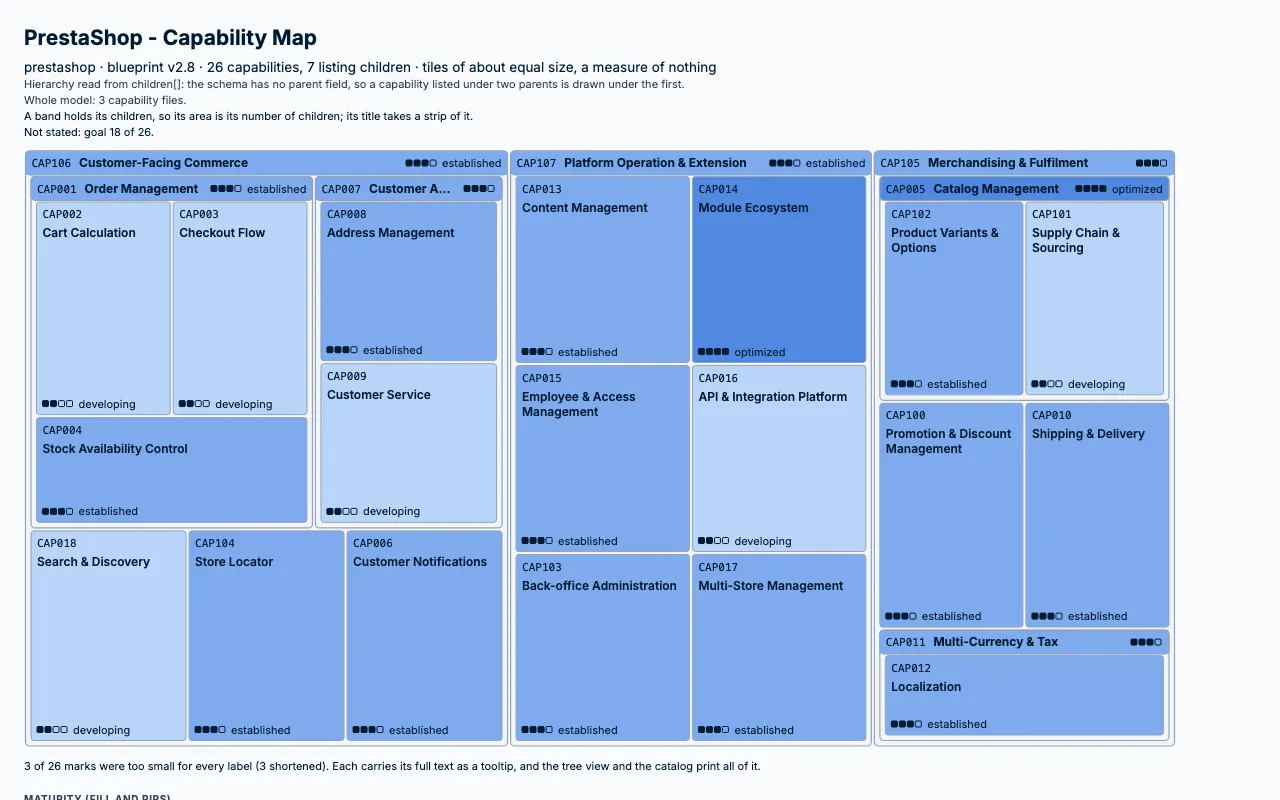
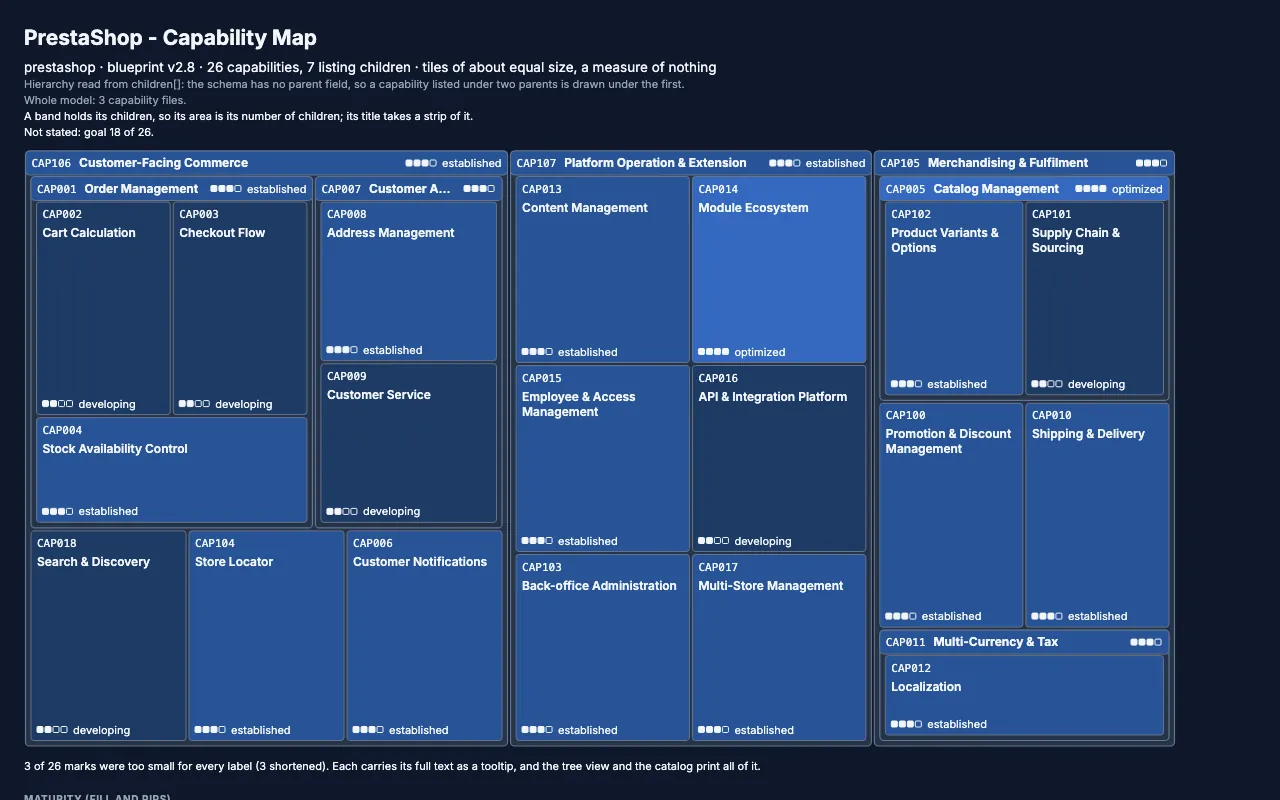
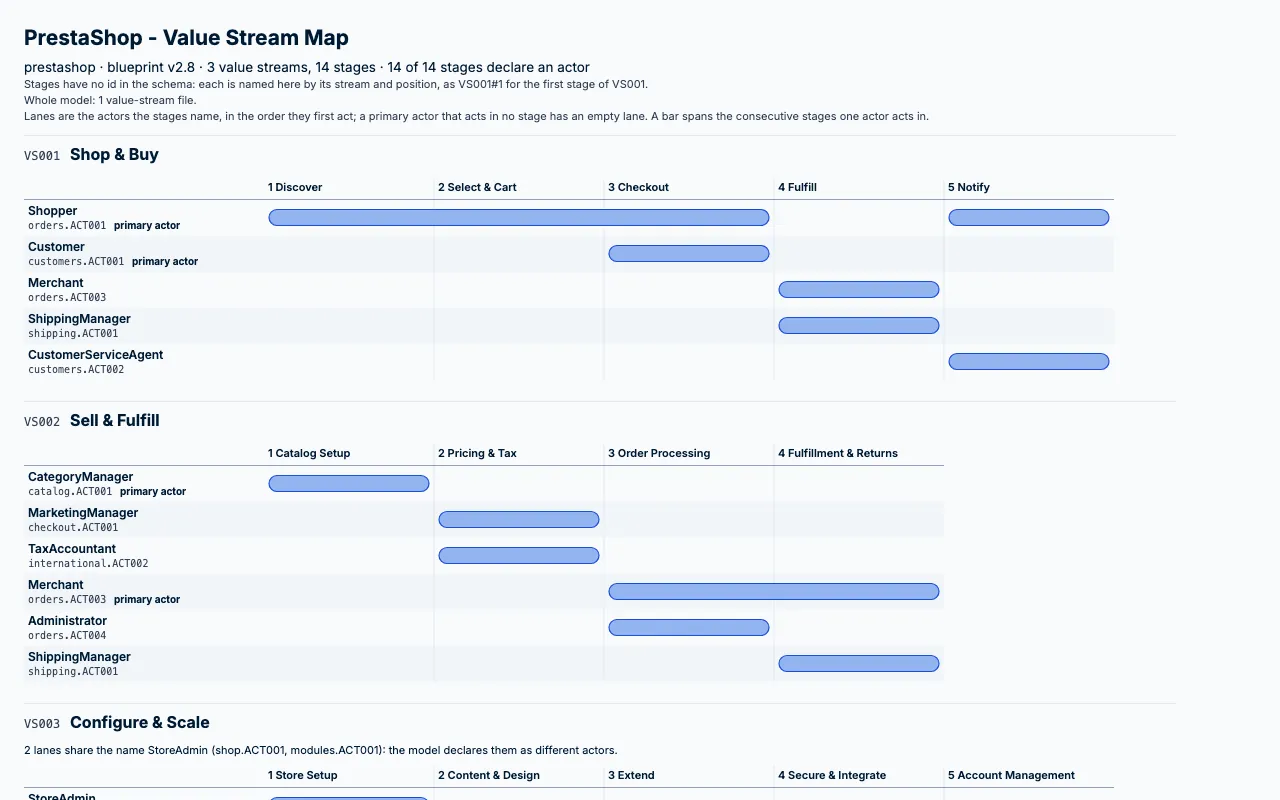
Public Blueprint resources and Archally Pro tools: what they help you answer, what is available and how to get it.
Public Blueprint resources
These selected resources are available from the public Blueprint repository under the licences shown. Follow the linked instructions to use them locally.
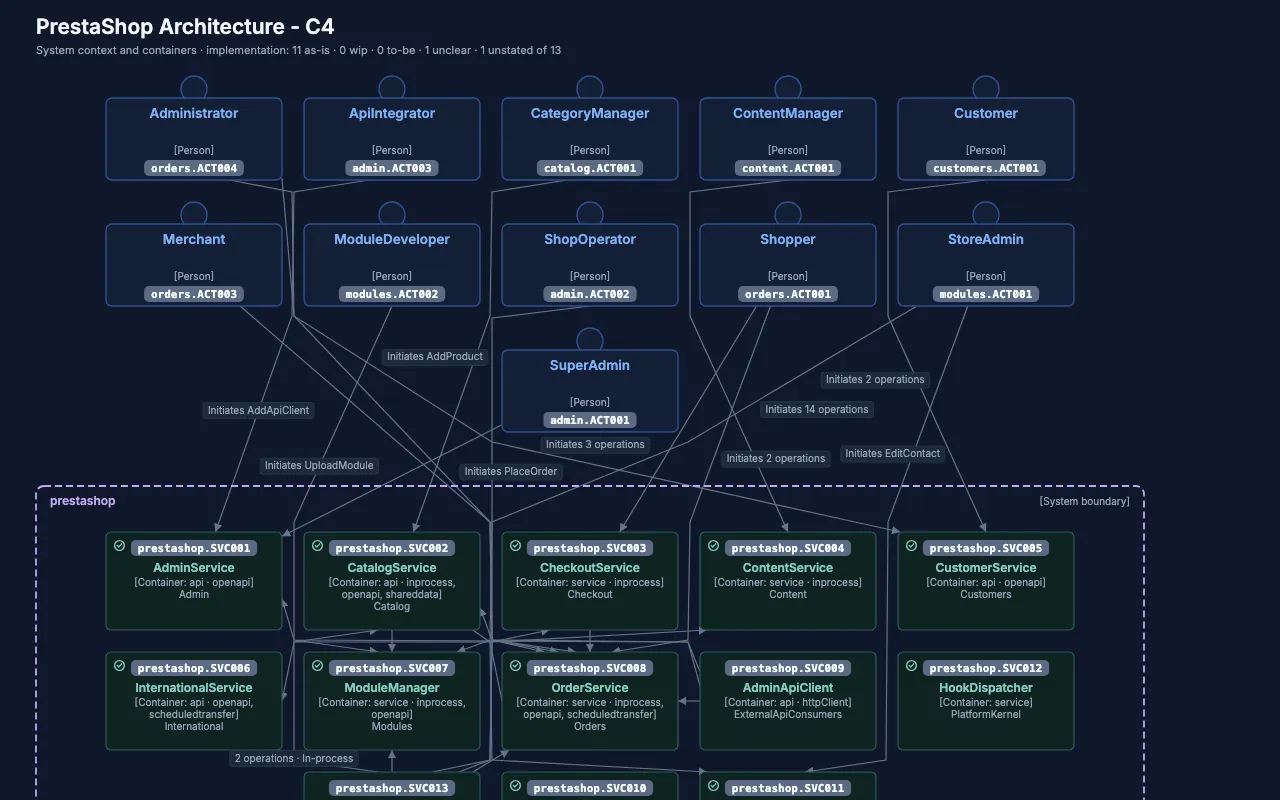
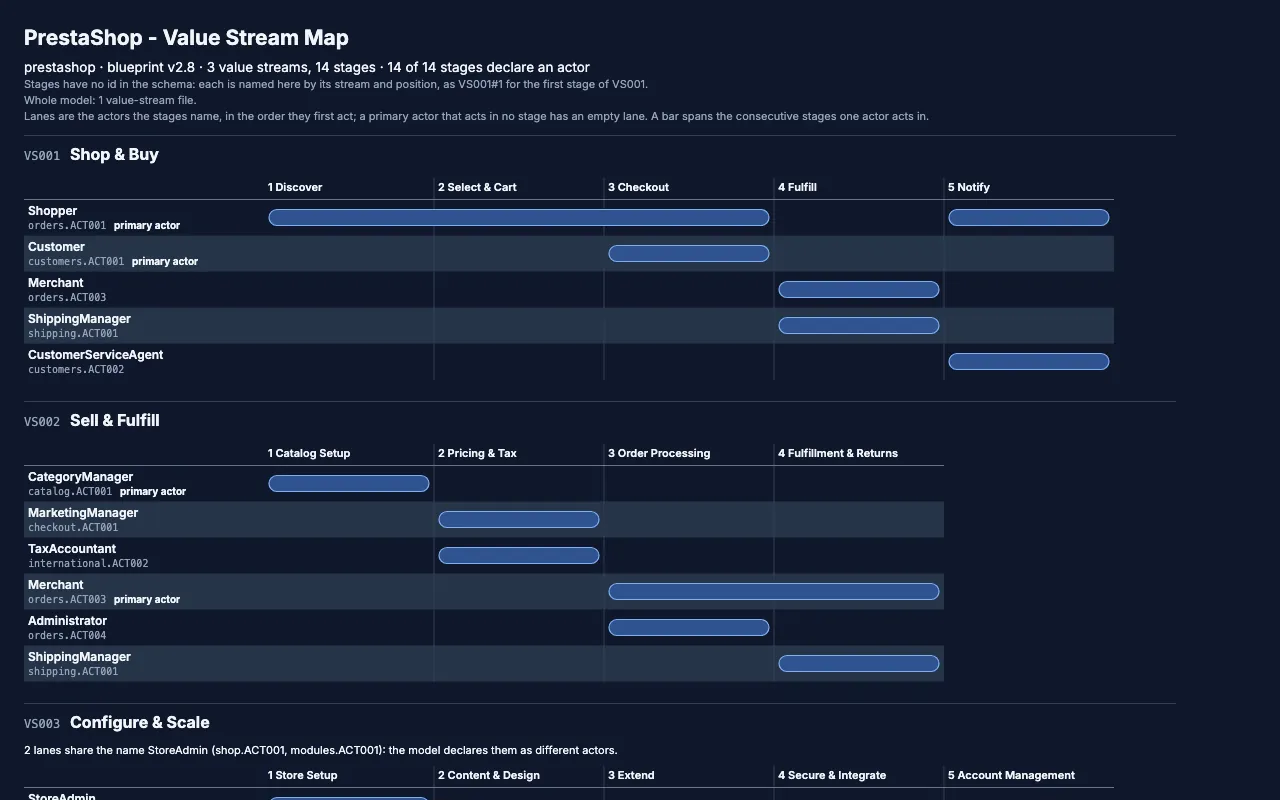
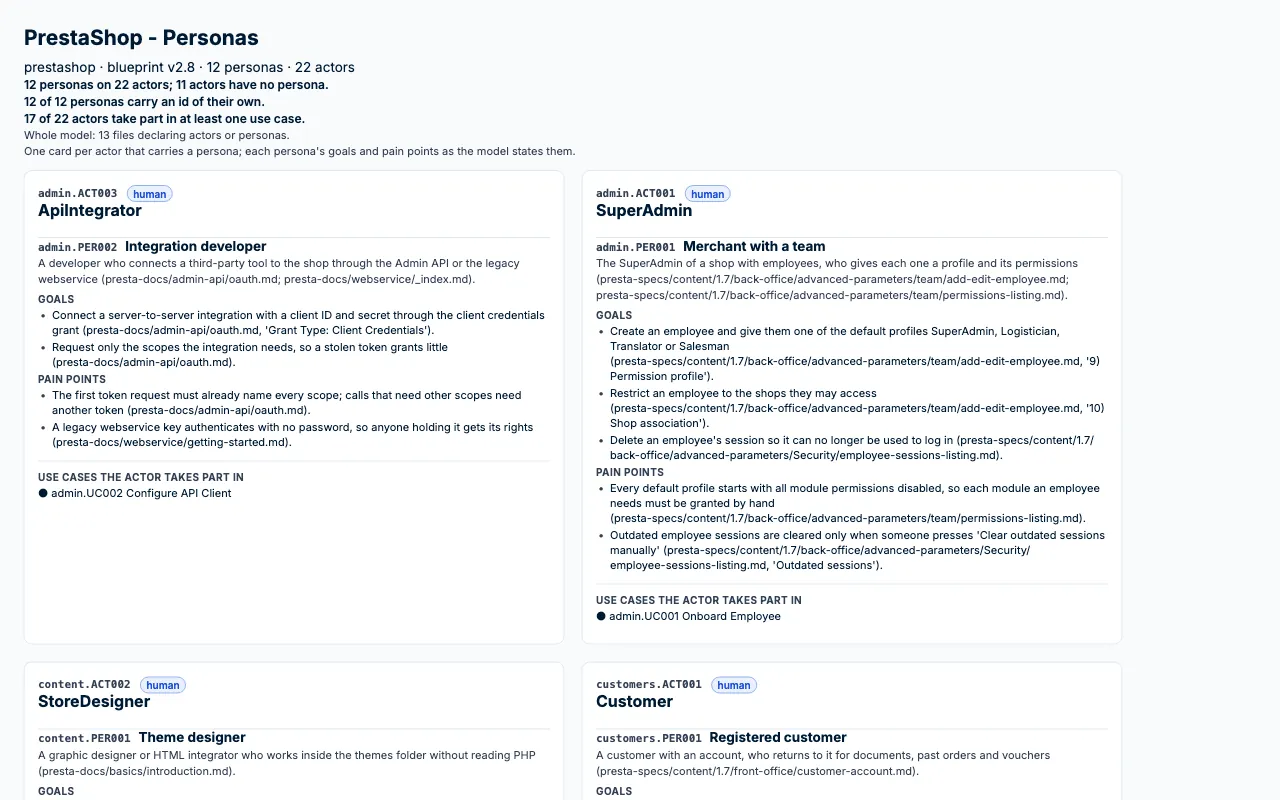
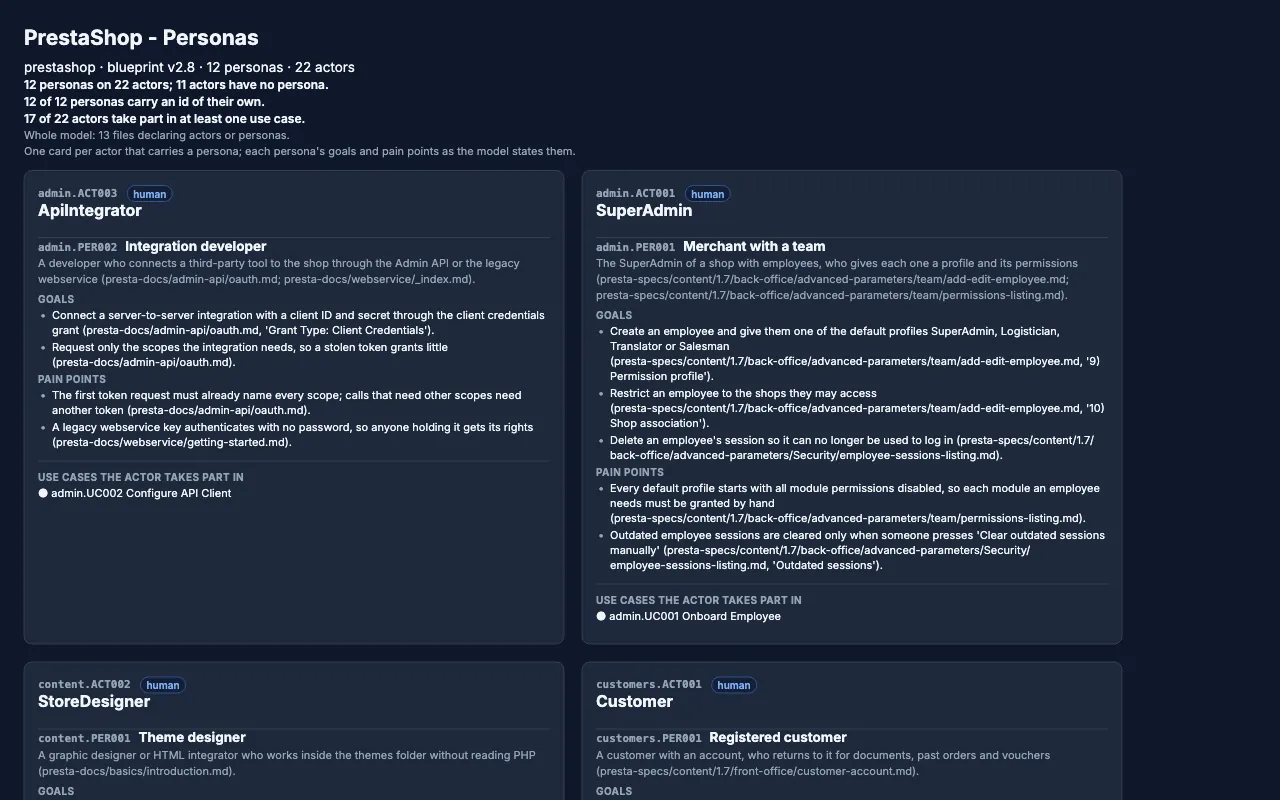
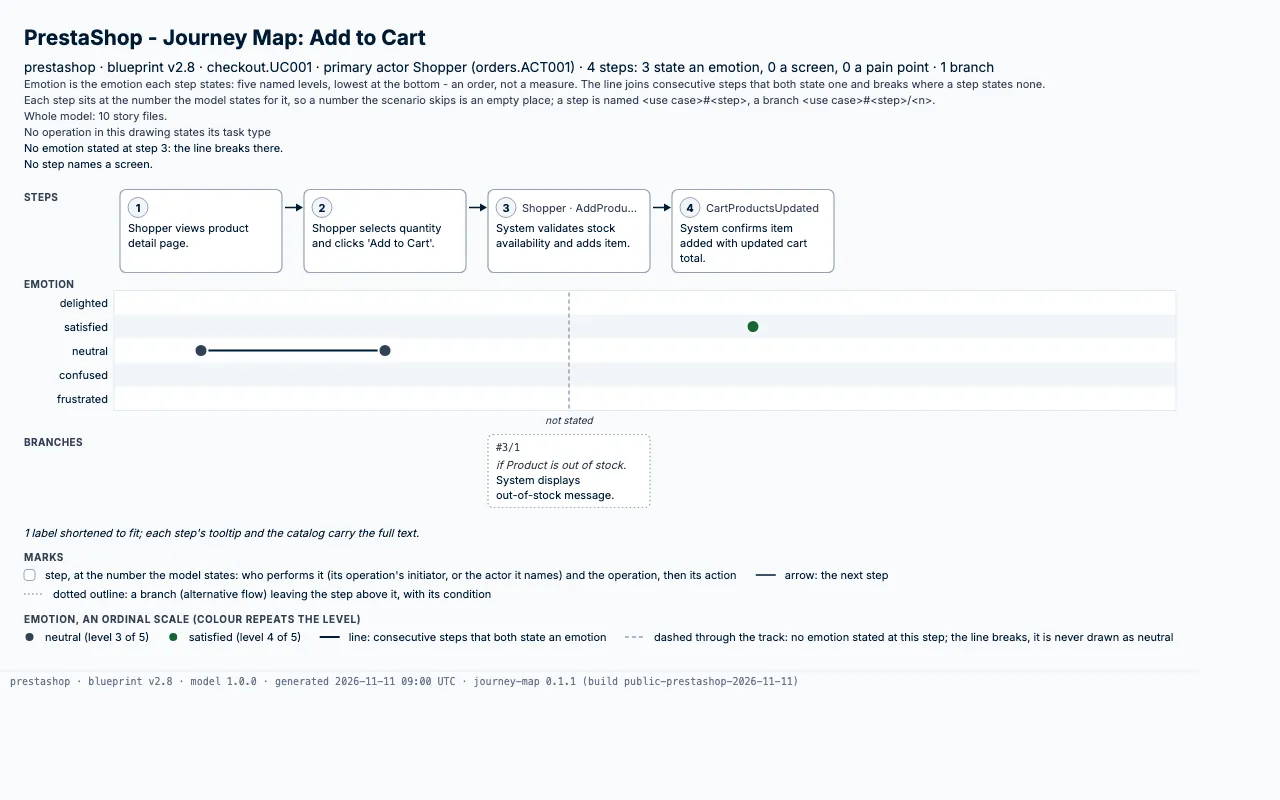
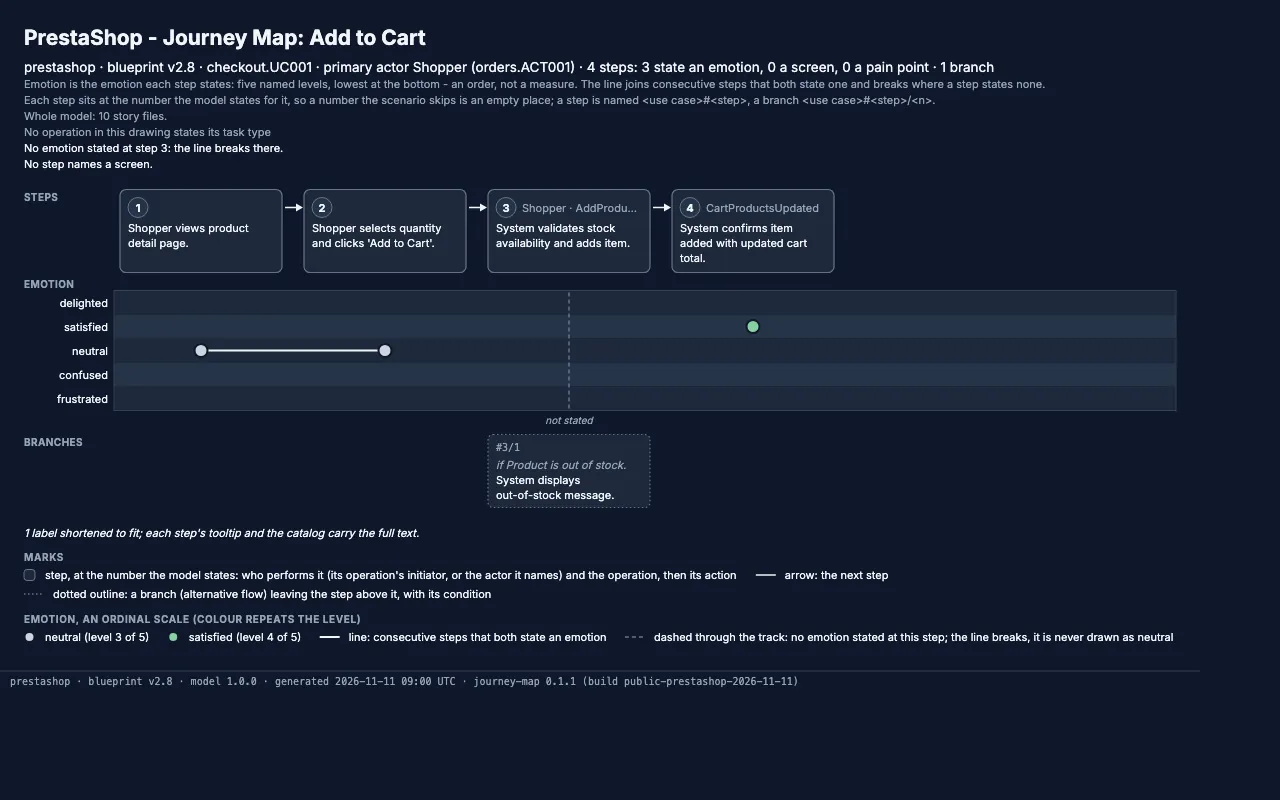
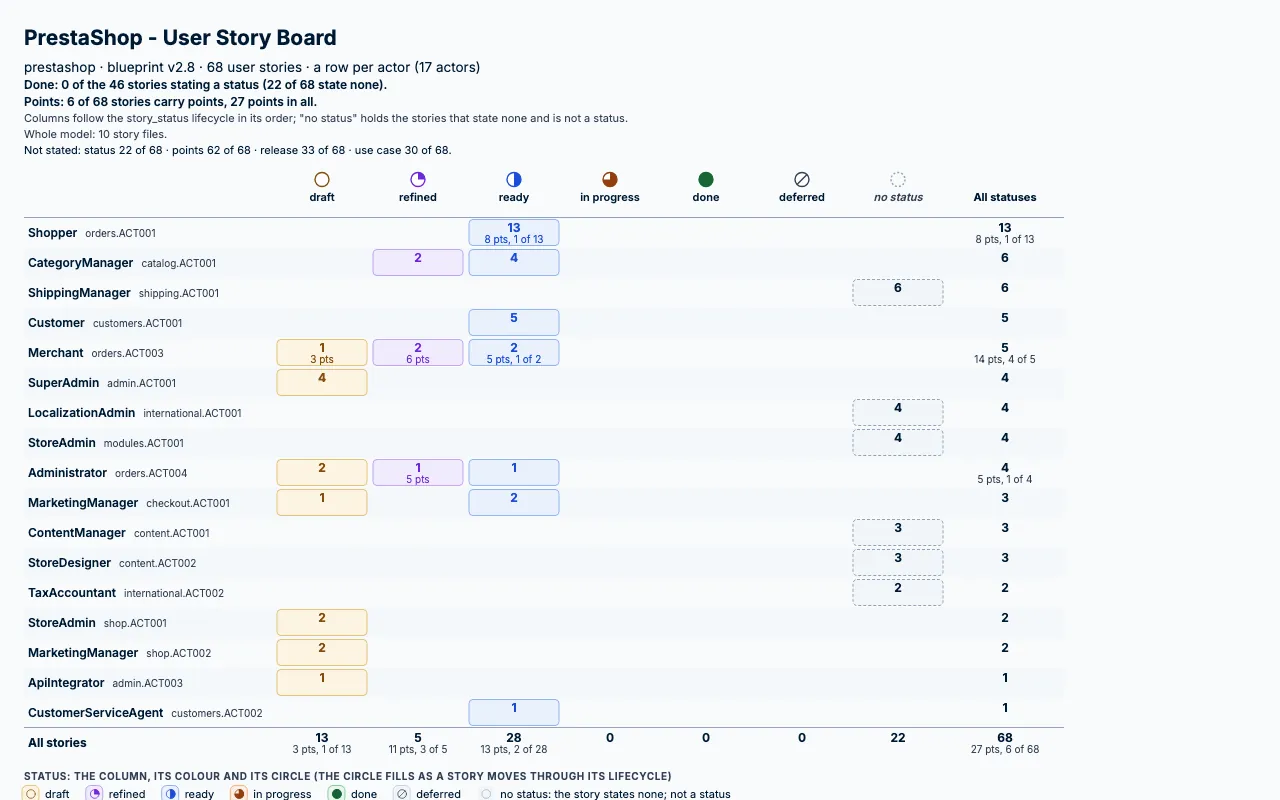
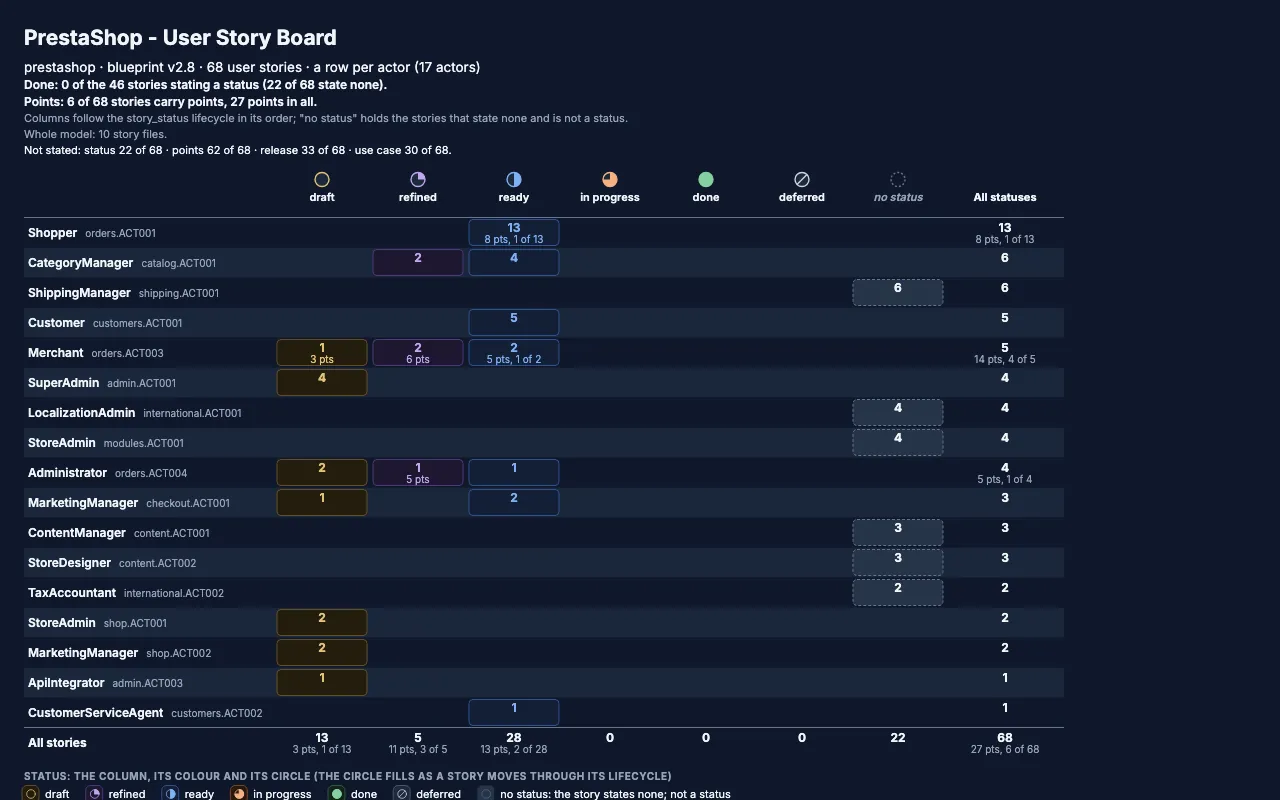
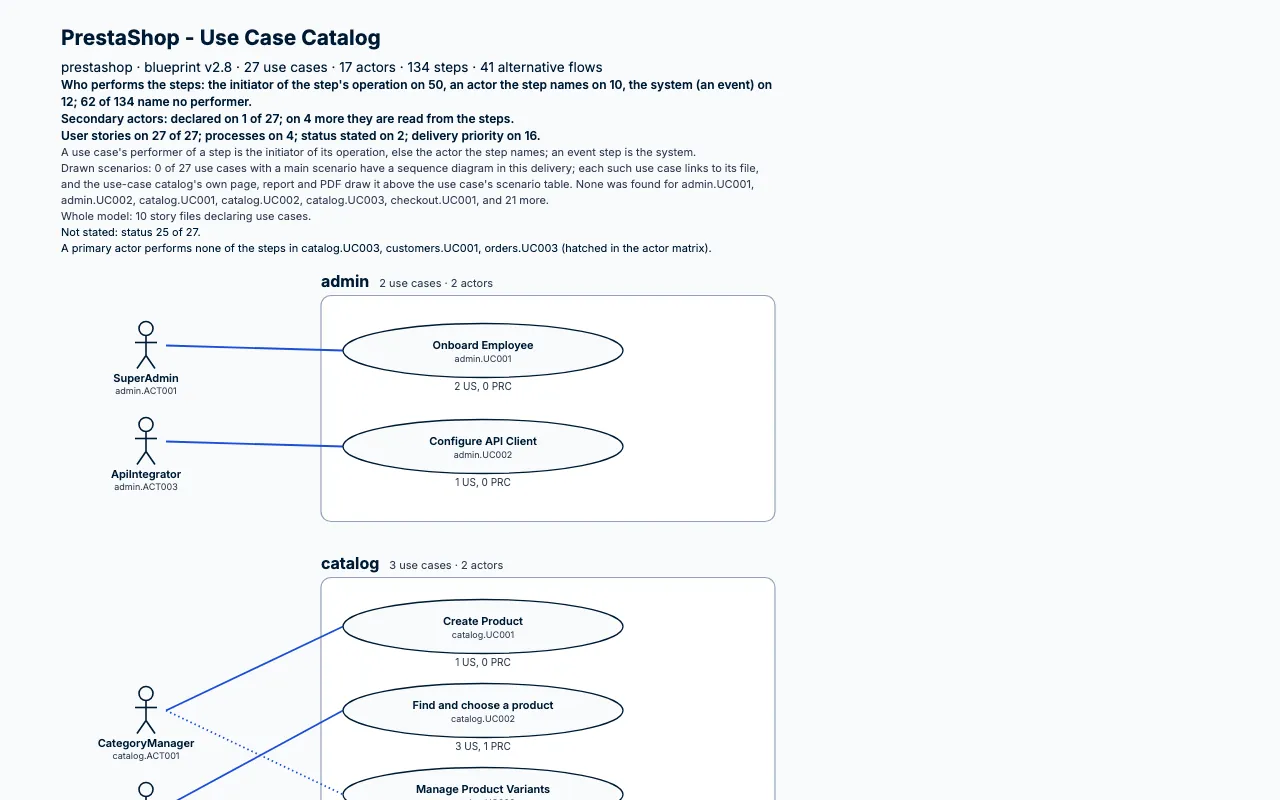
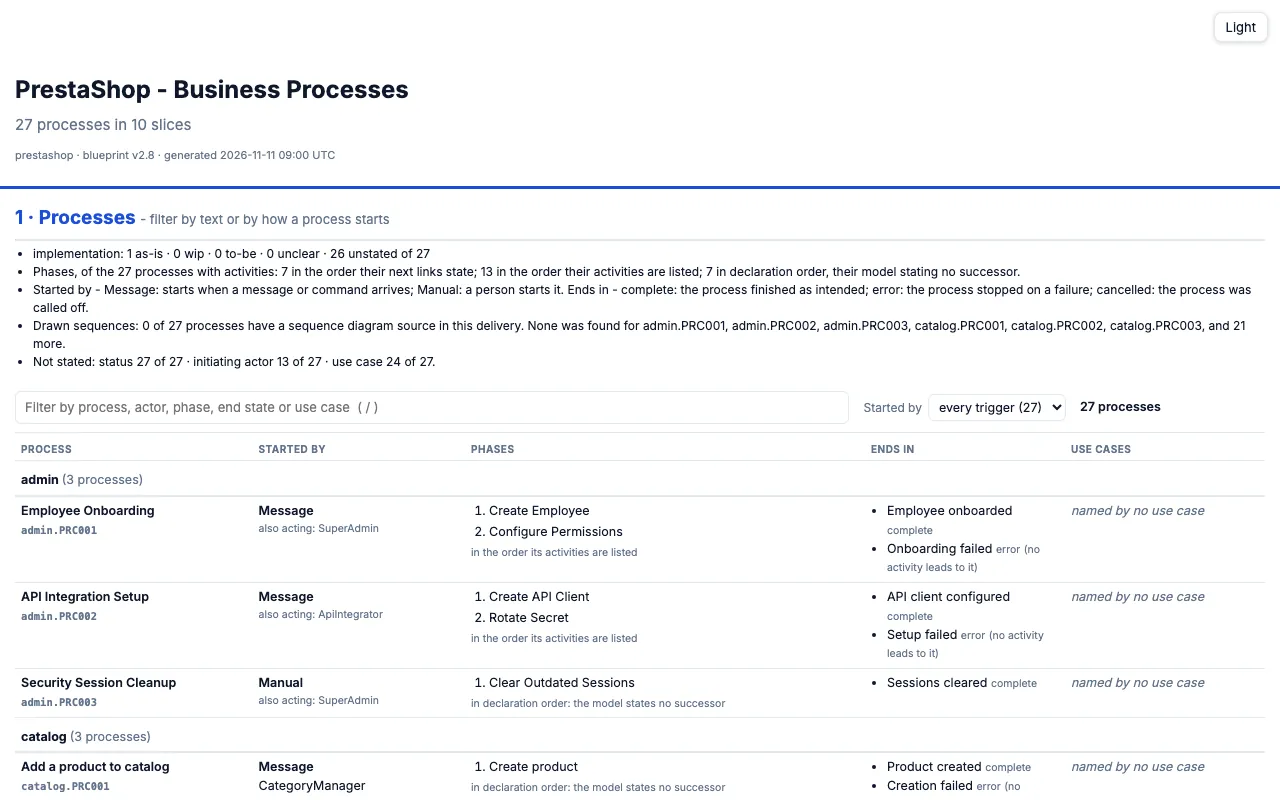
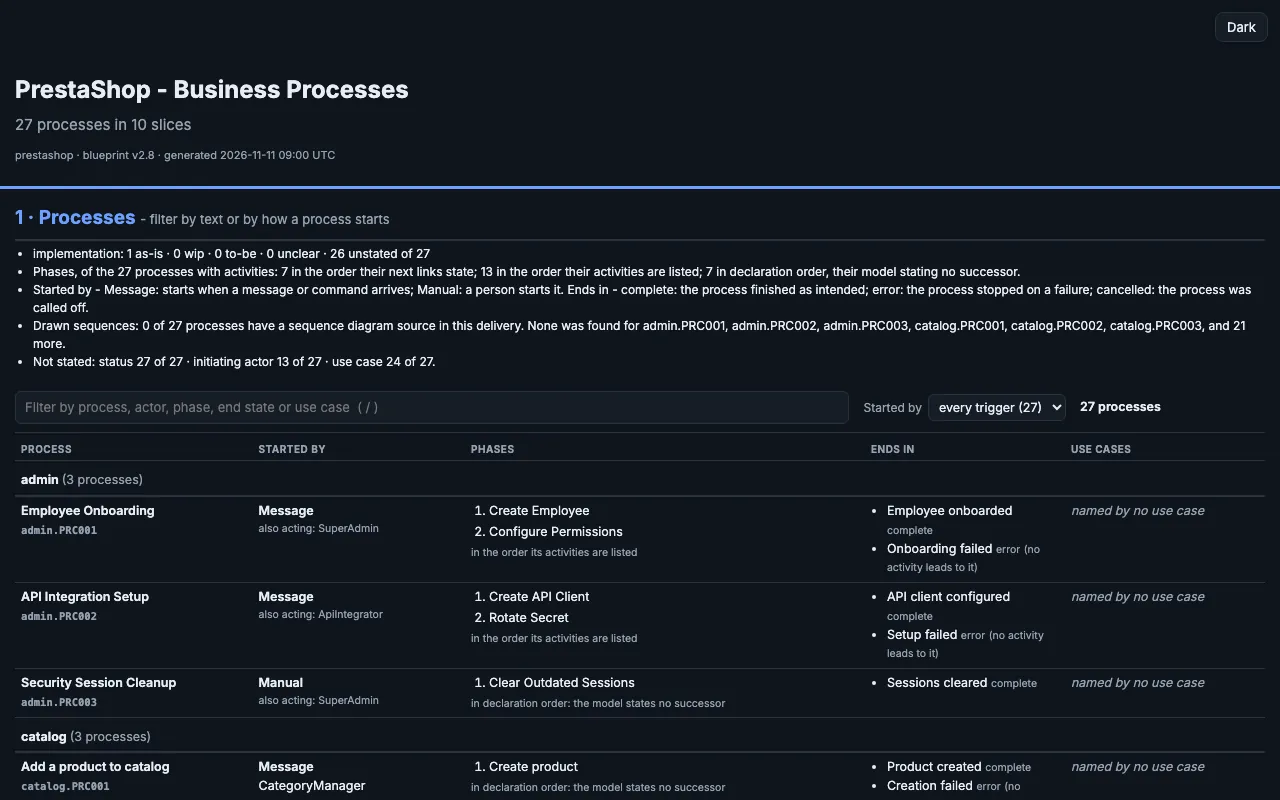
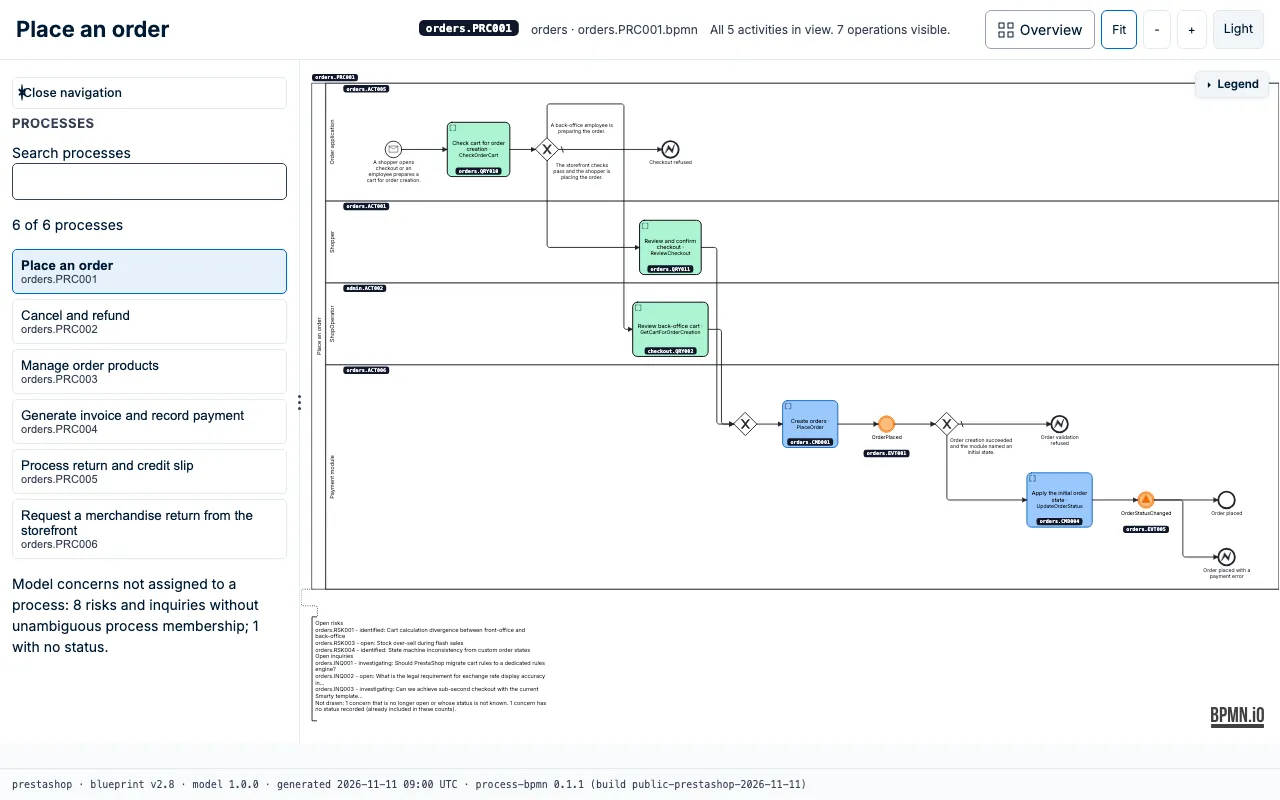
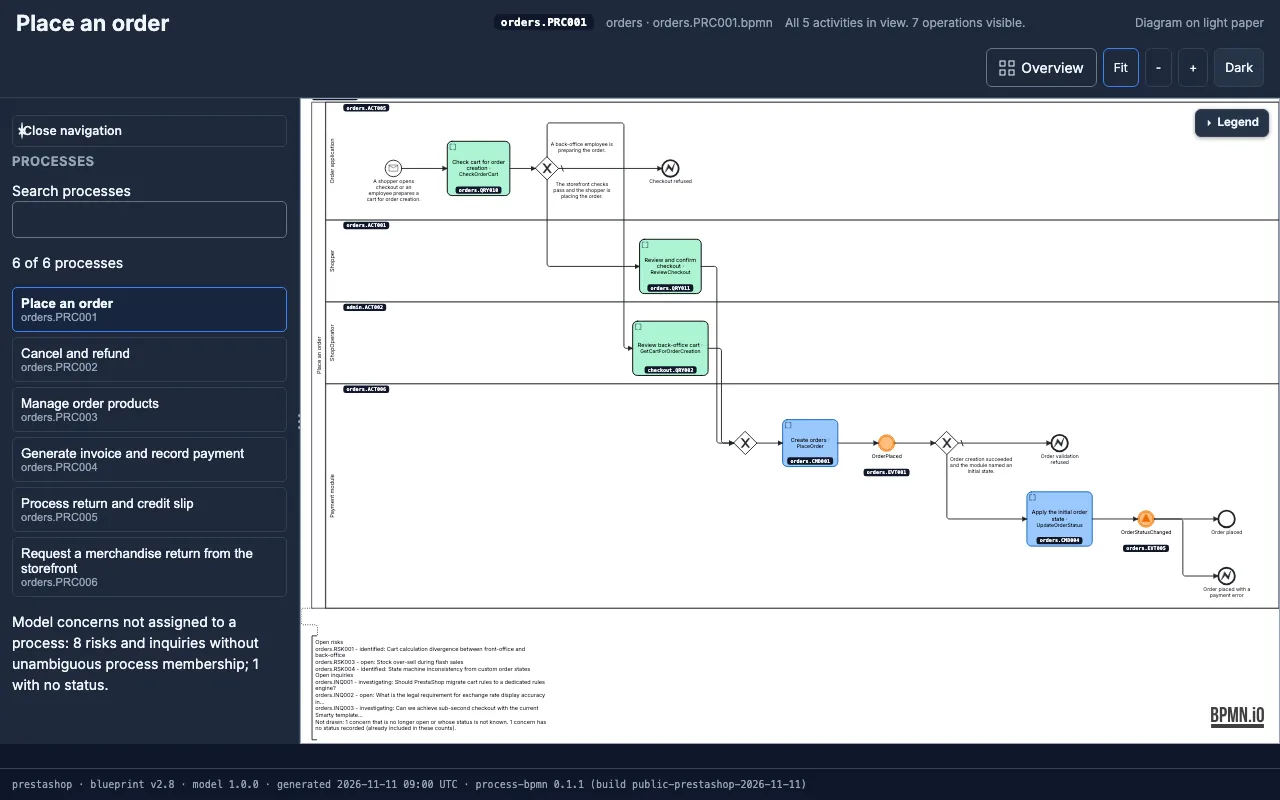
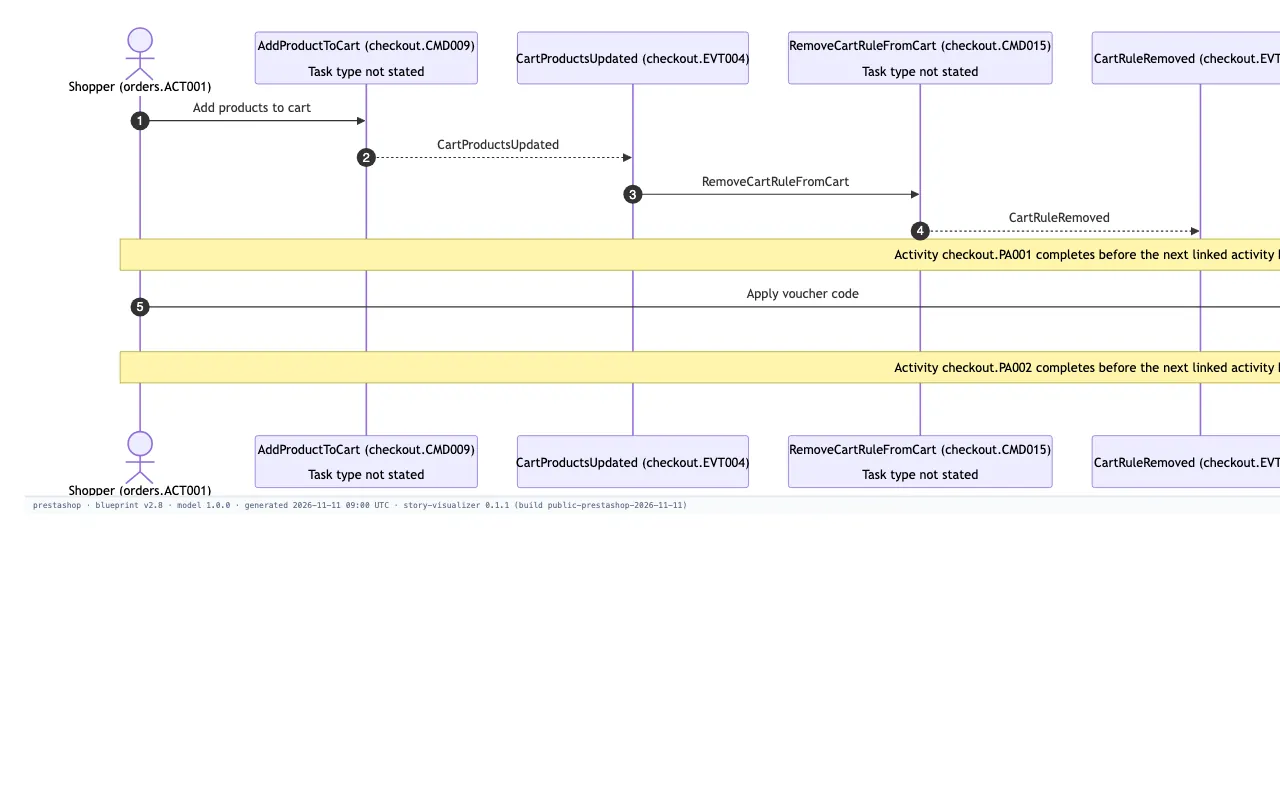
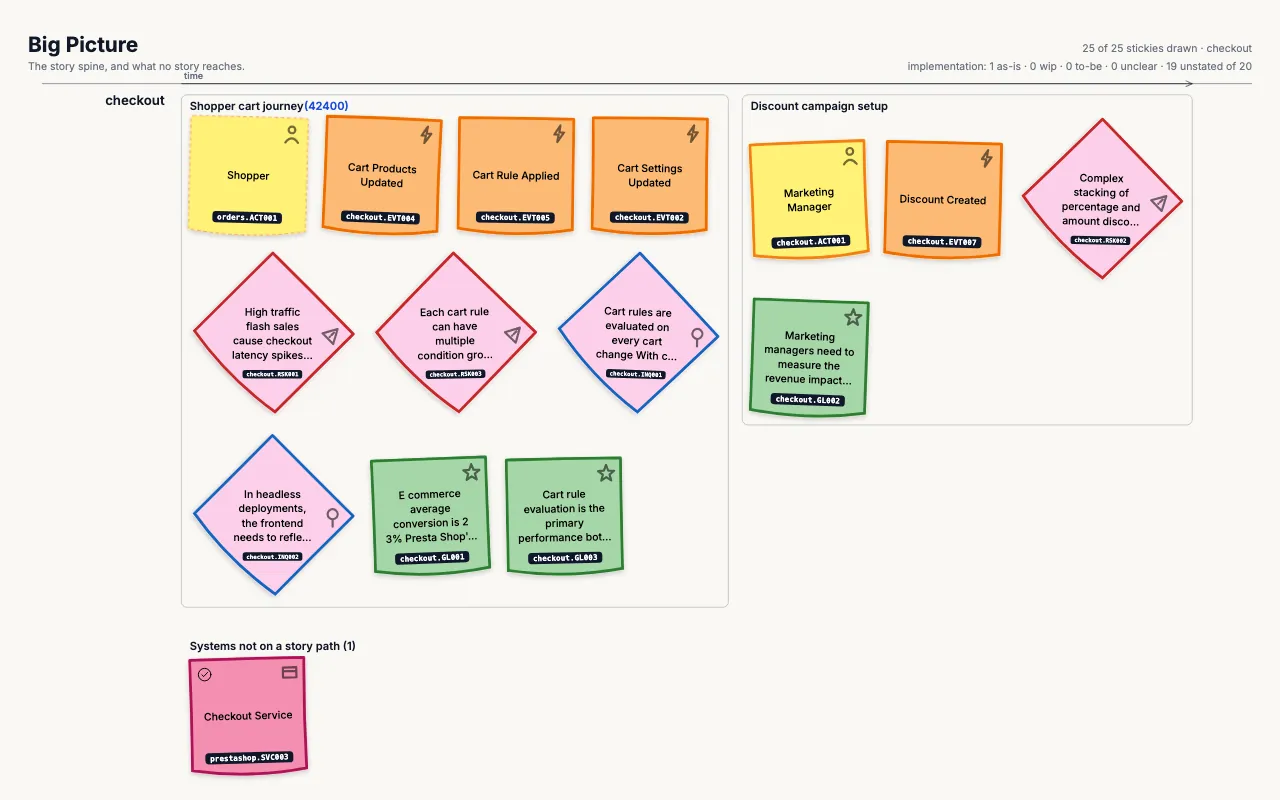
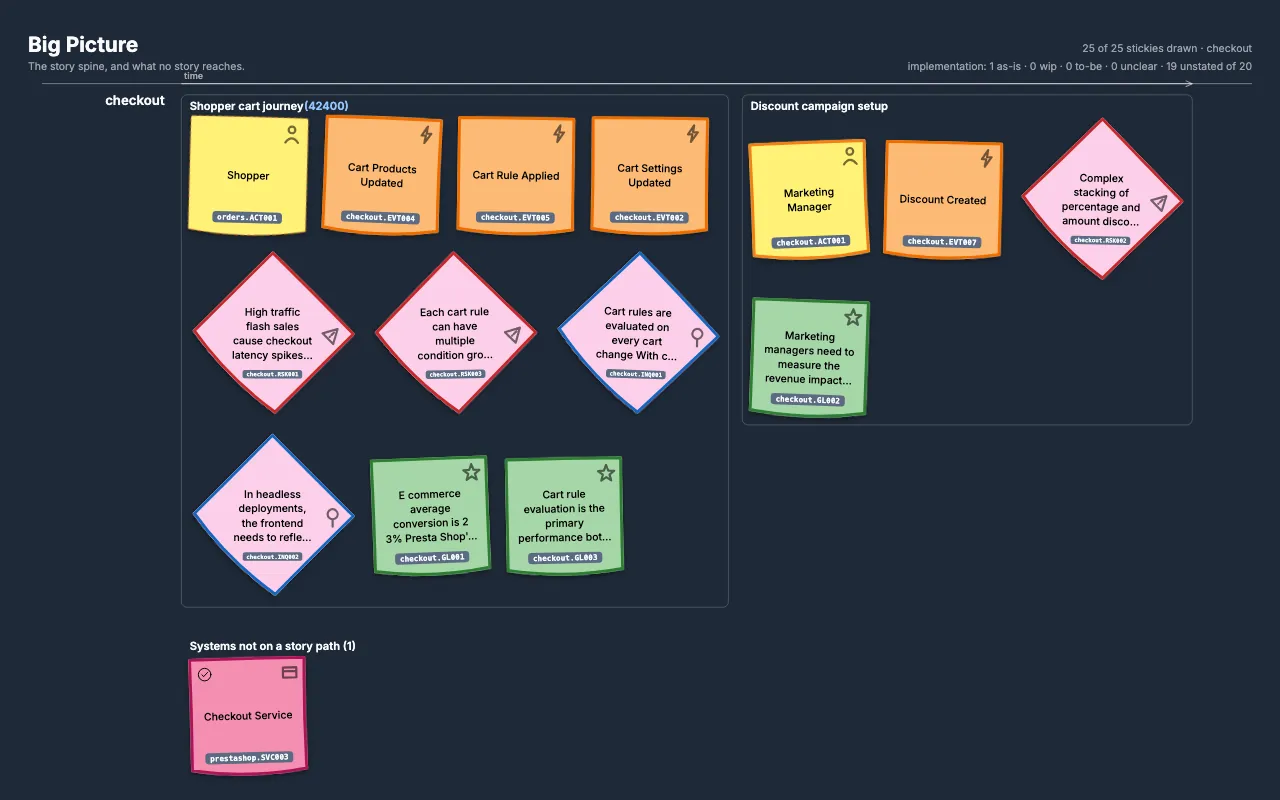
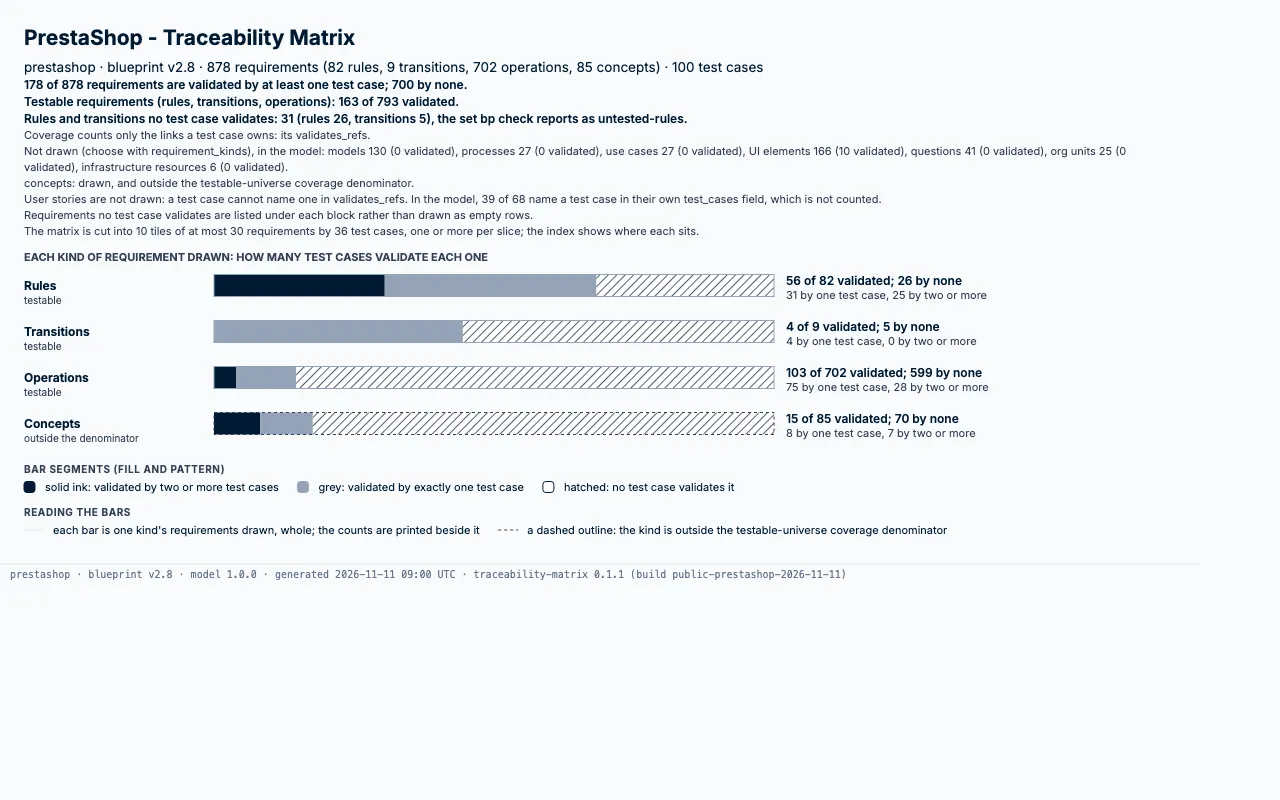
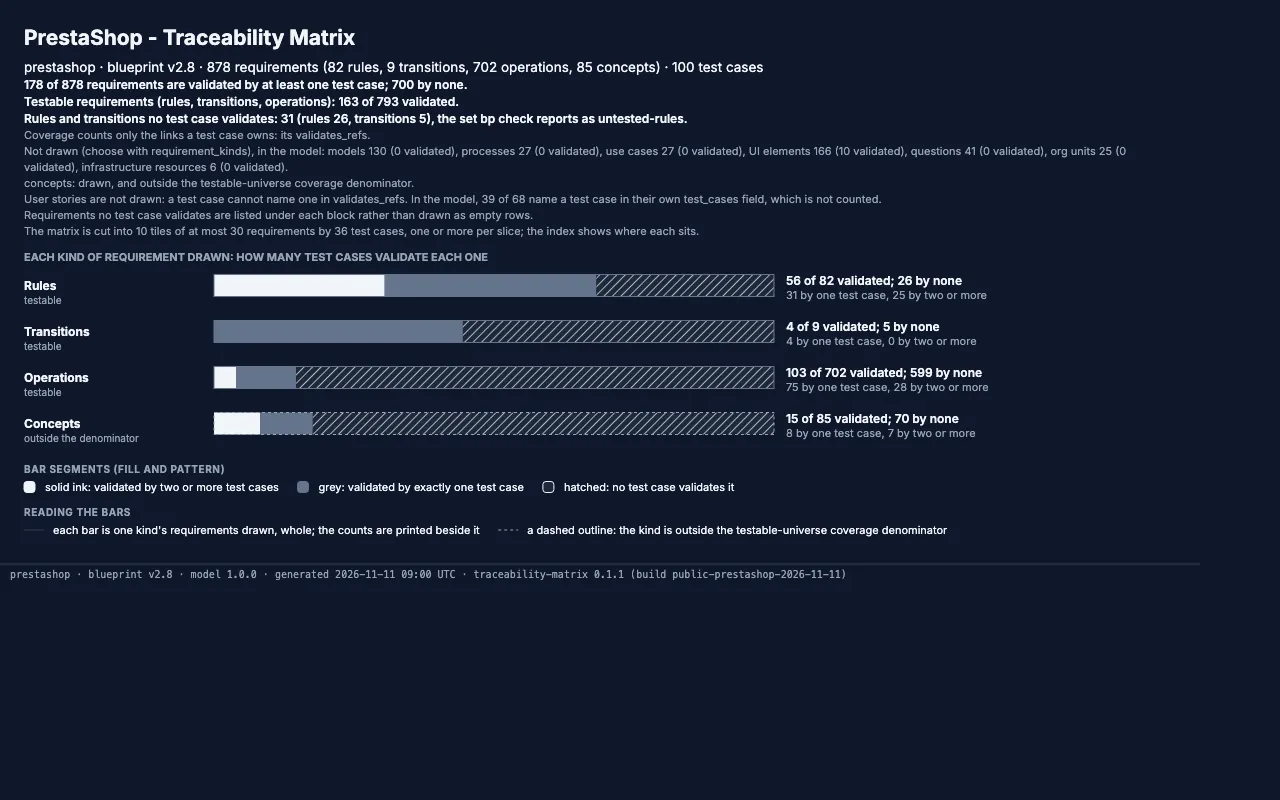
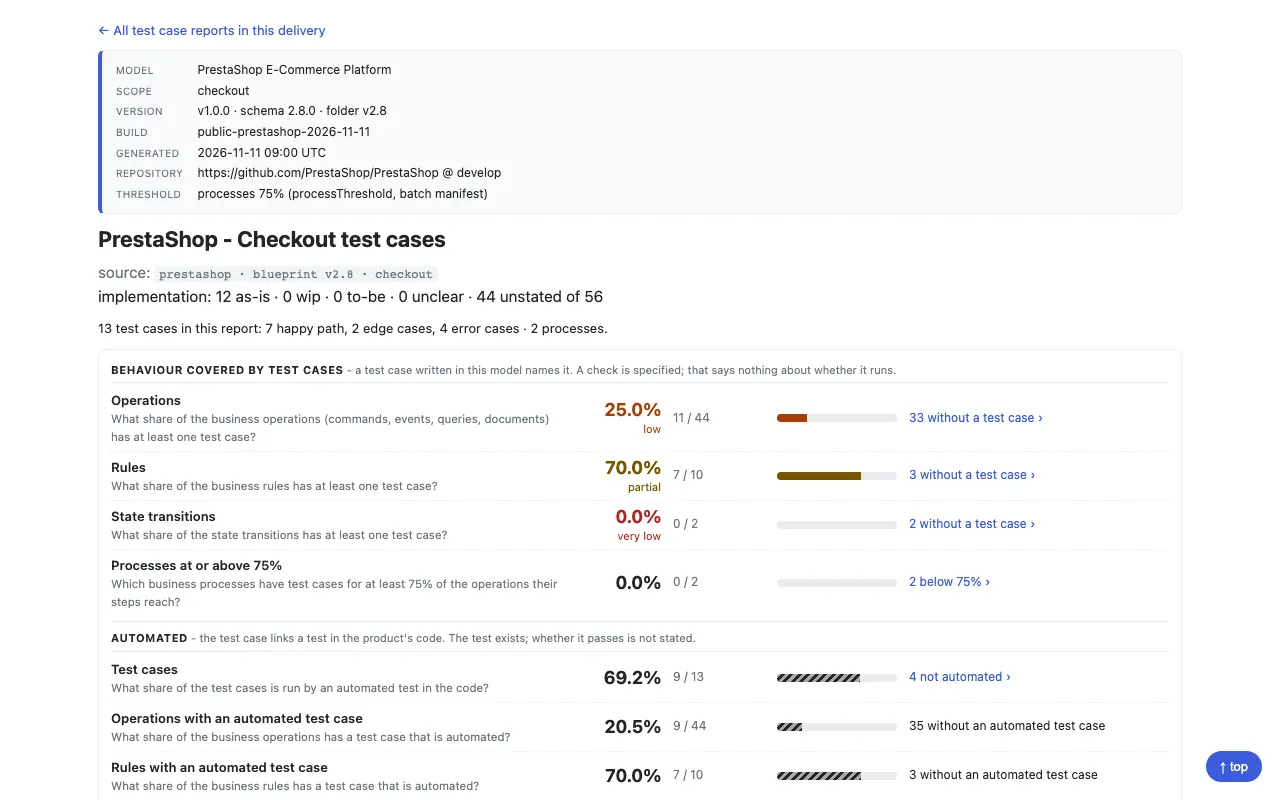
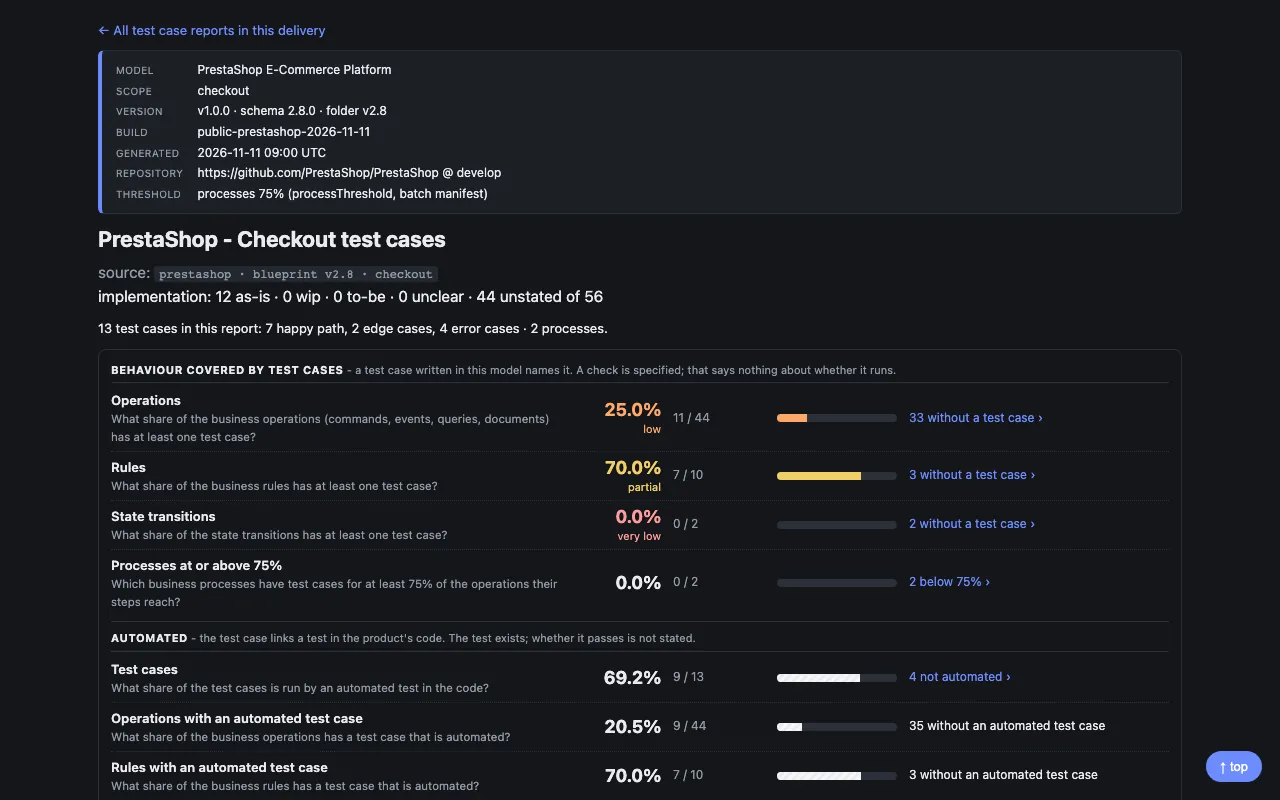
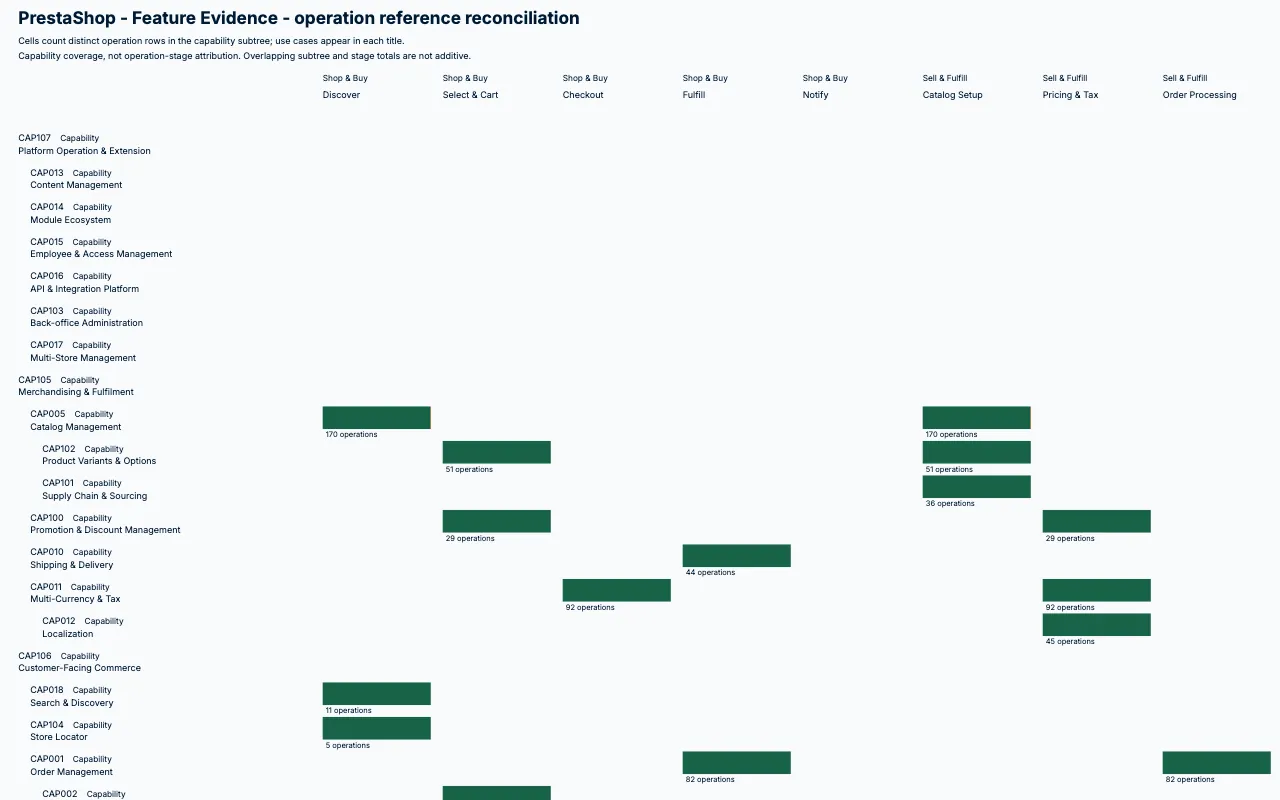
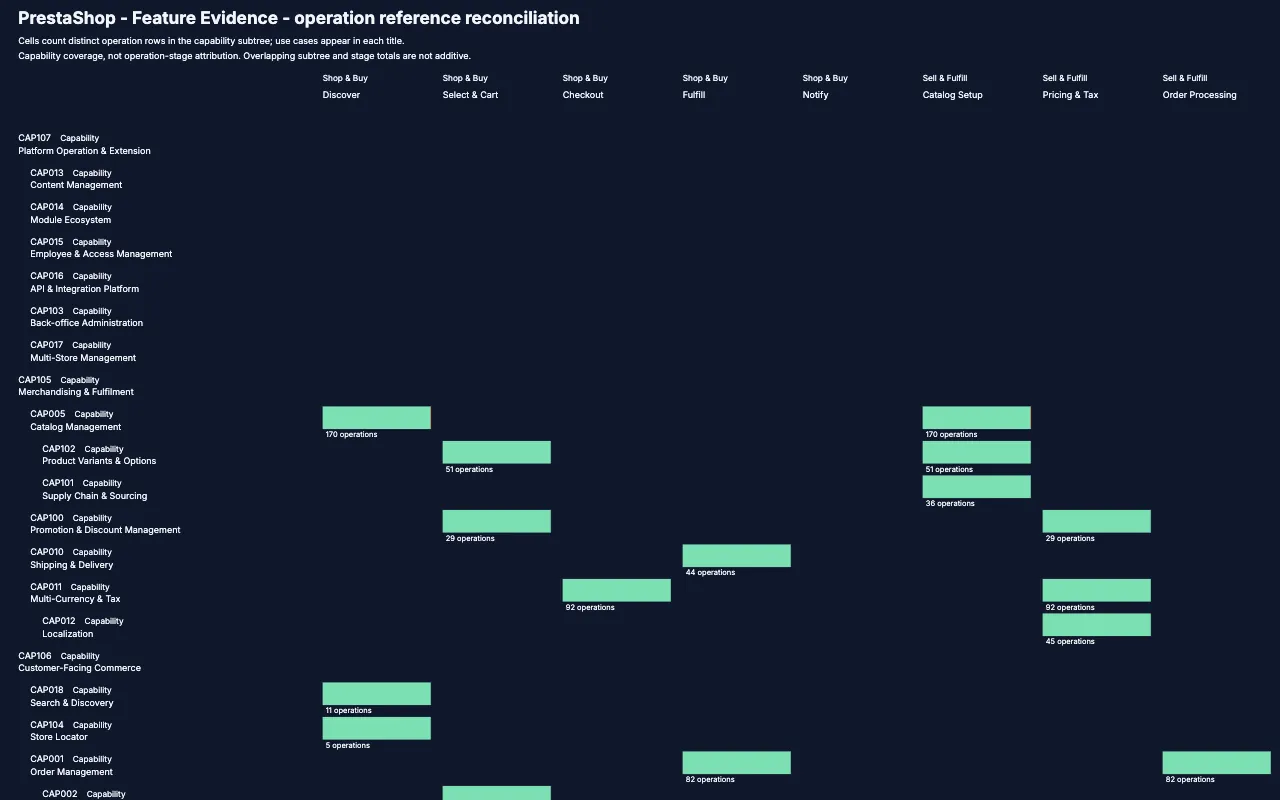
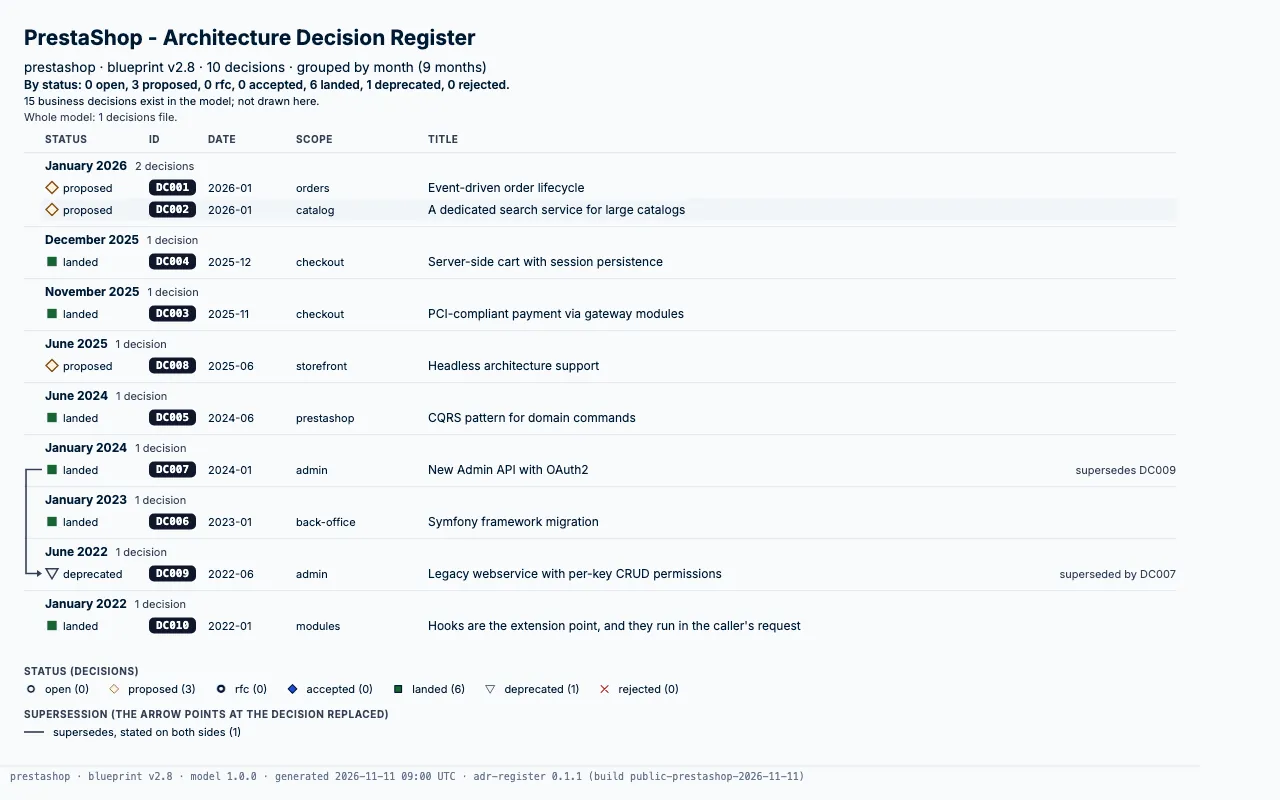
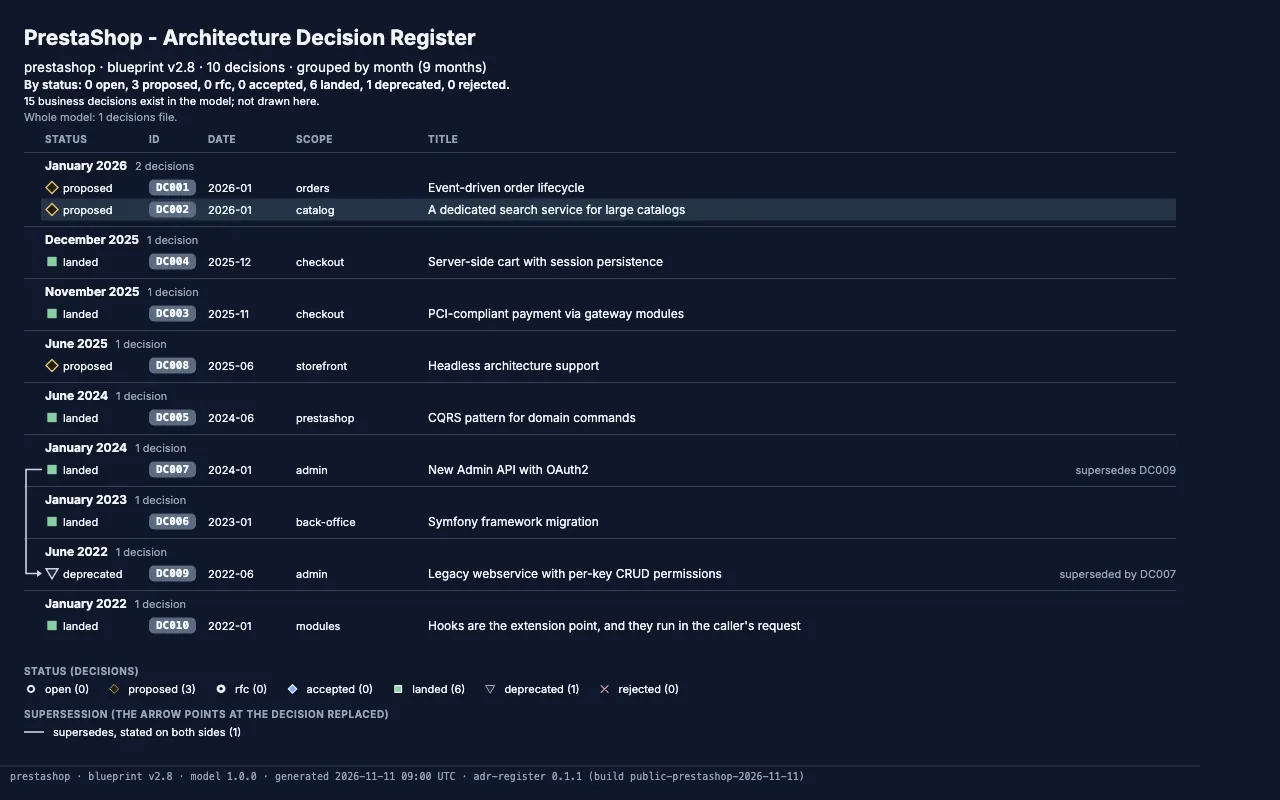
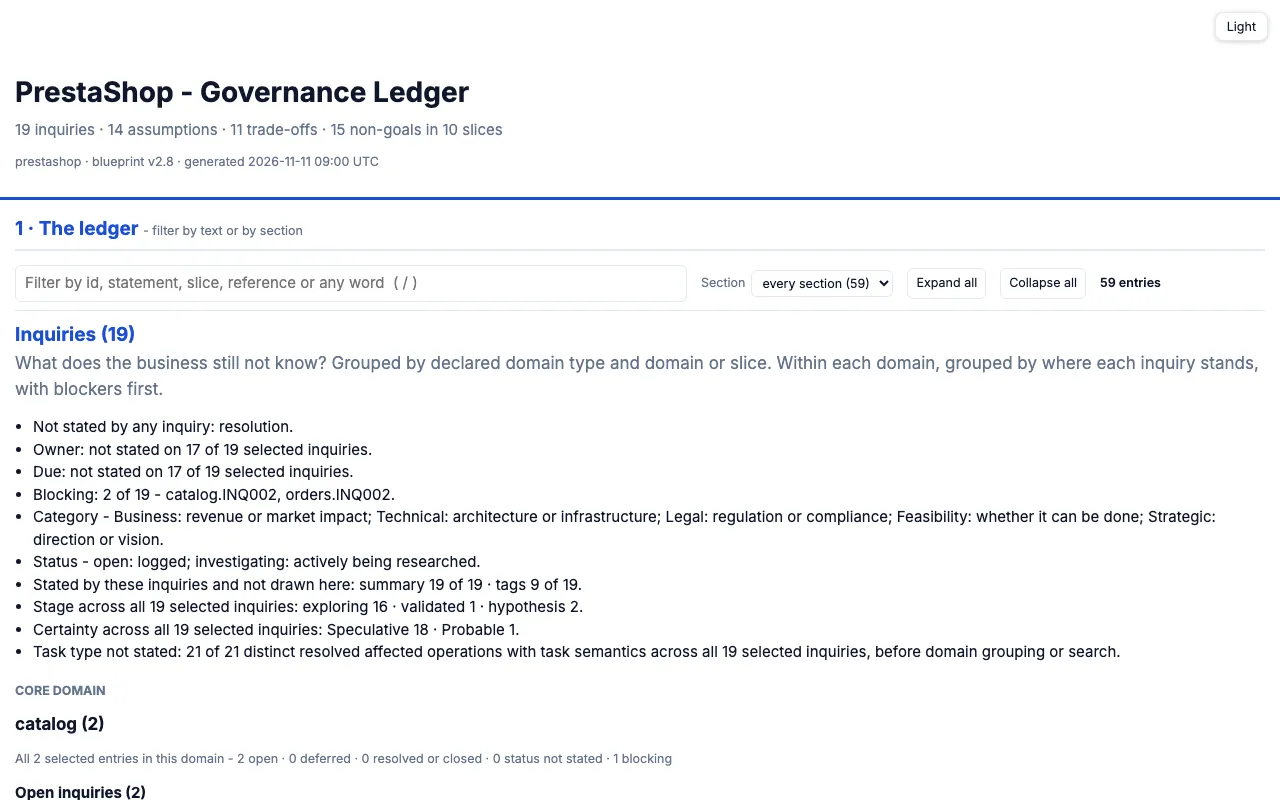
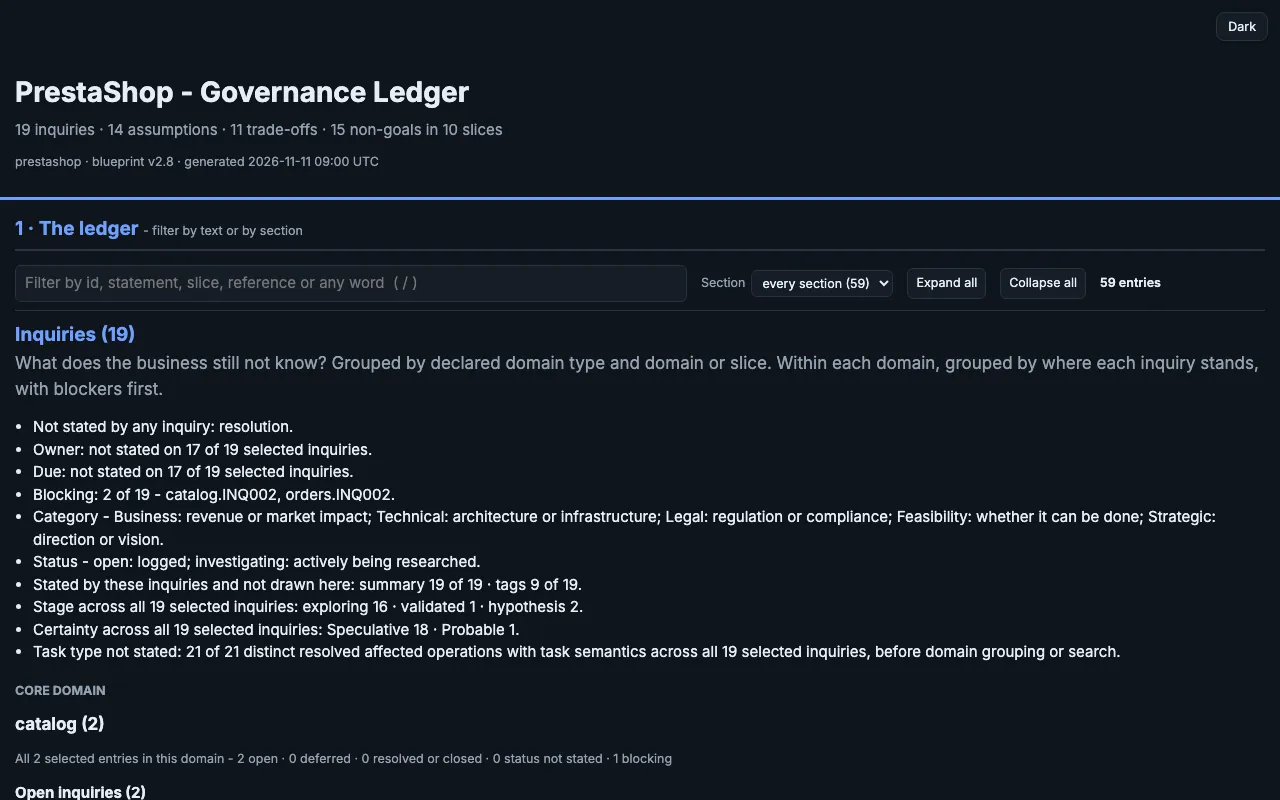
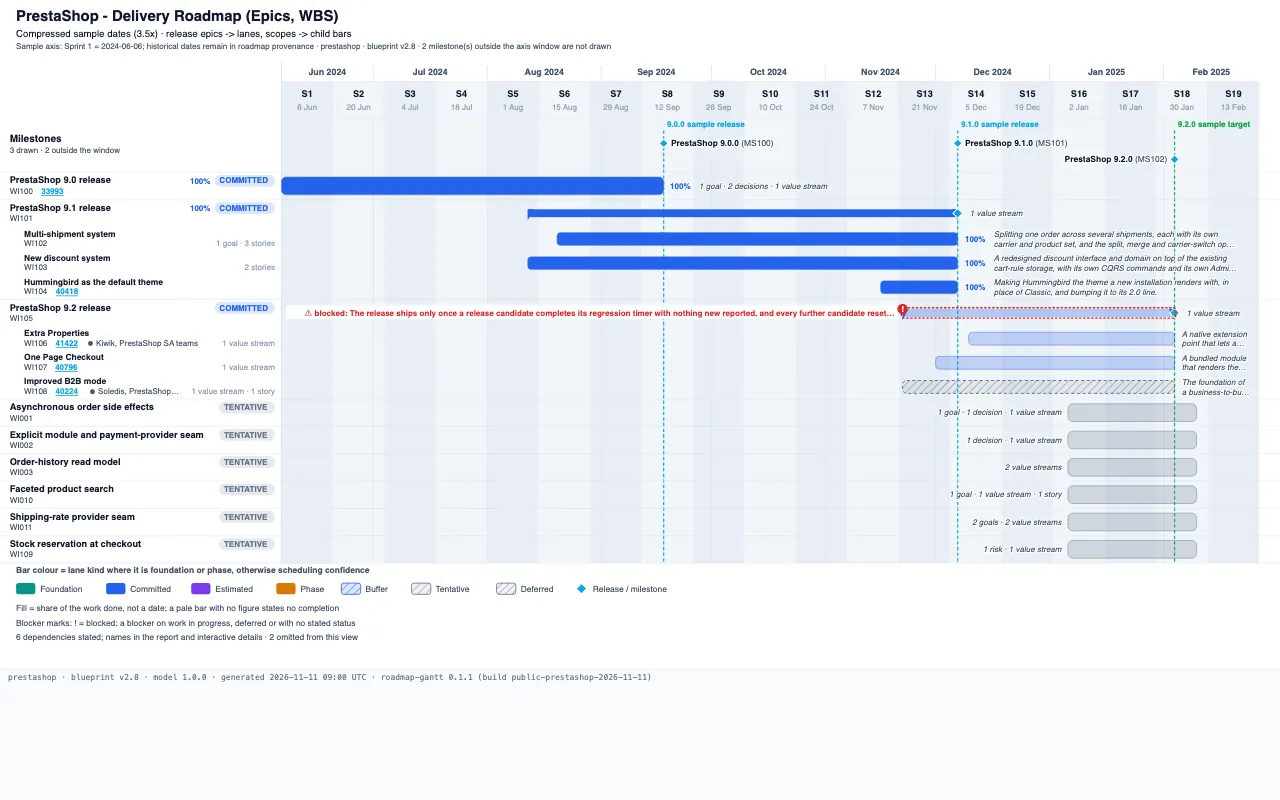
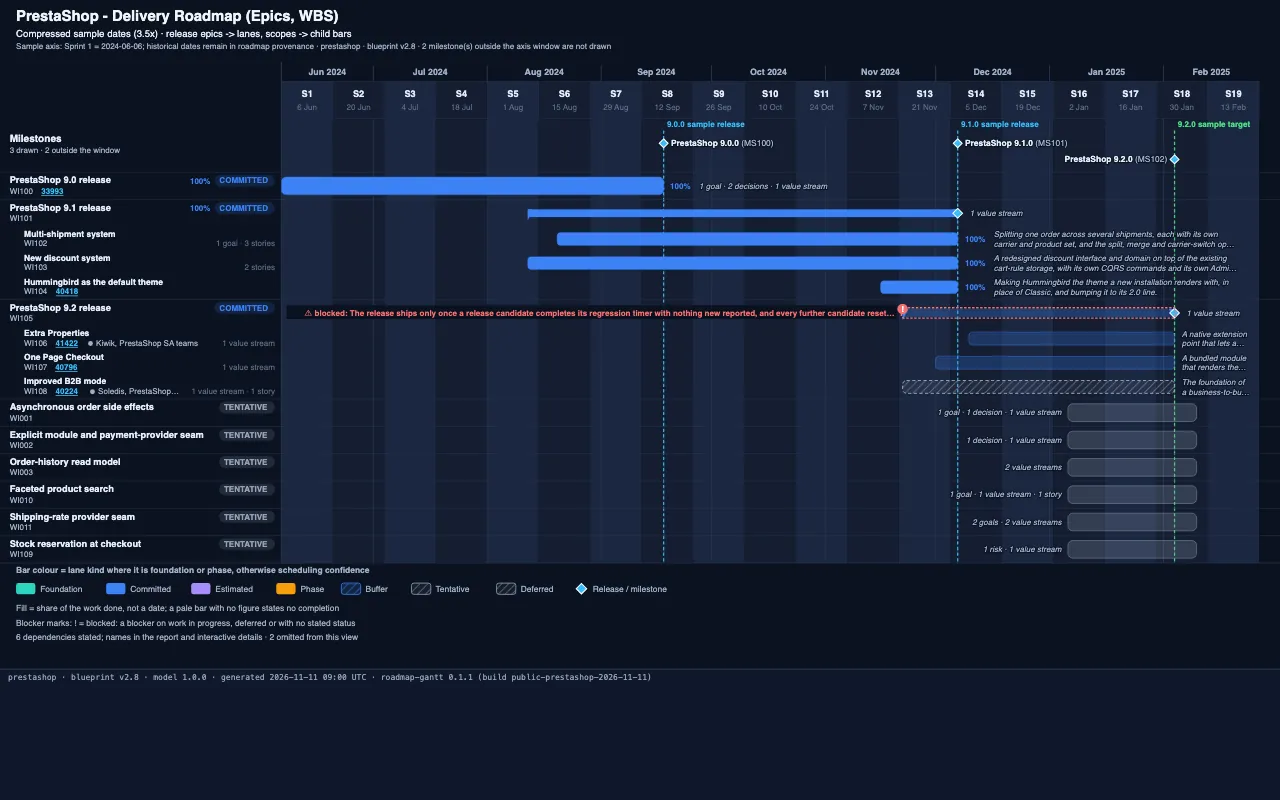
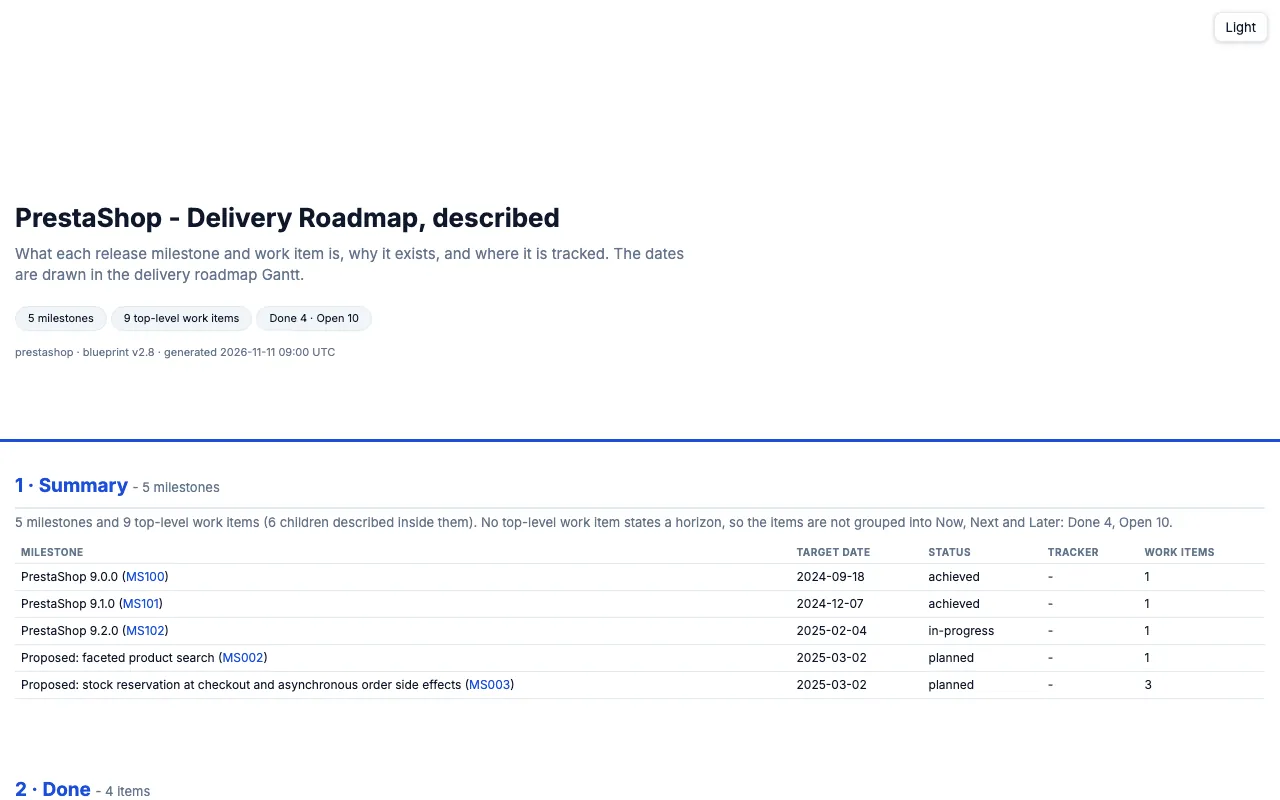
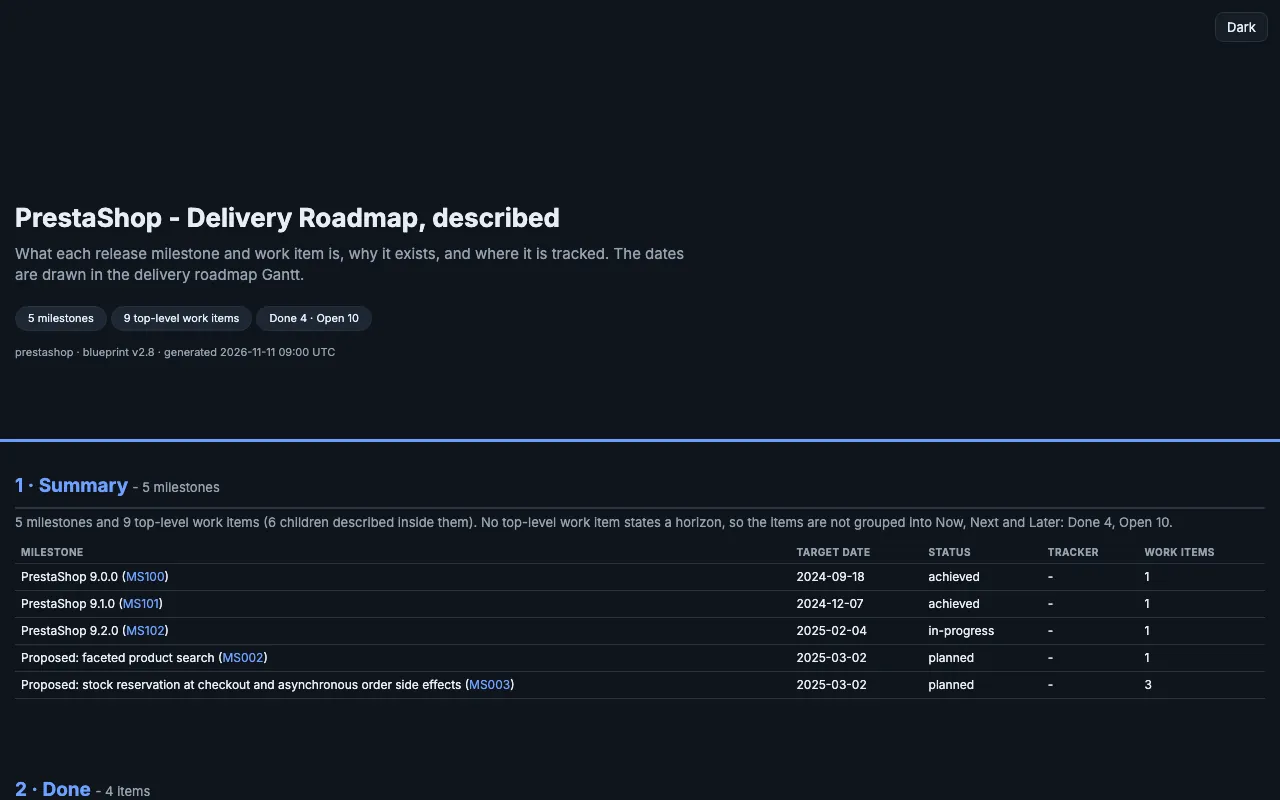
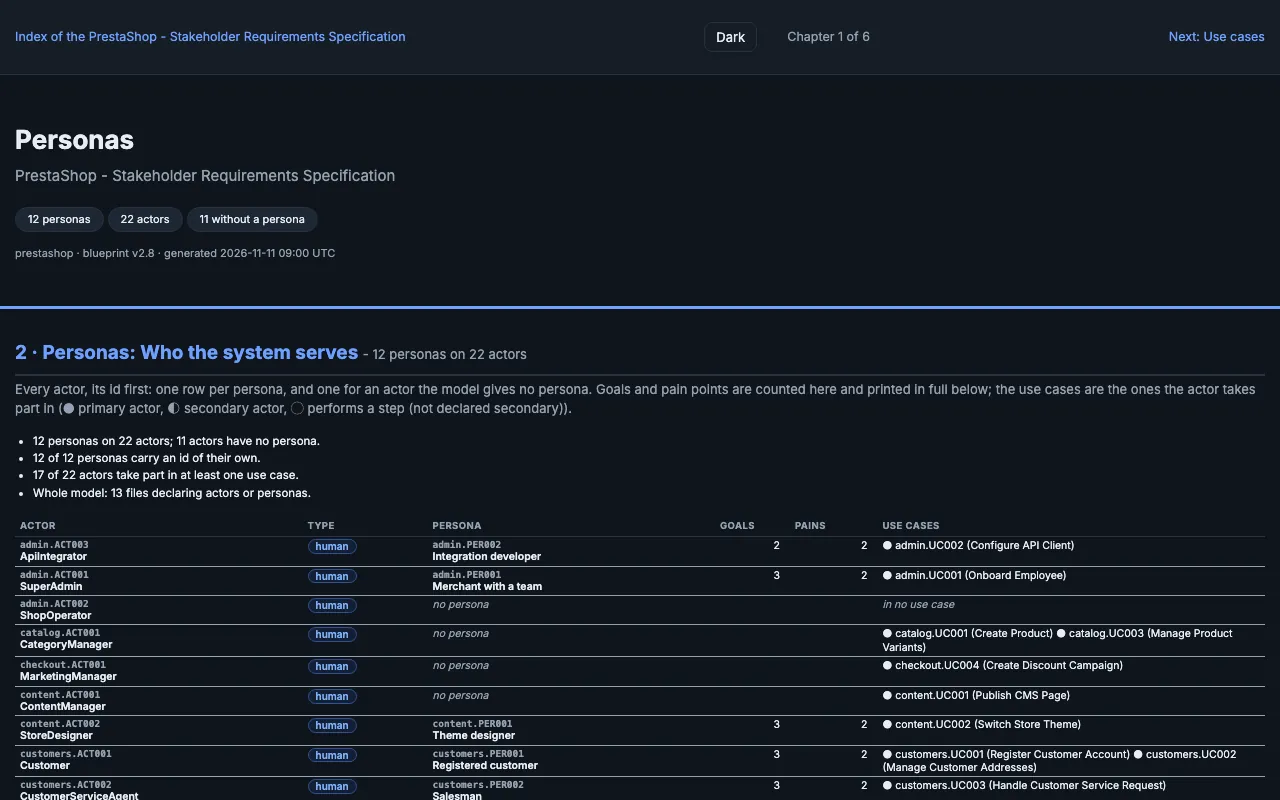
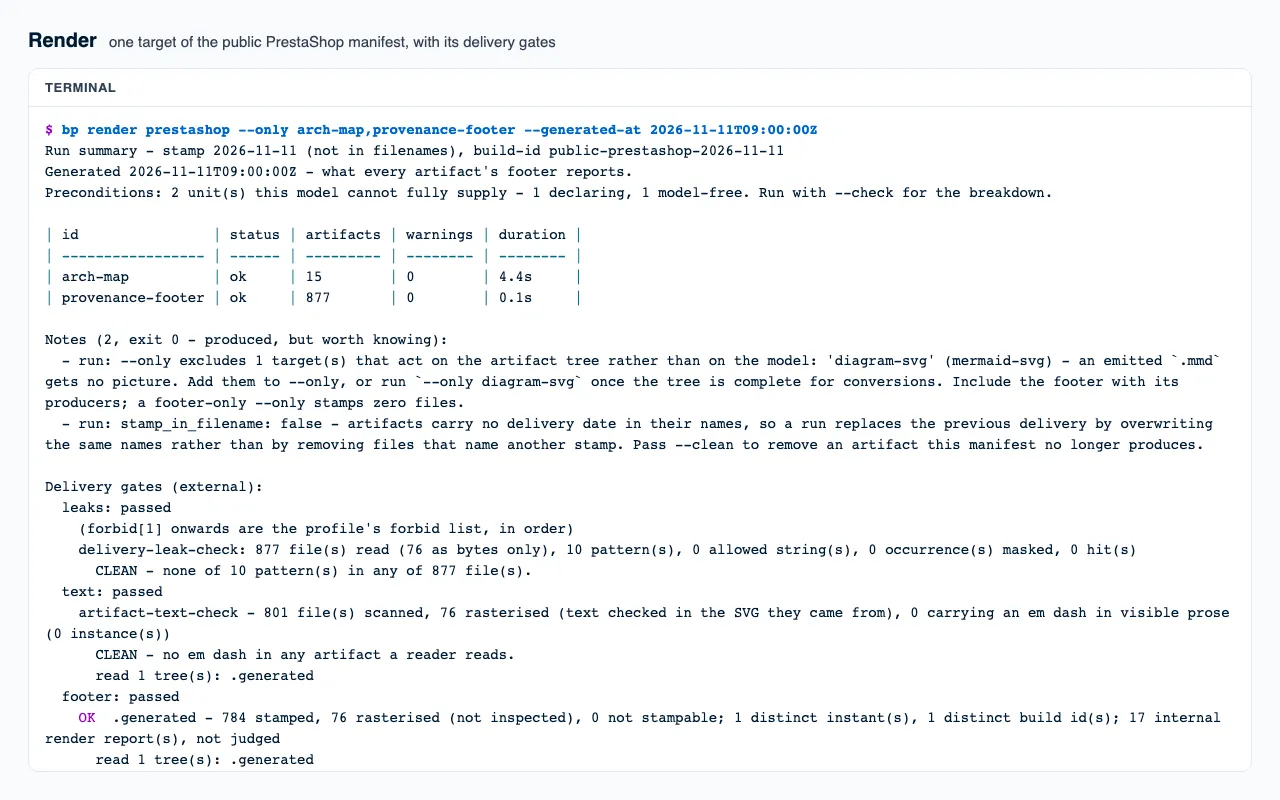
Renderers are programs that produce diagrams and reports, convert diagrams or stamp provenance. bp render is the CLI command that runs them from a project's render manifest. Choose by the question you need to answer.
Available now. Access and delivery agreed for the selected scope.
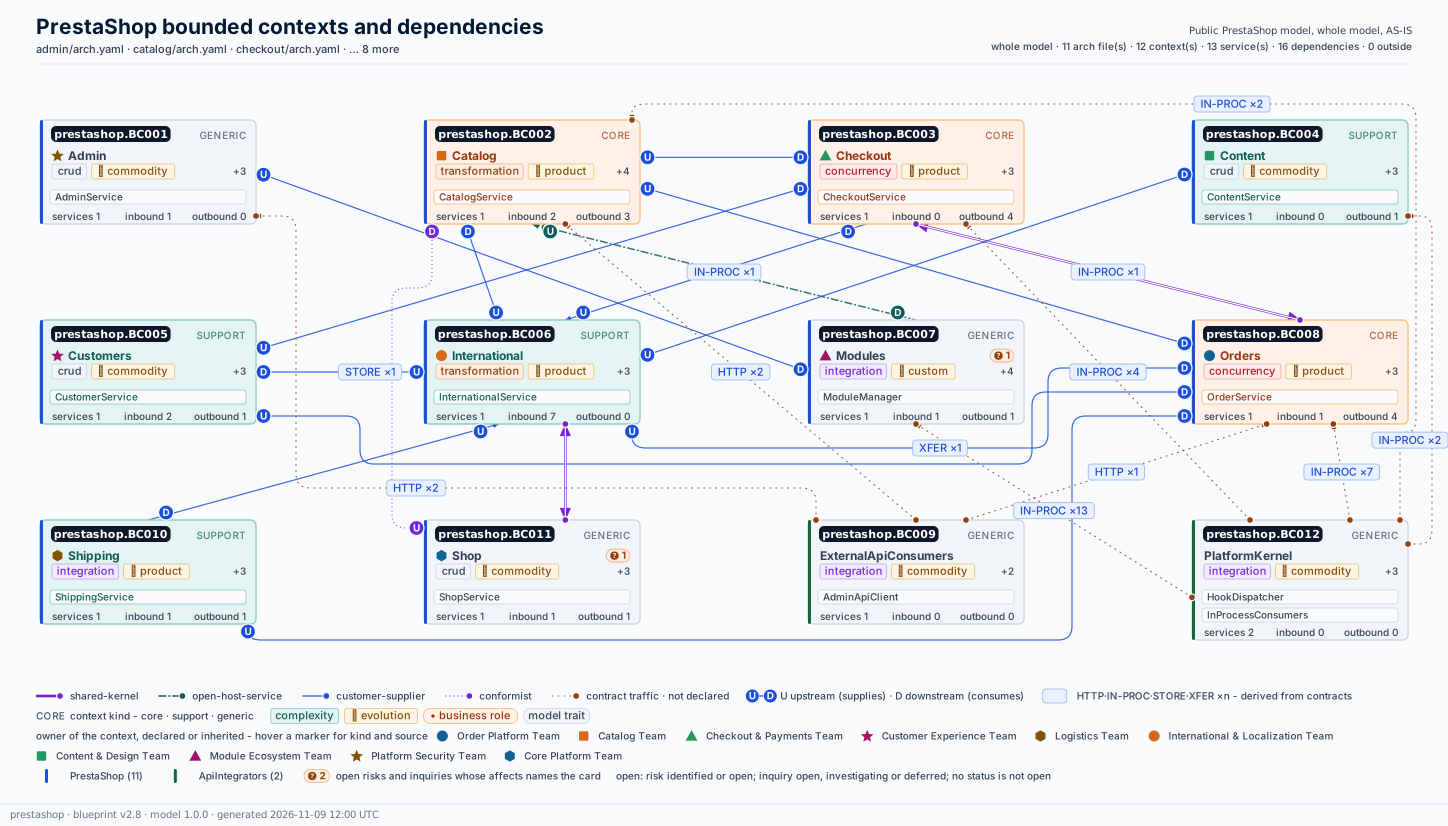
How is the system connected?
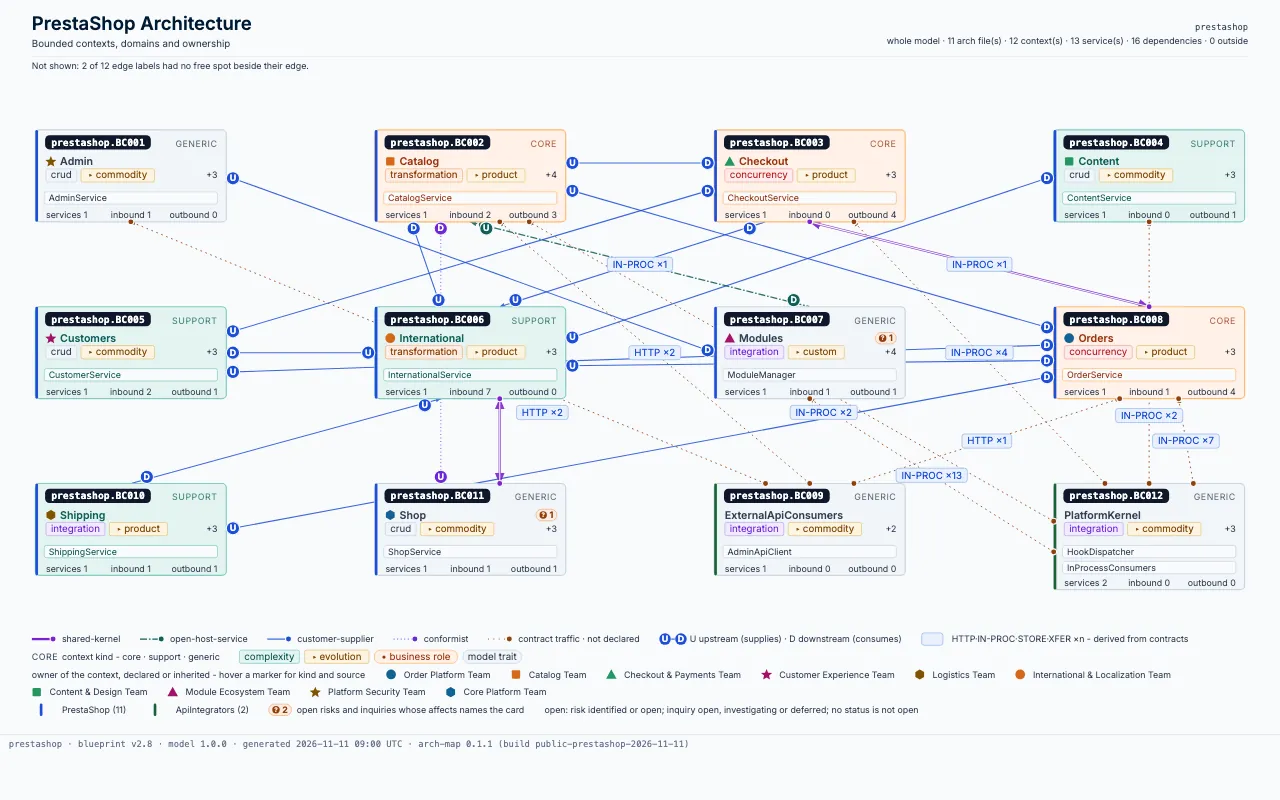
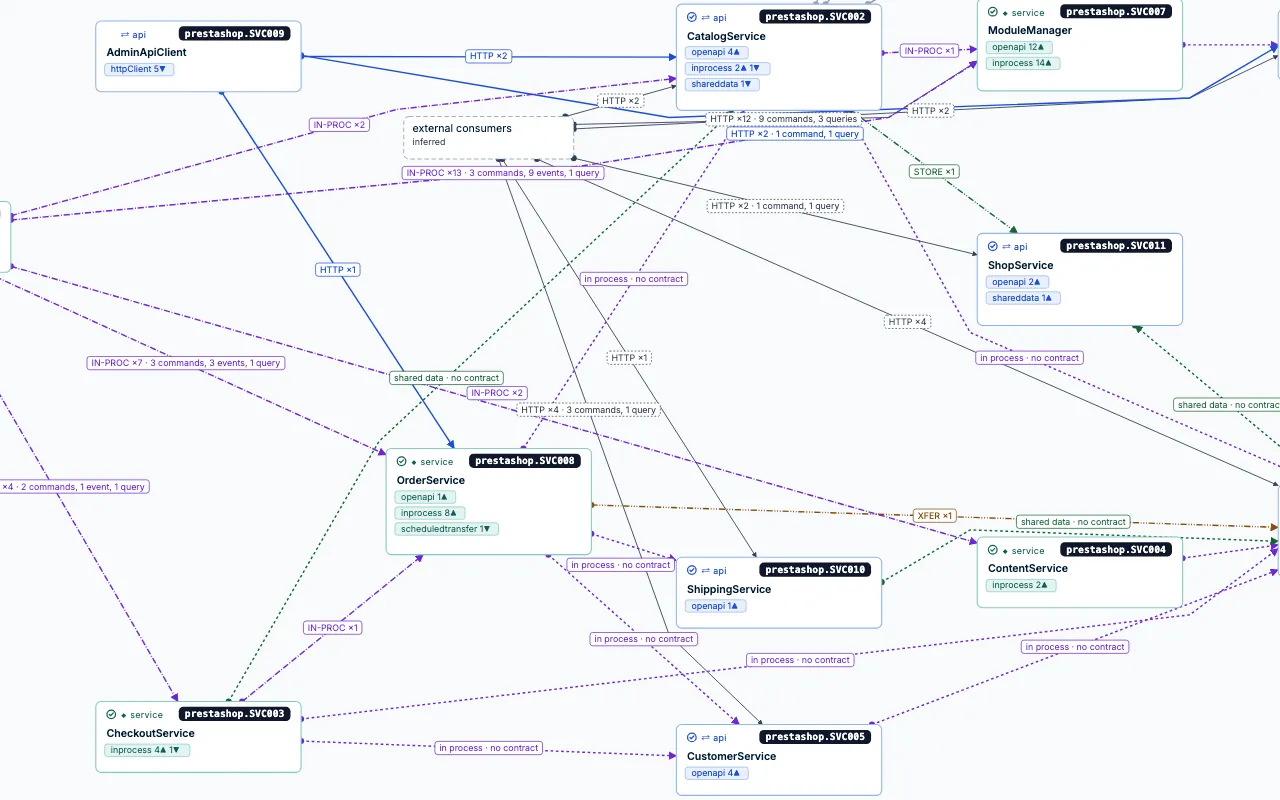
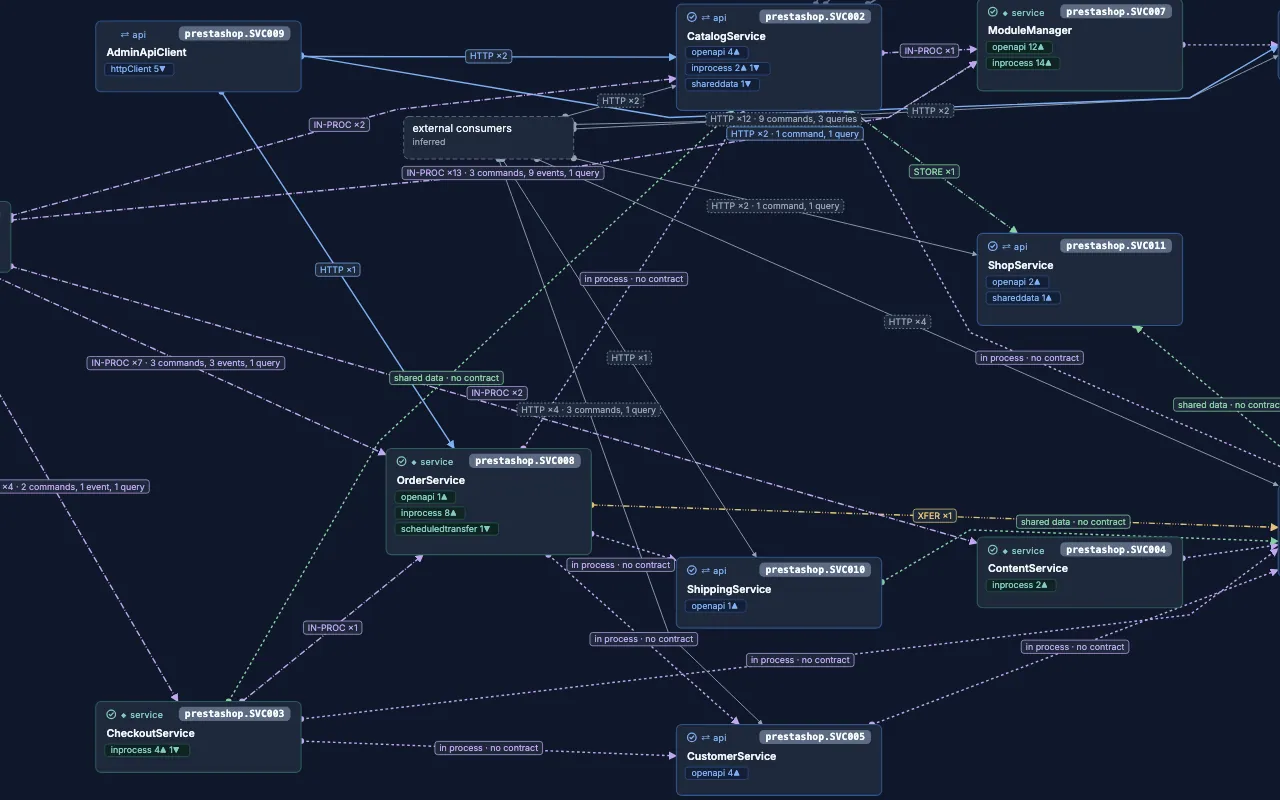
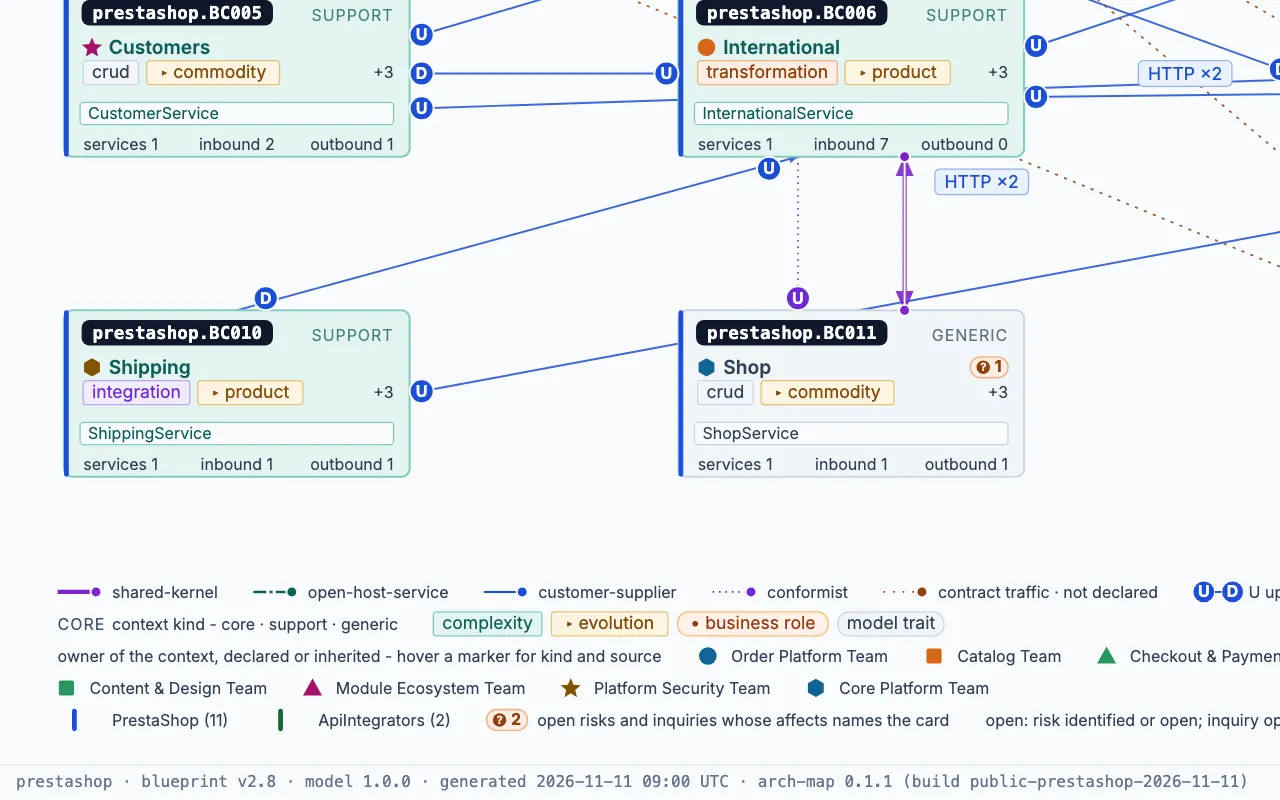
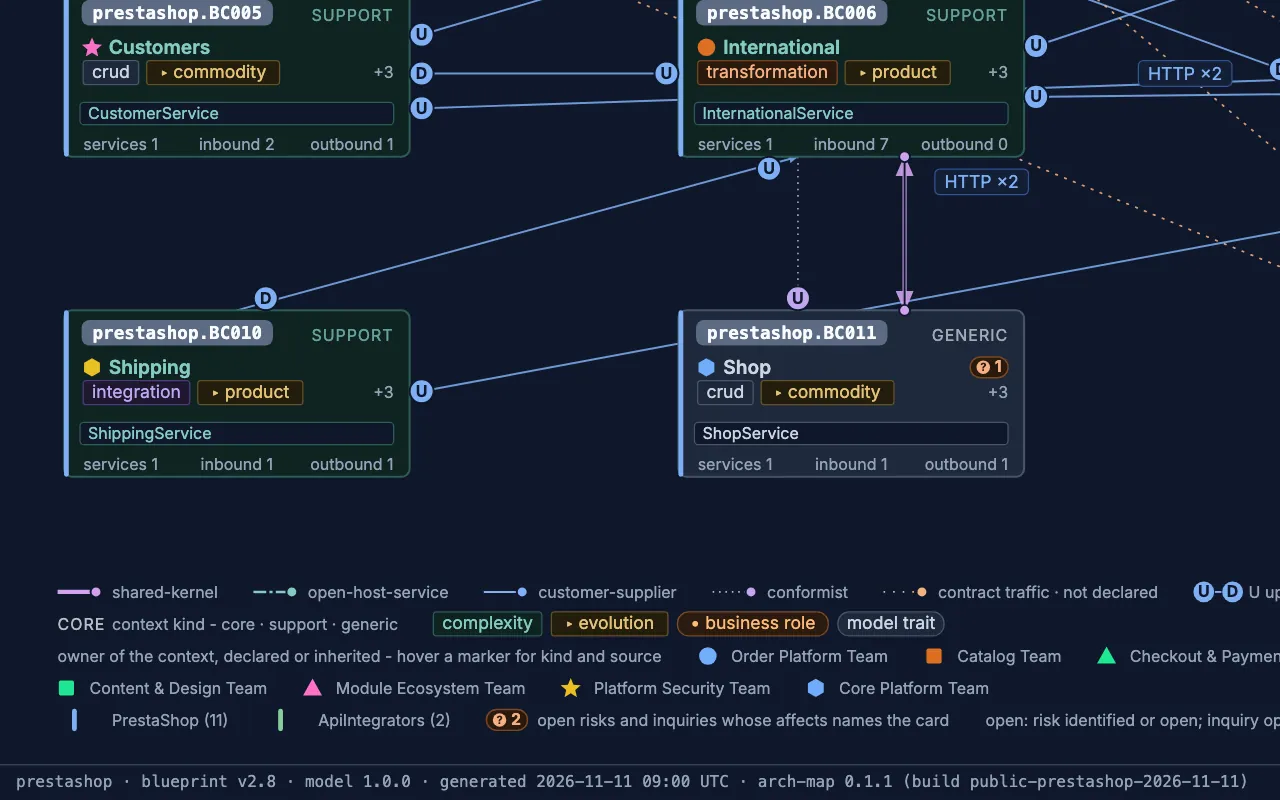
arch-map
Which question does it answer? Draws bounded contexts, ownership and service integrations.
For: Architects reviewing context ownership and integrations.
Use when: Agreeing service boundaries and dependencies.
Bring -> get: Blueprint model -> architecture map.
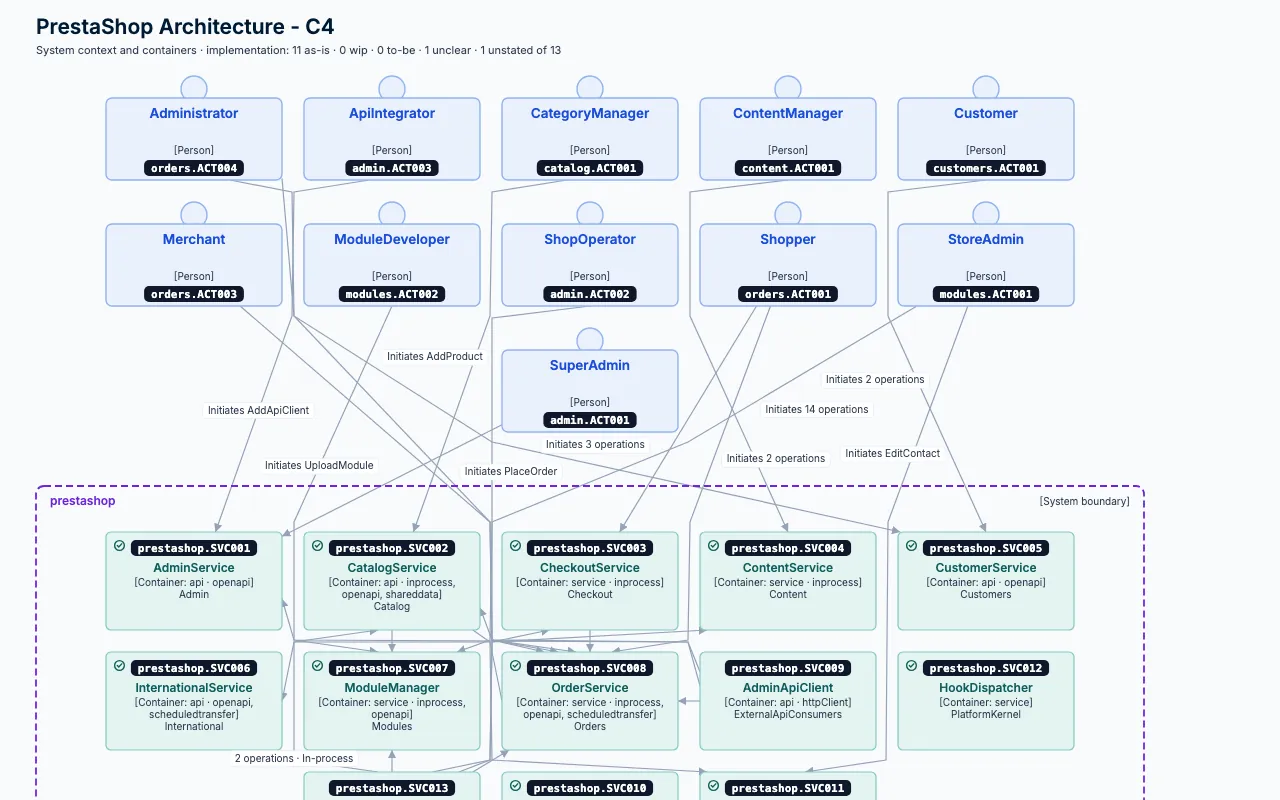
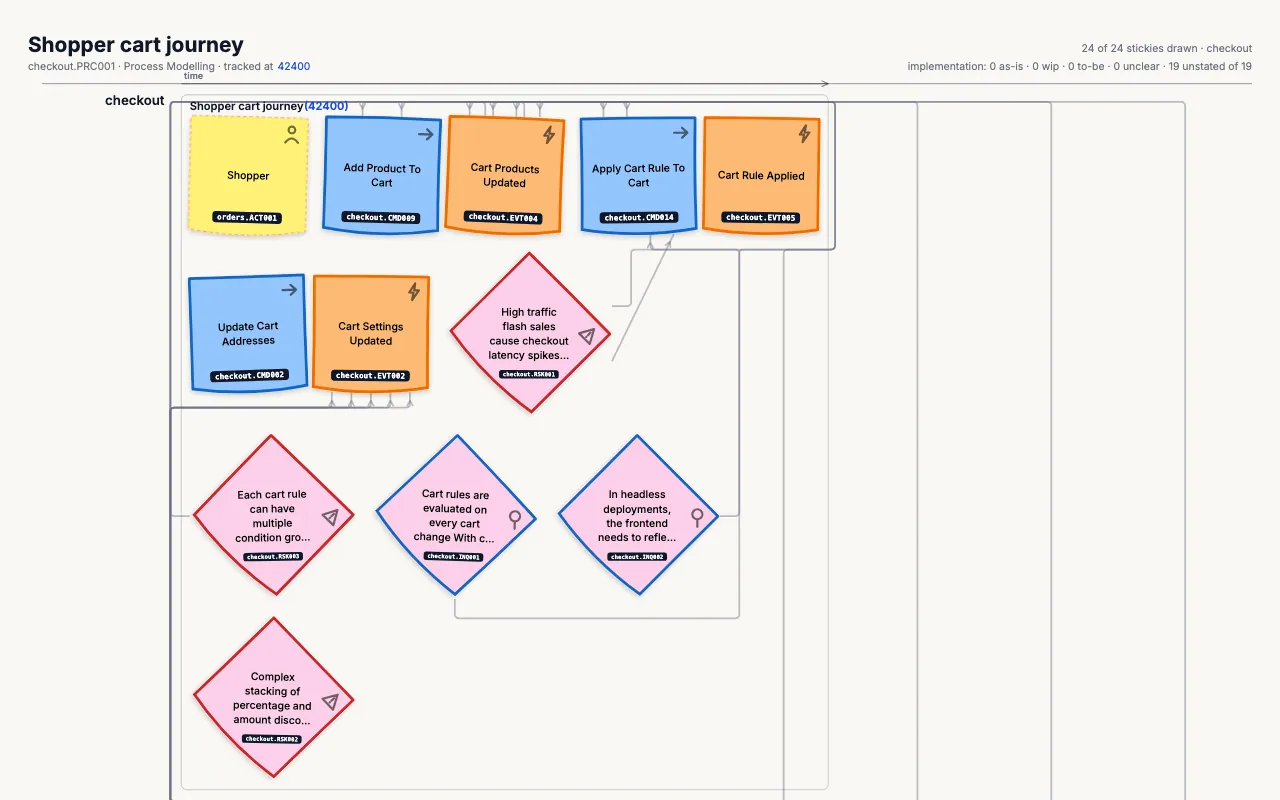
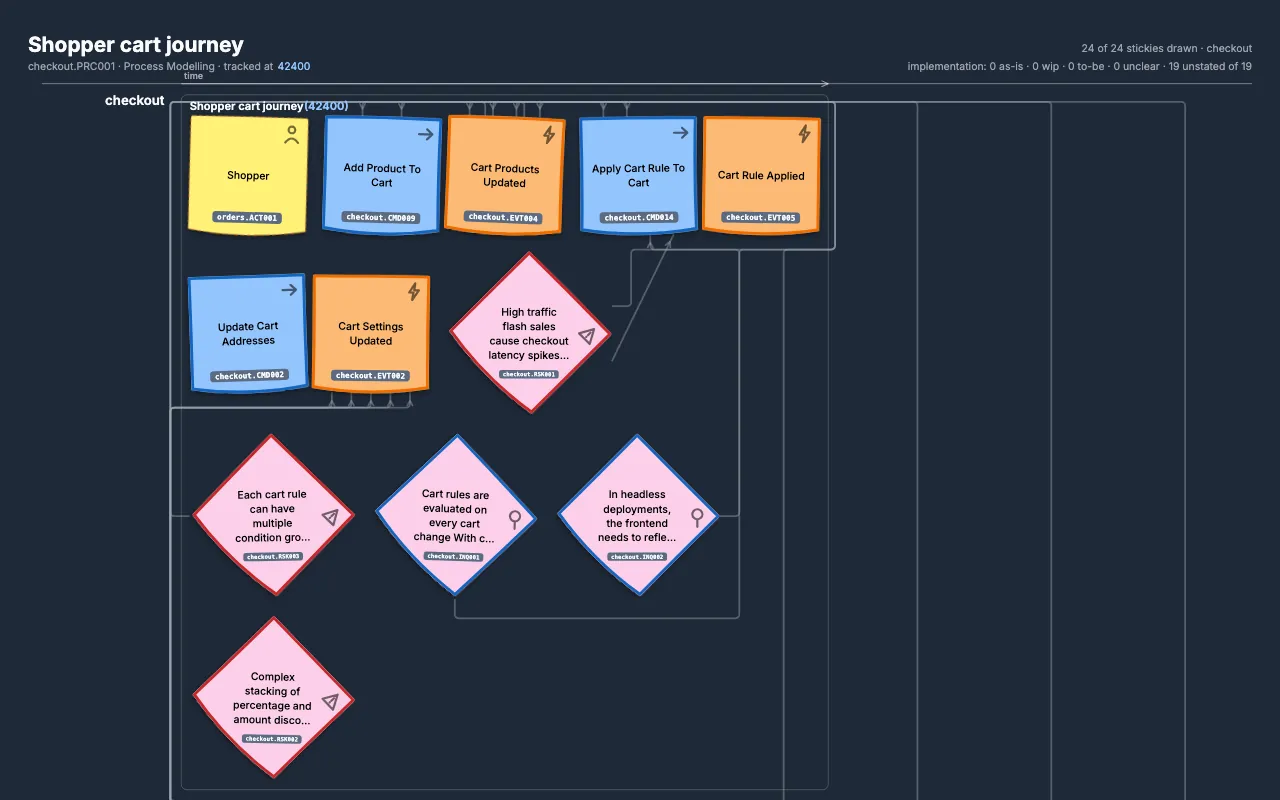
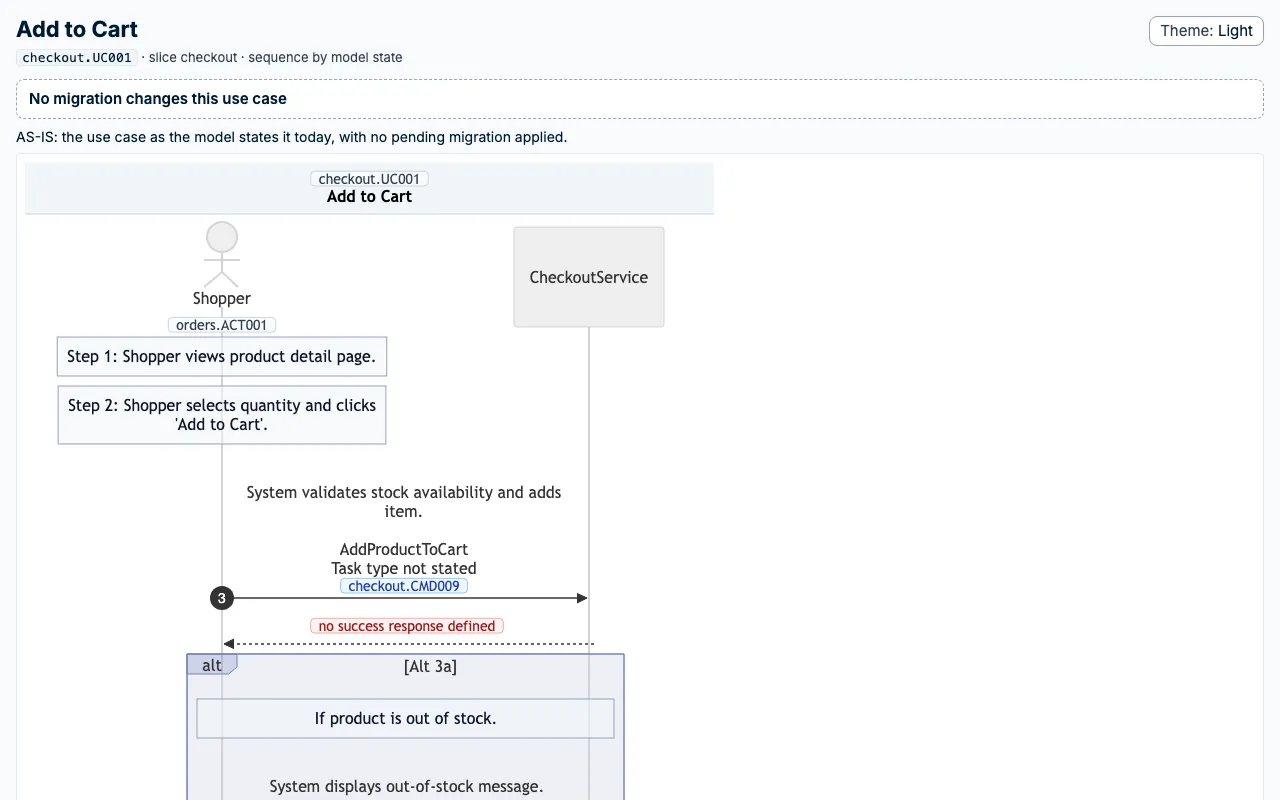
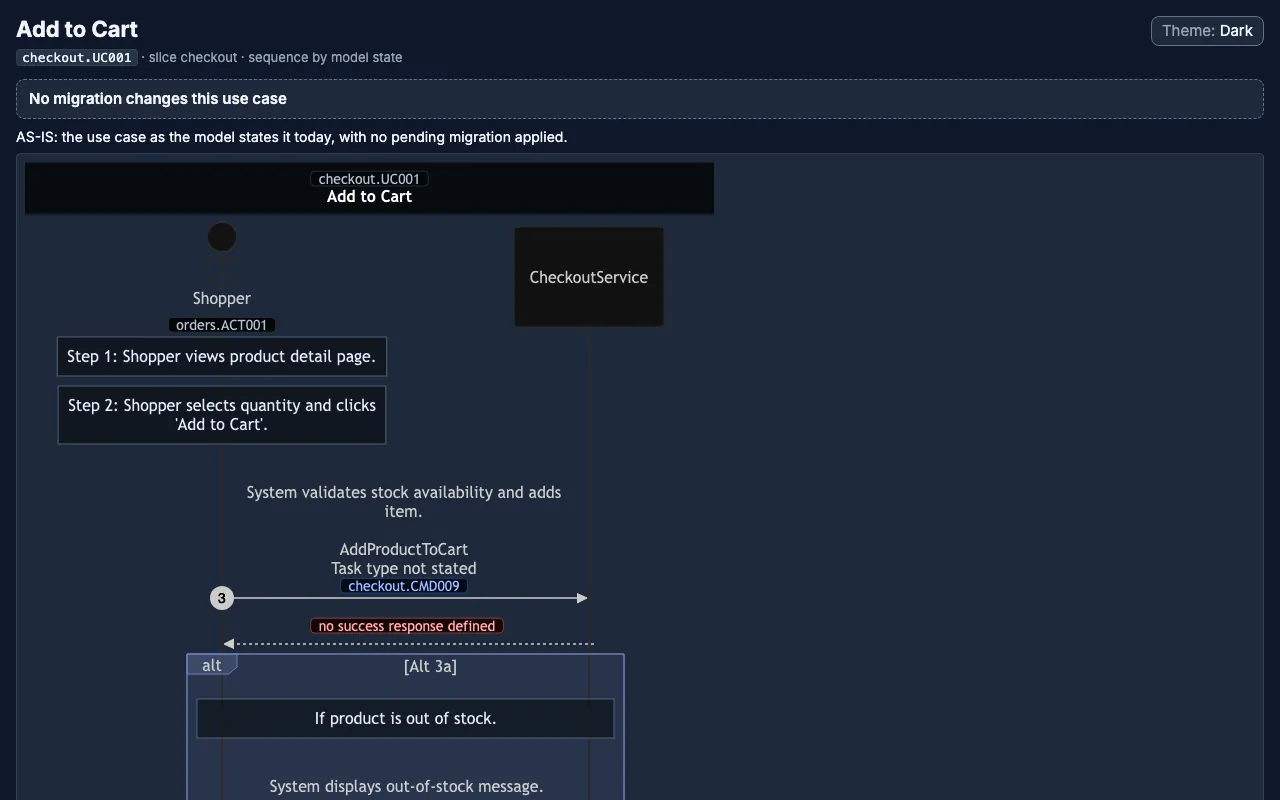
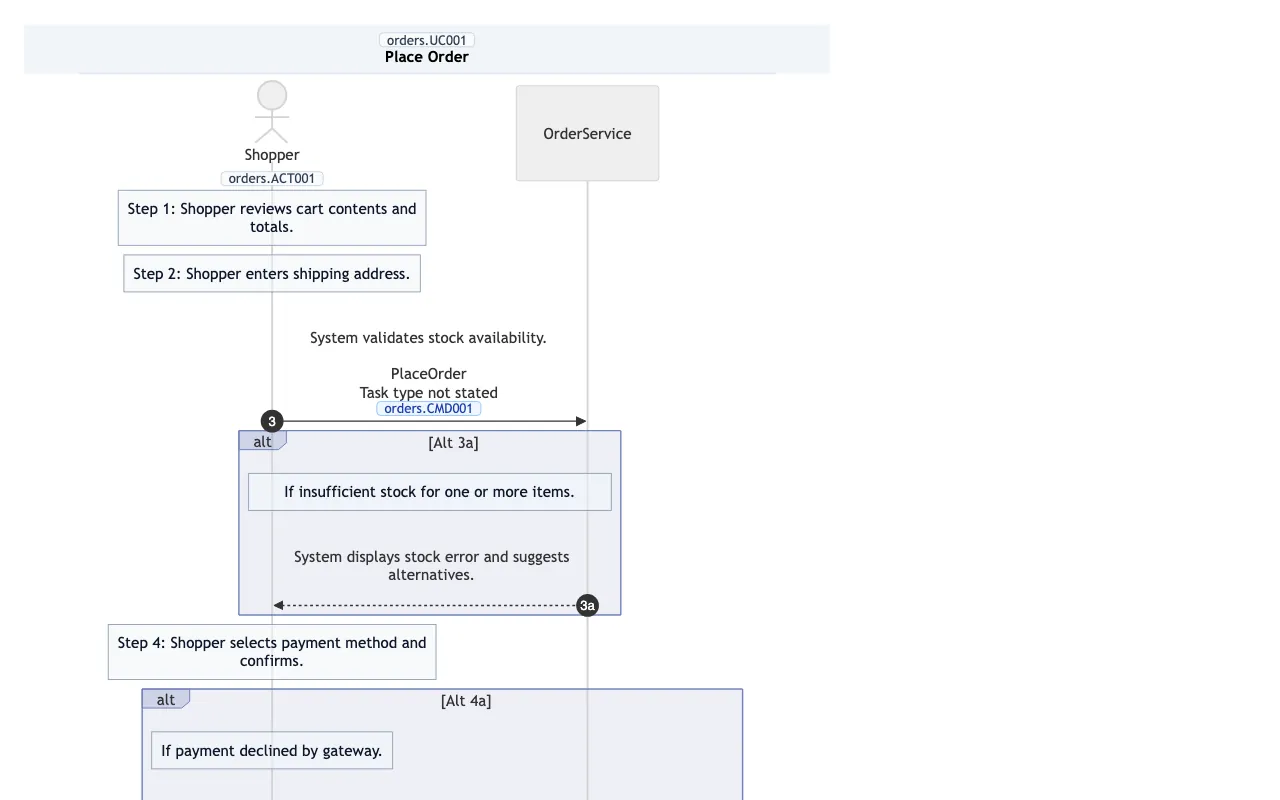
Which question does it answer? Converts generated Mermaid sources into SVG: sequence diagrams of process stories and use cases, flowcharts of process stories, C4 context and C4 container diagrams.
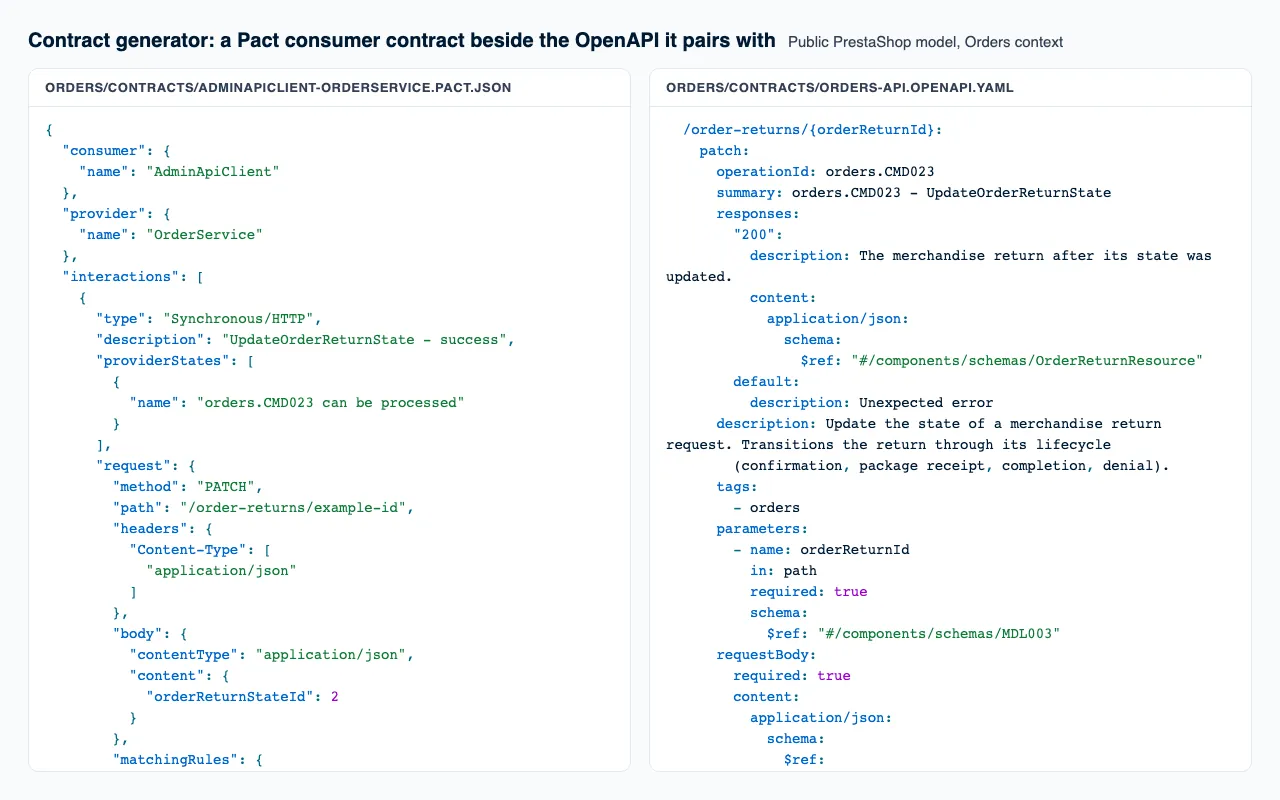
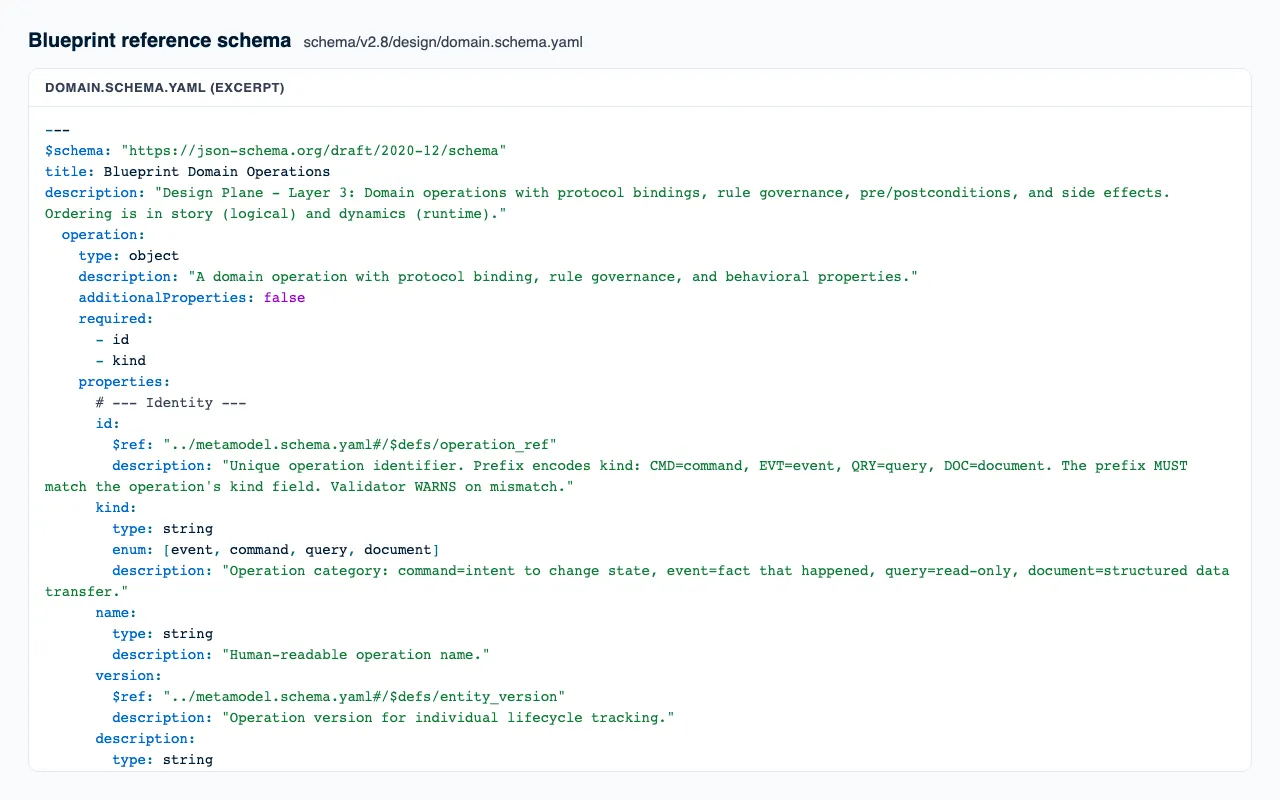
An Archally contract models what a service exposes and consumes in the blueprint. The contract generator emits external syntaxes: OpenAPI, AsyncAPI, Arazzo, OpenRPC and Pact, including Pact consumer contract tests.
Available now. Access and delivery agreed for the selected scope.
Contract generator
Which question does it answer? Which external contract files can I generate from modeled service interfaces?
For: API developers sharing service interfaces with consumers.
Use when: Handing off interfaces or refreshing integration descriptions.
Bring -> get: Blueprint model -> OpenAPI, AsyncAPI, Arazzo, OpenRPC and Pact files.
Pact consumer contract tests describe interactions expected by a calling application. Align the generated Pact with the consumer; the provider still verifies the contract.
Viewers
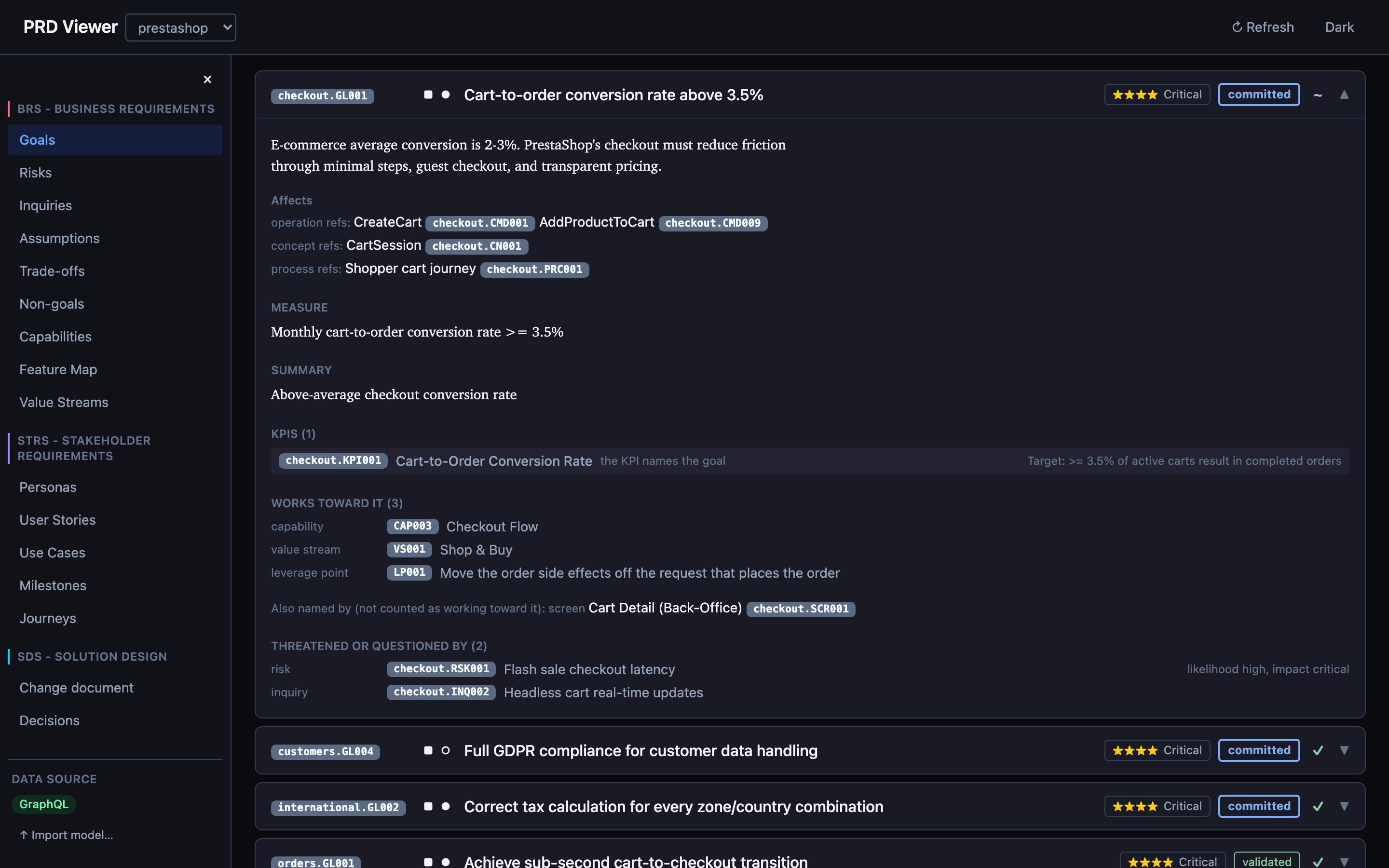
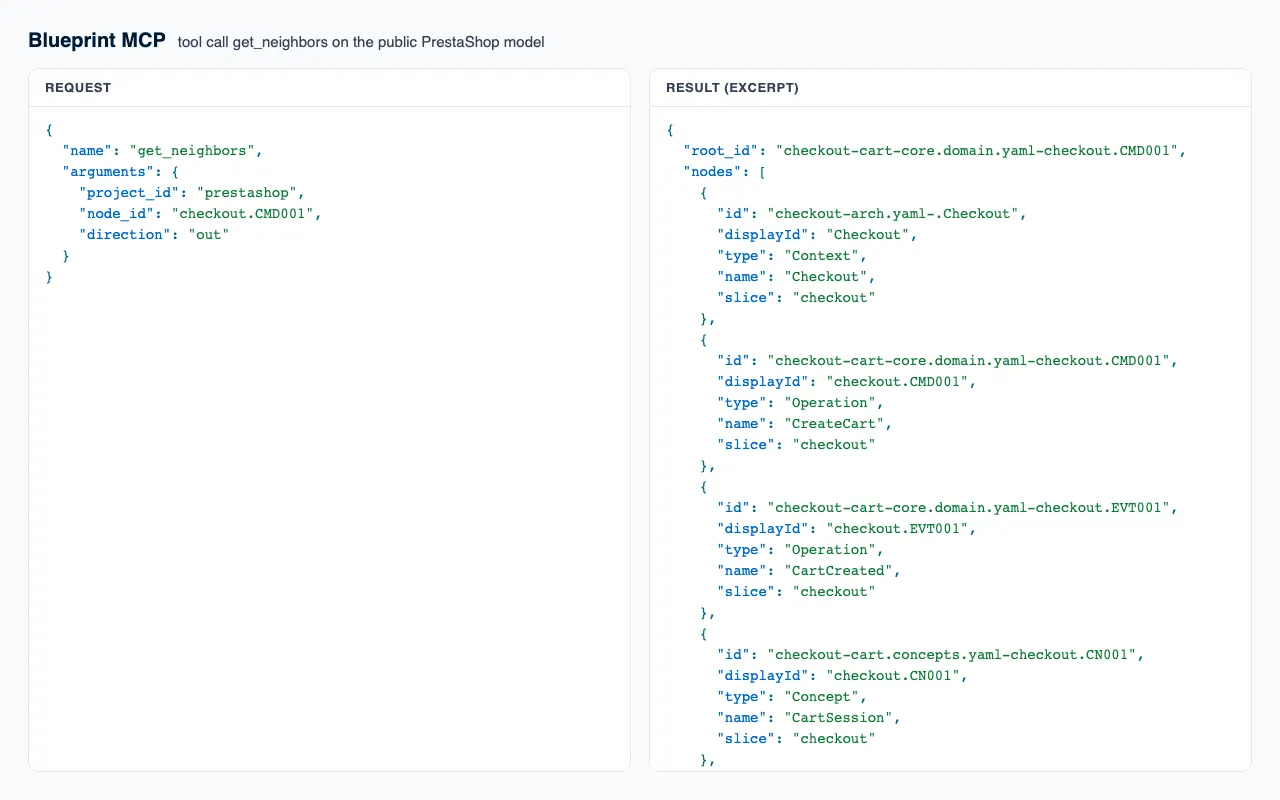
Explore a Blueprint model interactively. Connected viewers can use the GraphQL server; standalone builds use exported model snapshots.
Available now. Access and delivery agreed for the selected scope.
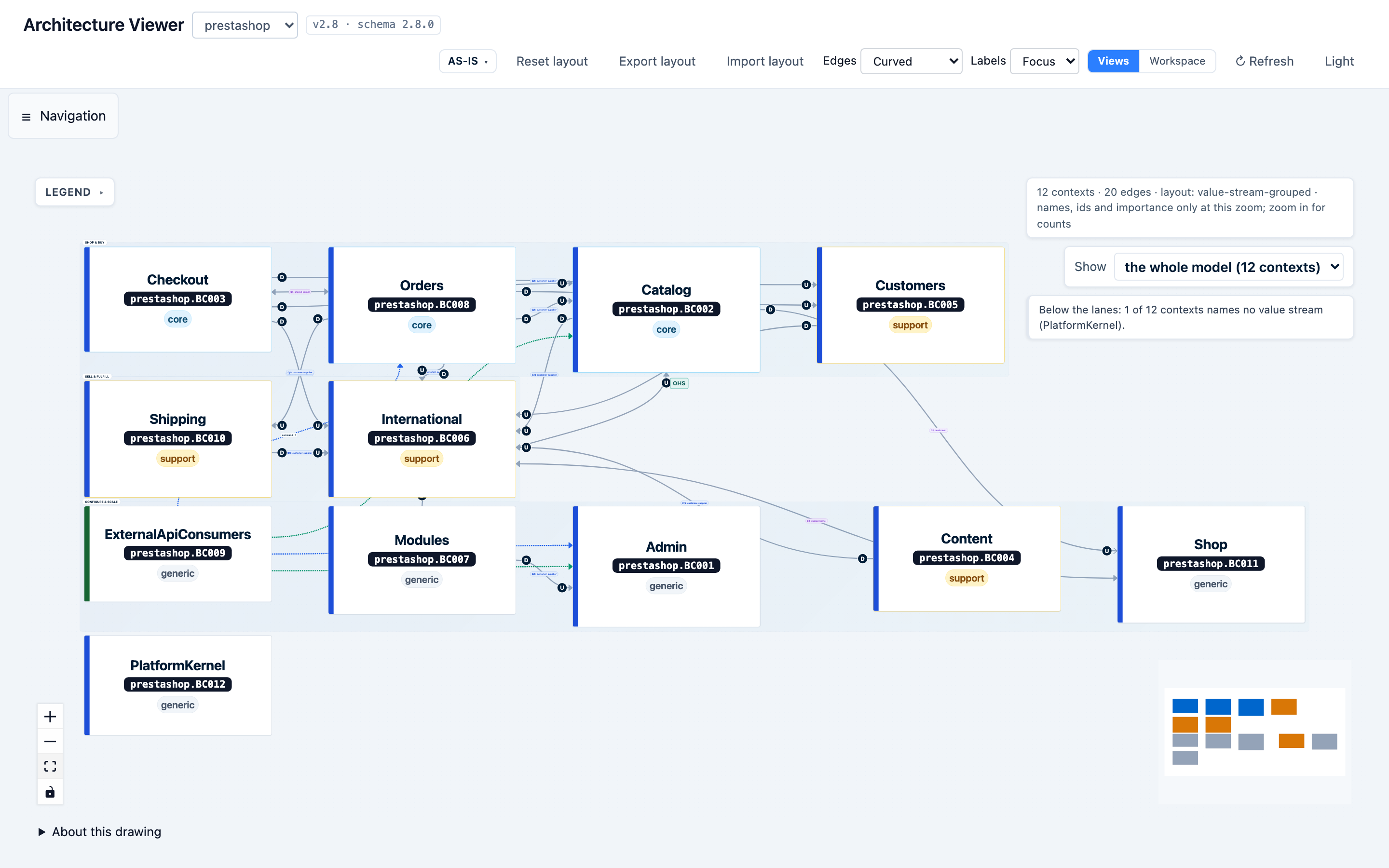
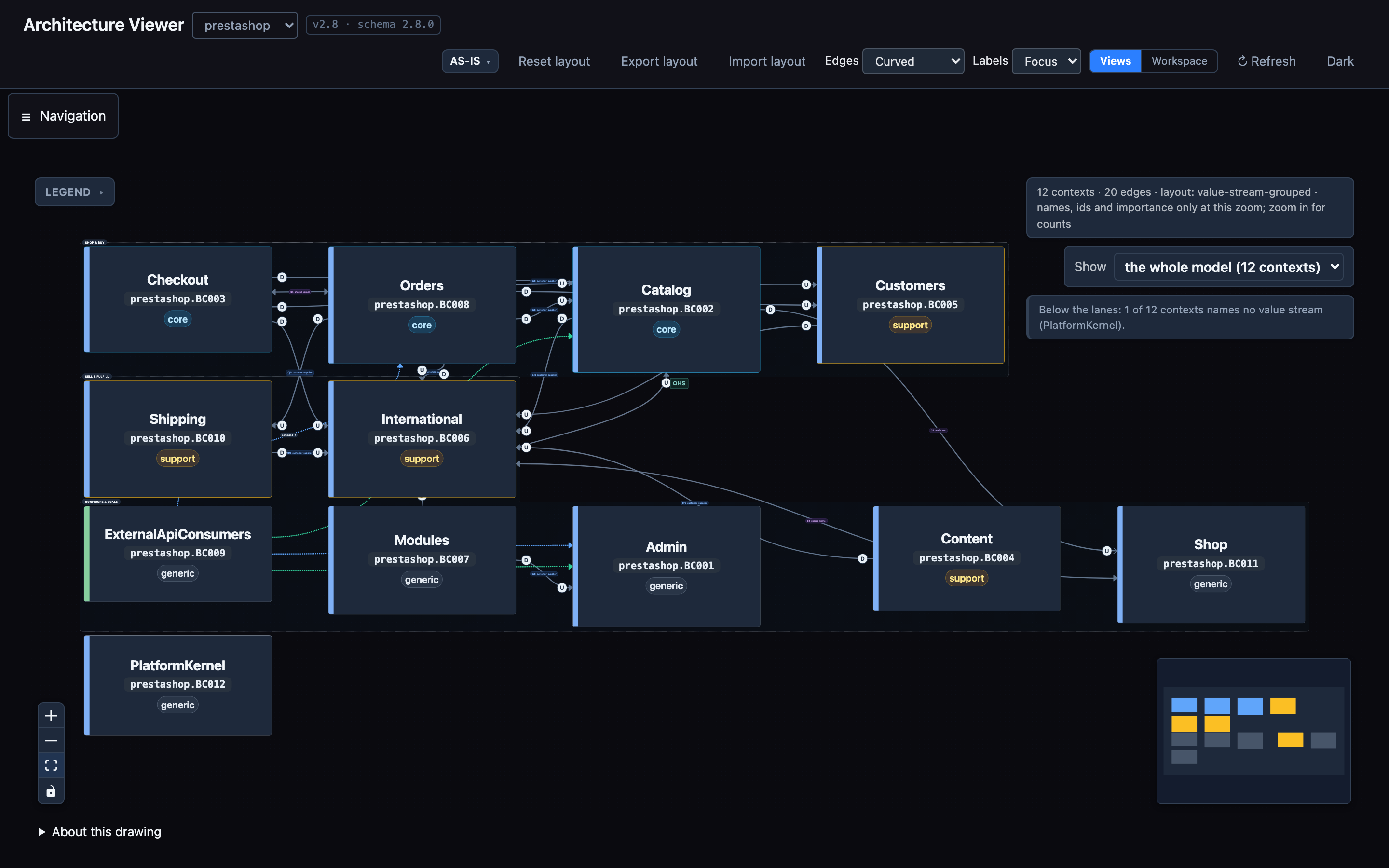
Architecture viewer
Which question does it answer? Explore bounded contexts, service integrations and architecture dependencies.
For: Architects and engineers reviewing service dependencies.
Use when: Explaining integrations during design review or onboarding.
Bring -> get: Blueprint model -> interactive context and service views.
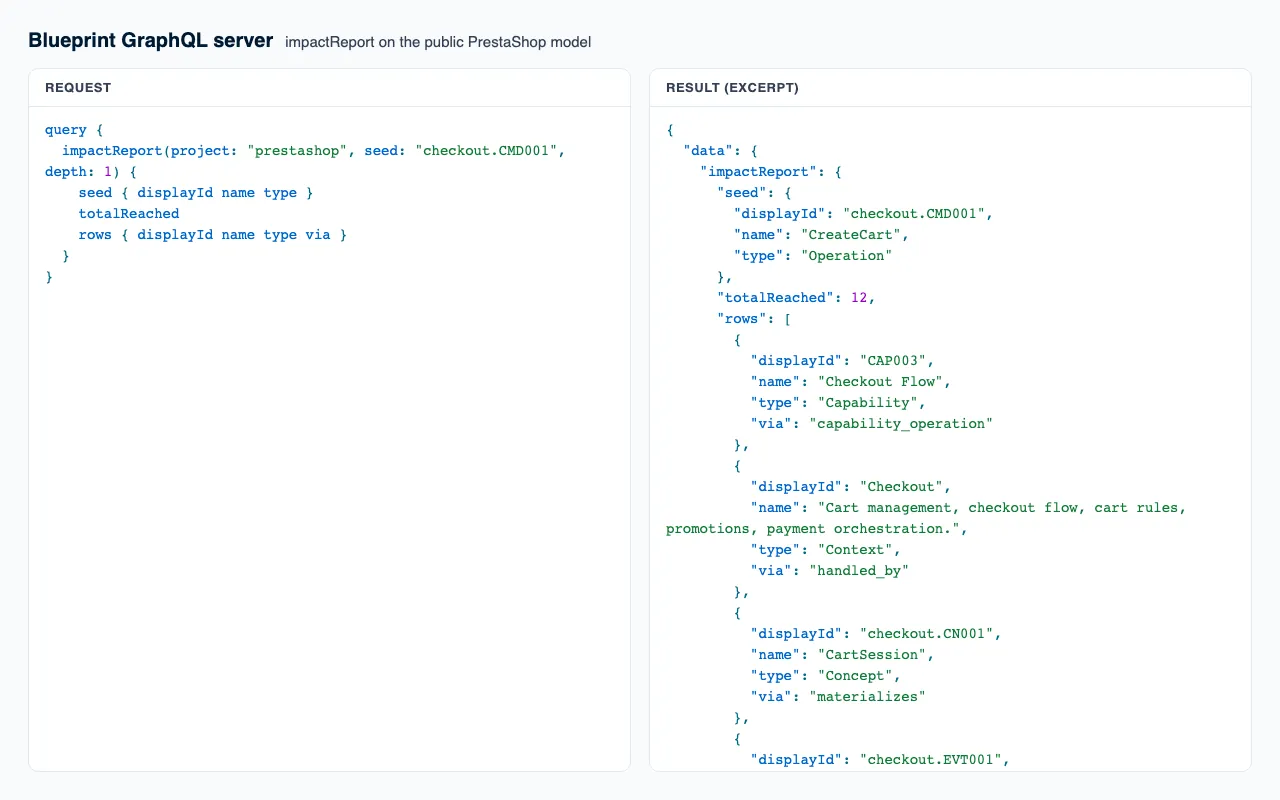
A shared model API for connected Blueprint viewers.
Available now. Access and delivery agreed for the selected scope.
Blueprint GraphQL server
Which question does it answer? Serves model queries to the architecture, graph and PRD viewers in connected mode; exported snapshots support standalone viewing.
For: Viewer developers connecting model queries to views.
Use when: Supplying a connected viewer with model data.
Bring -> get: Blueprint model and GraphQL query -> structured model results.
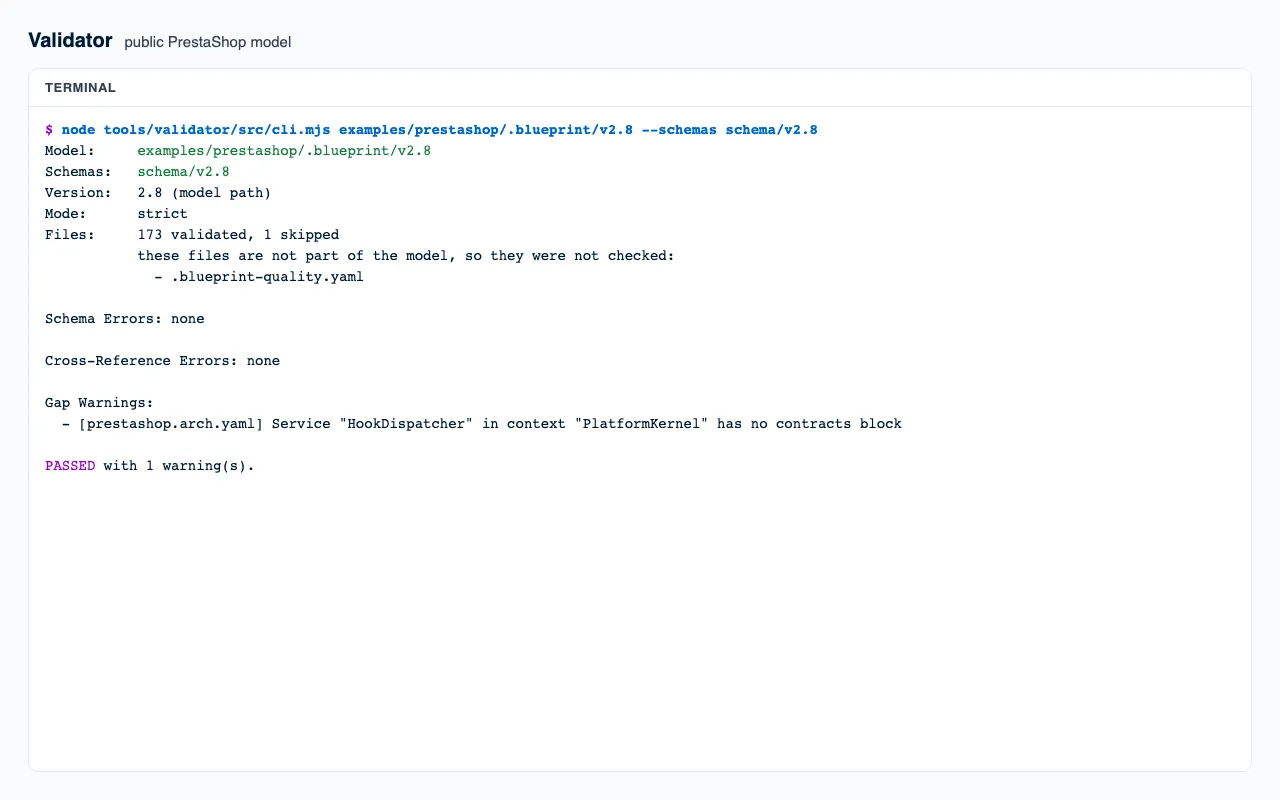
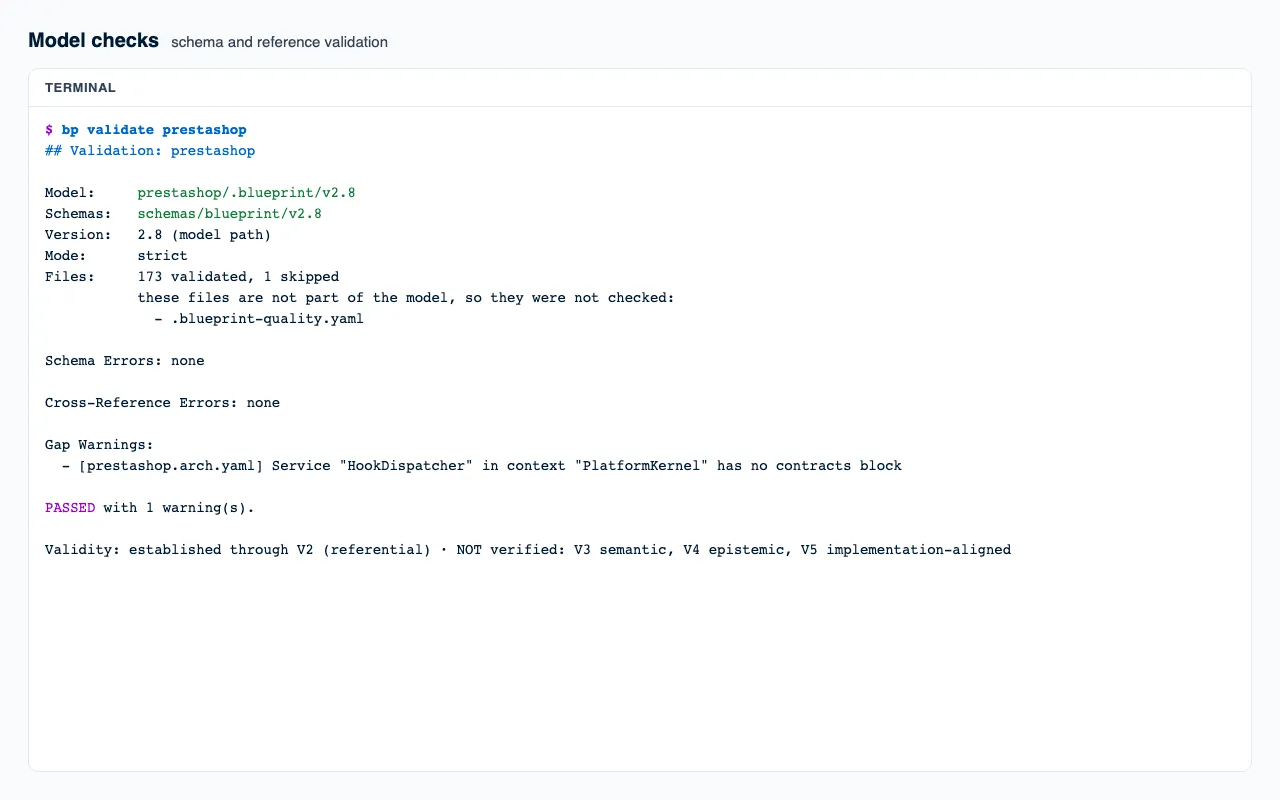
The validator checks schema conformance and cross-file references, with gap warnings.
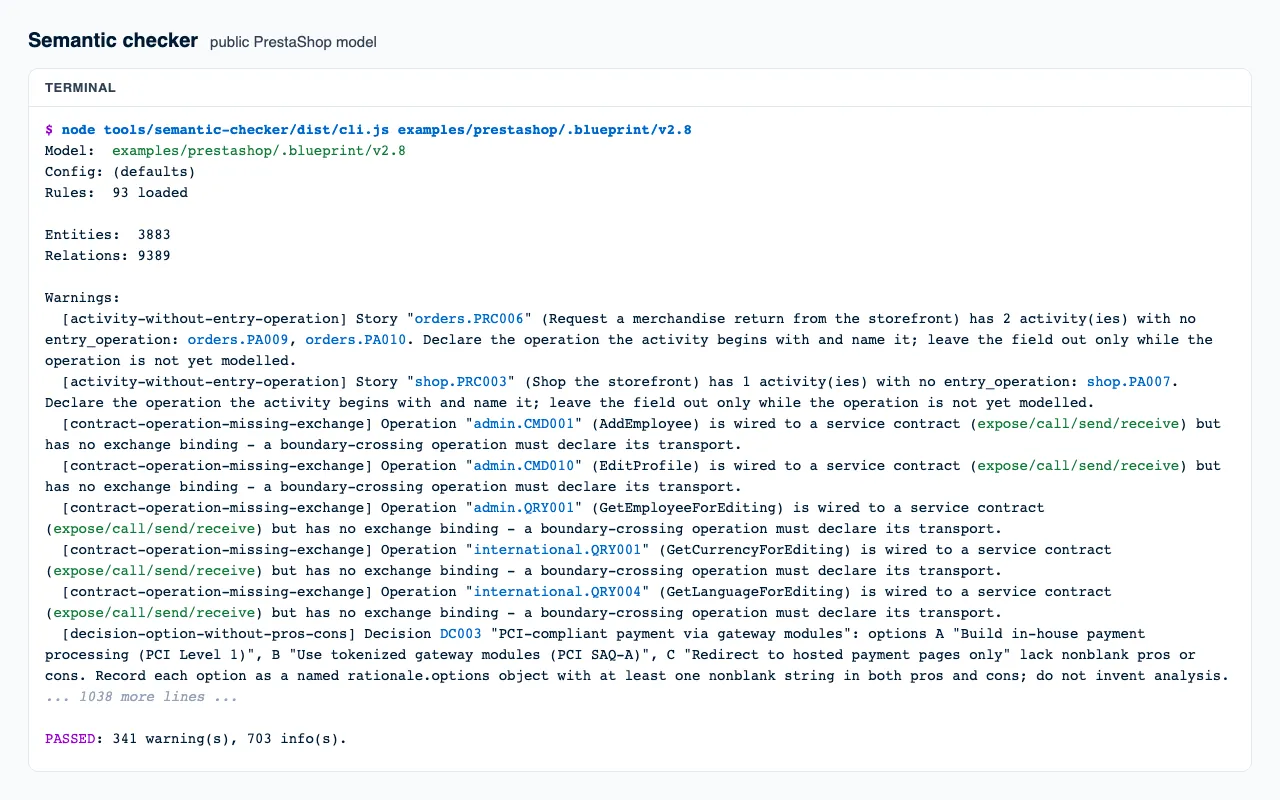
The semantic checker checks relationships for modeling issues beyond schema validity, such as orphan entities, missing causal links and untested rules.
Both report on the model; neither proves the running system correct.
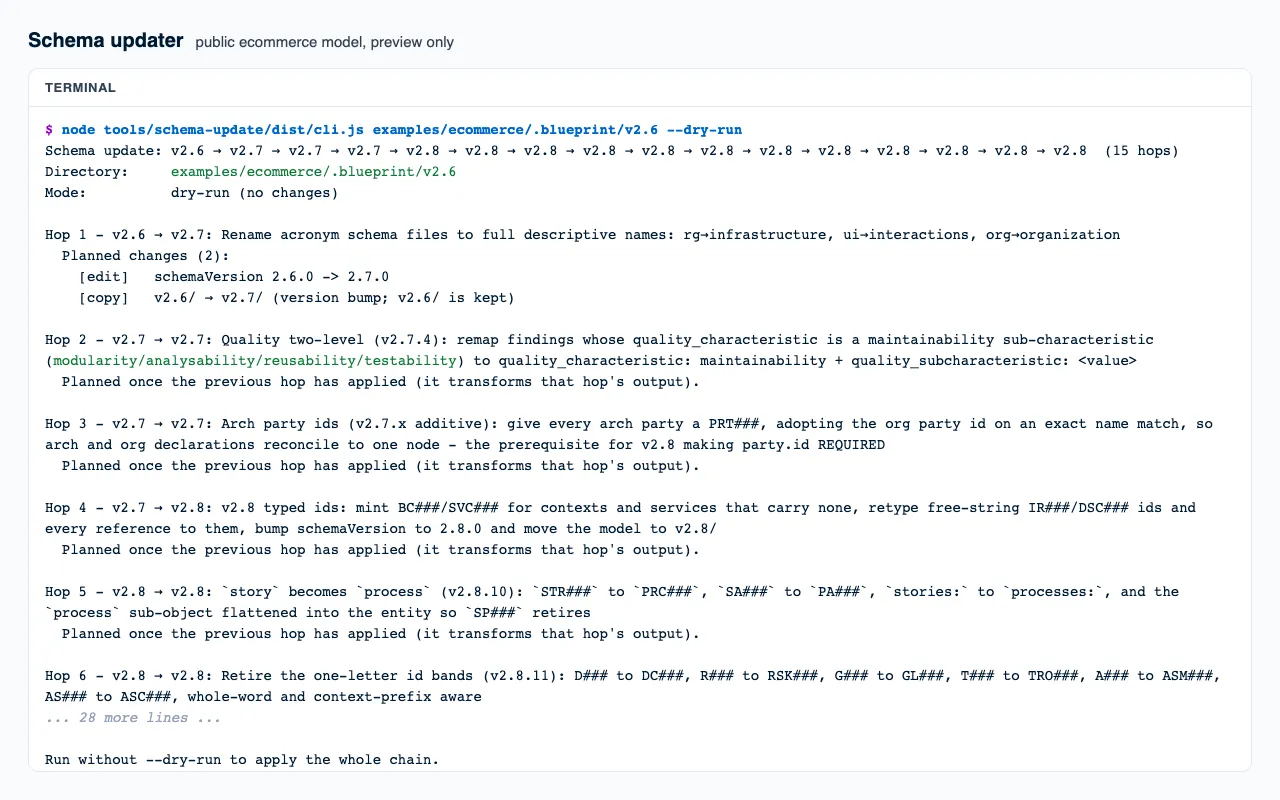
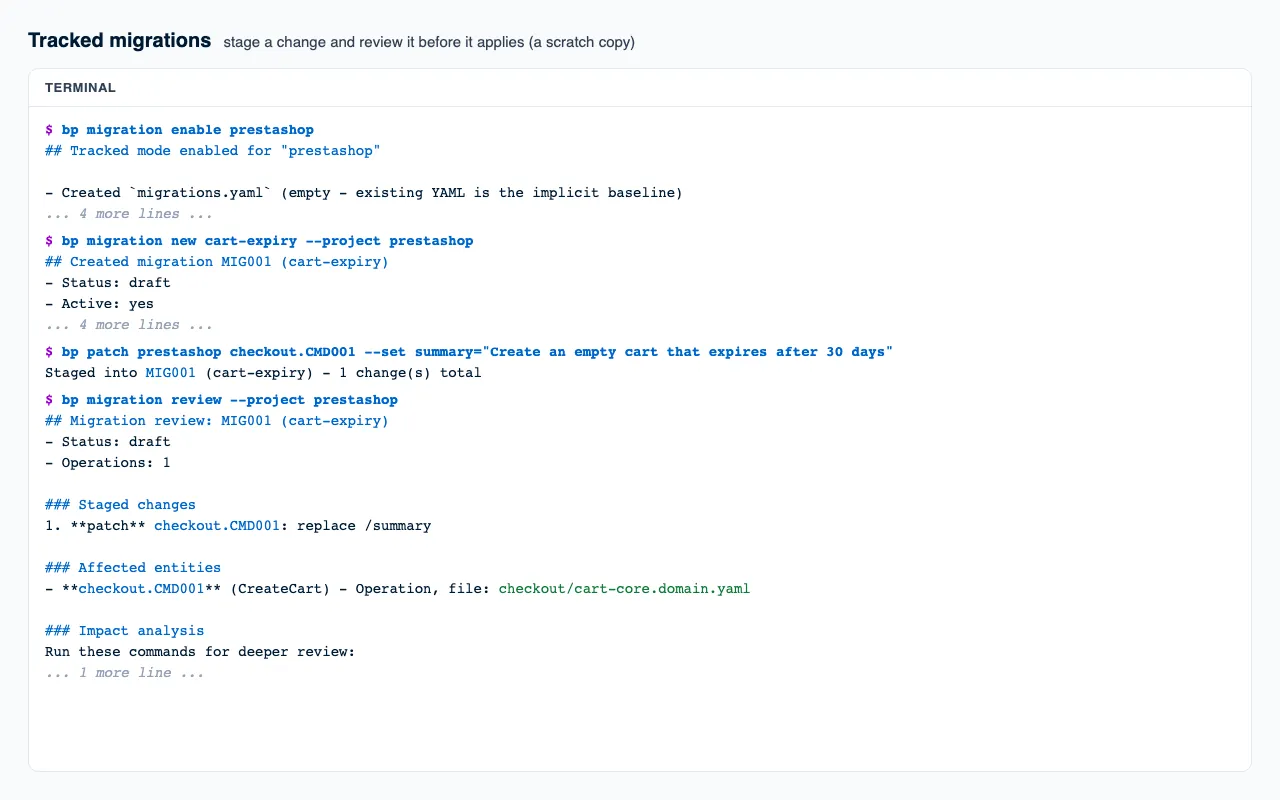
The schema updater previews and applies supported version migrations. It retains source version directories when creating the next version and reports items requiring manual work. Preview first and validate afterward.
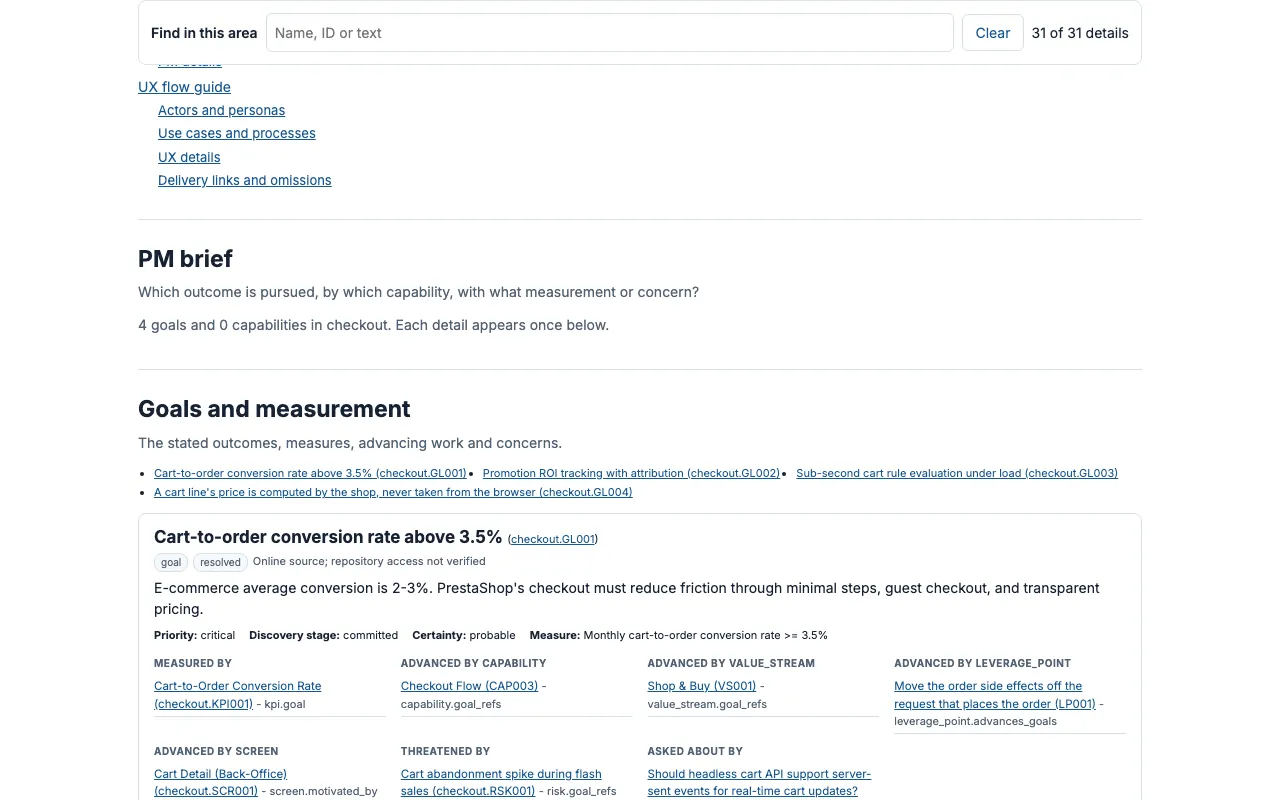
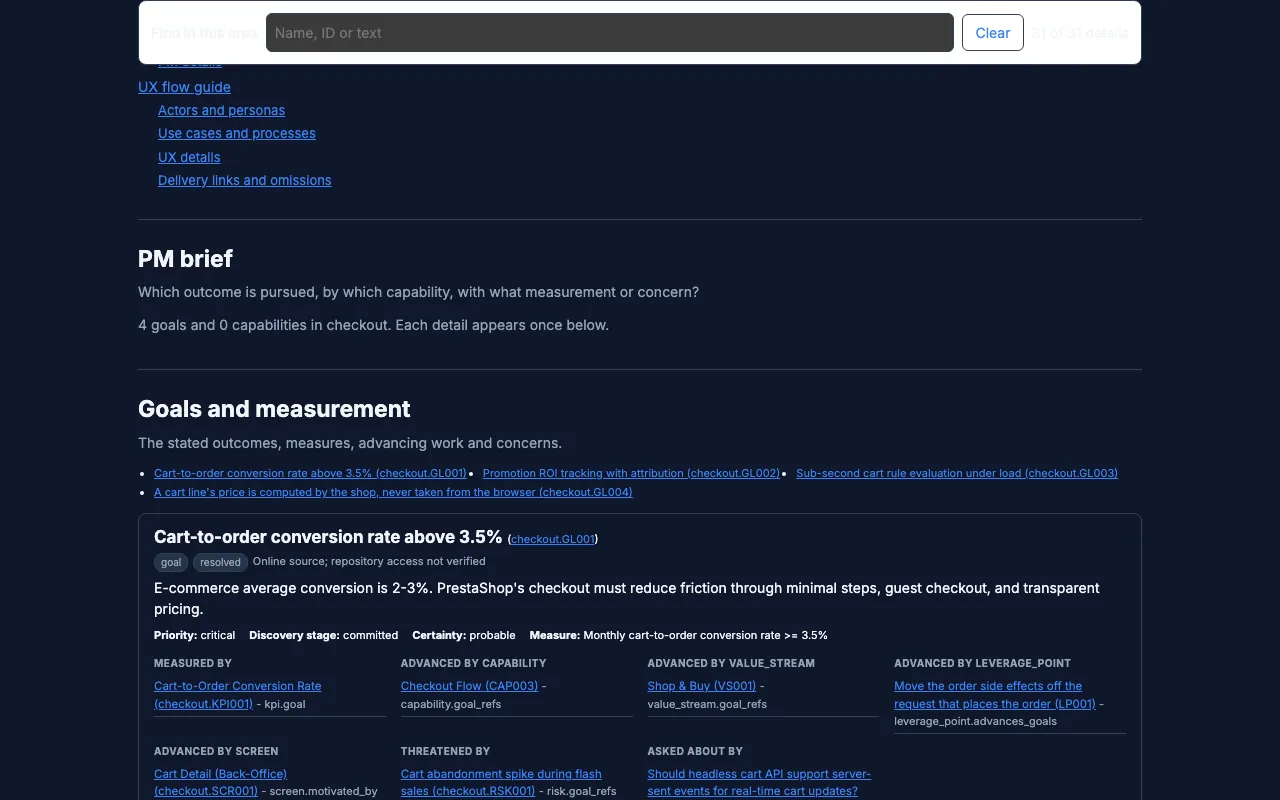
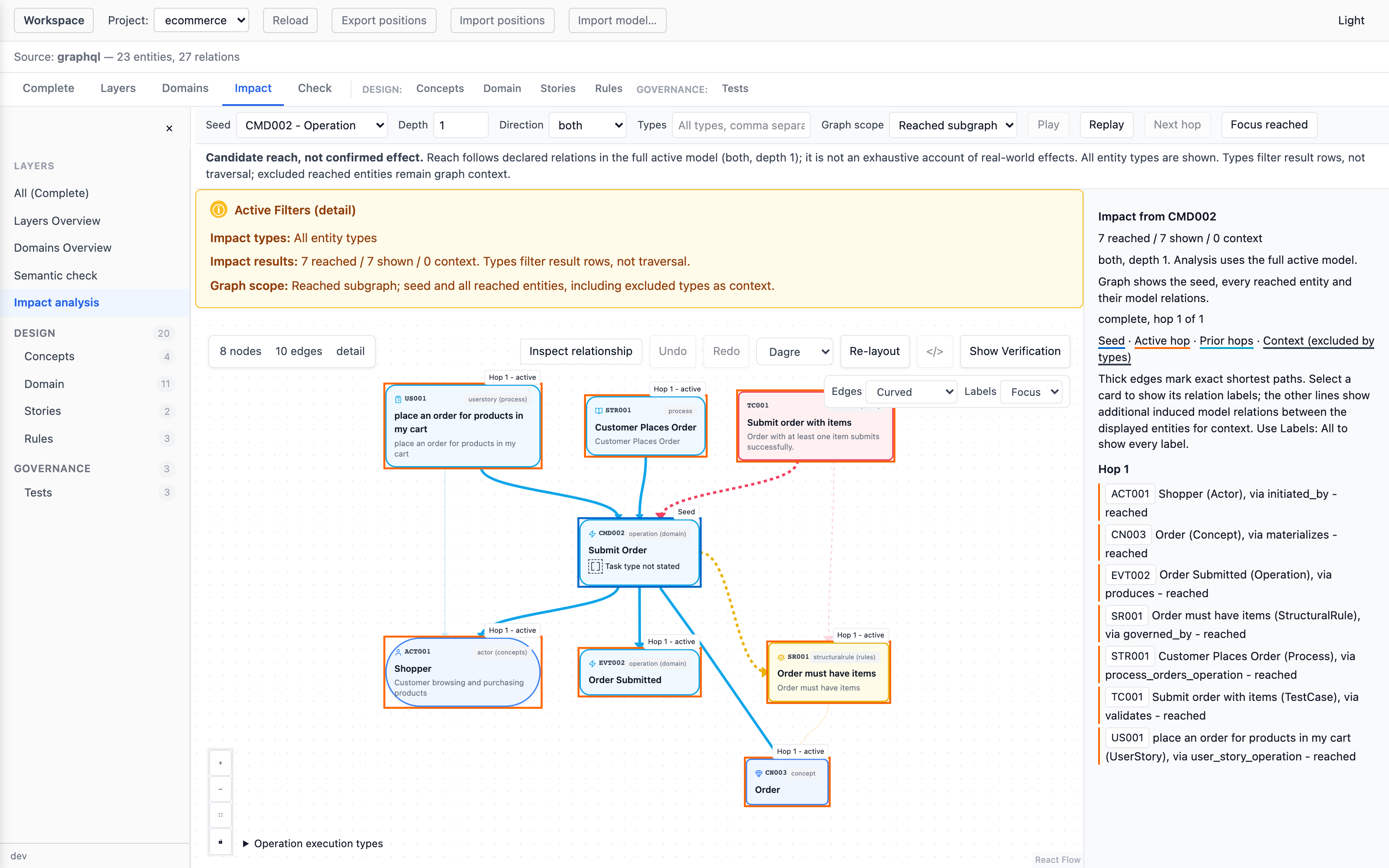
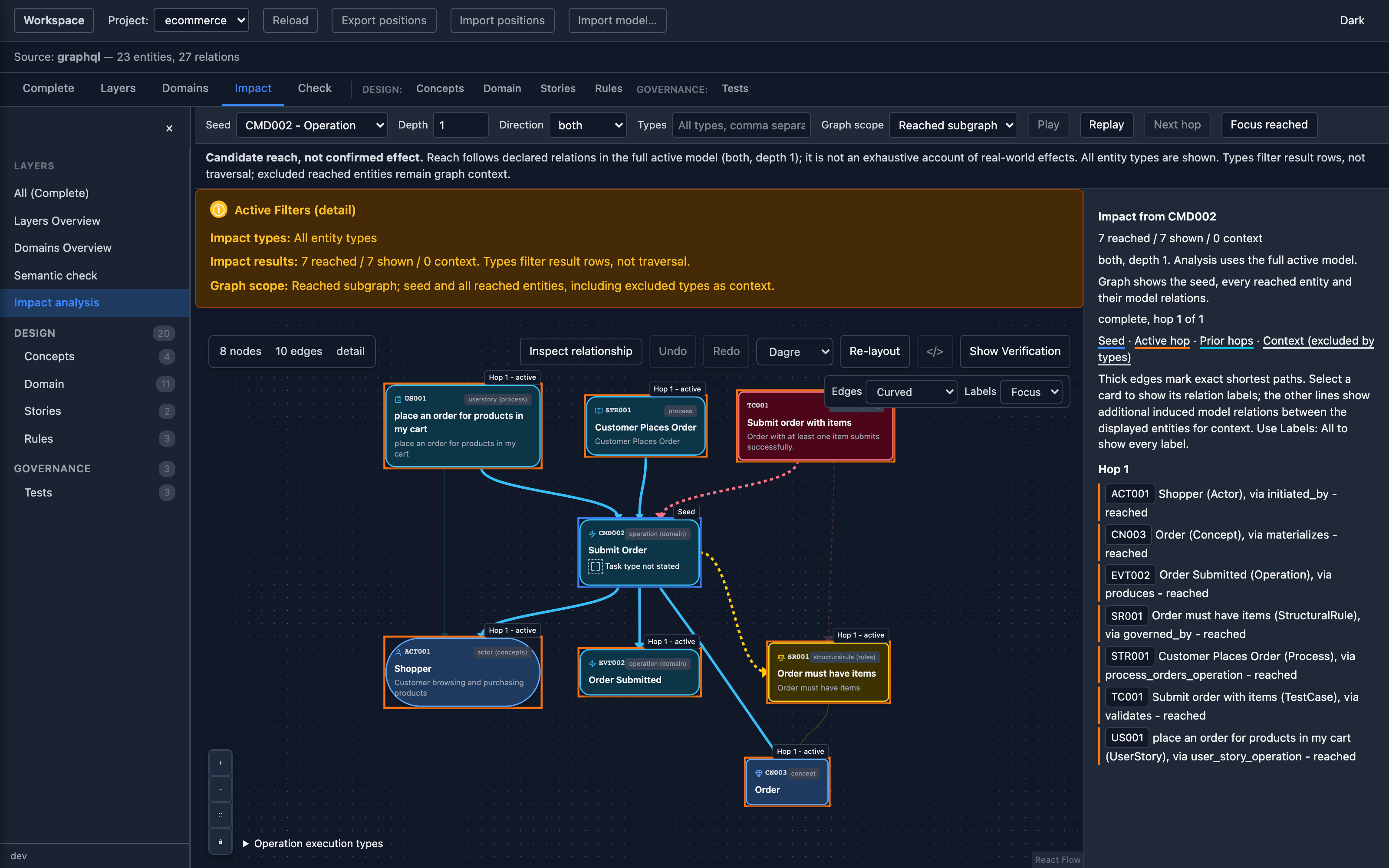
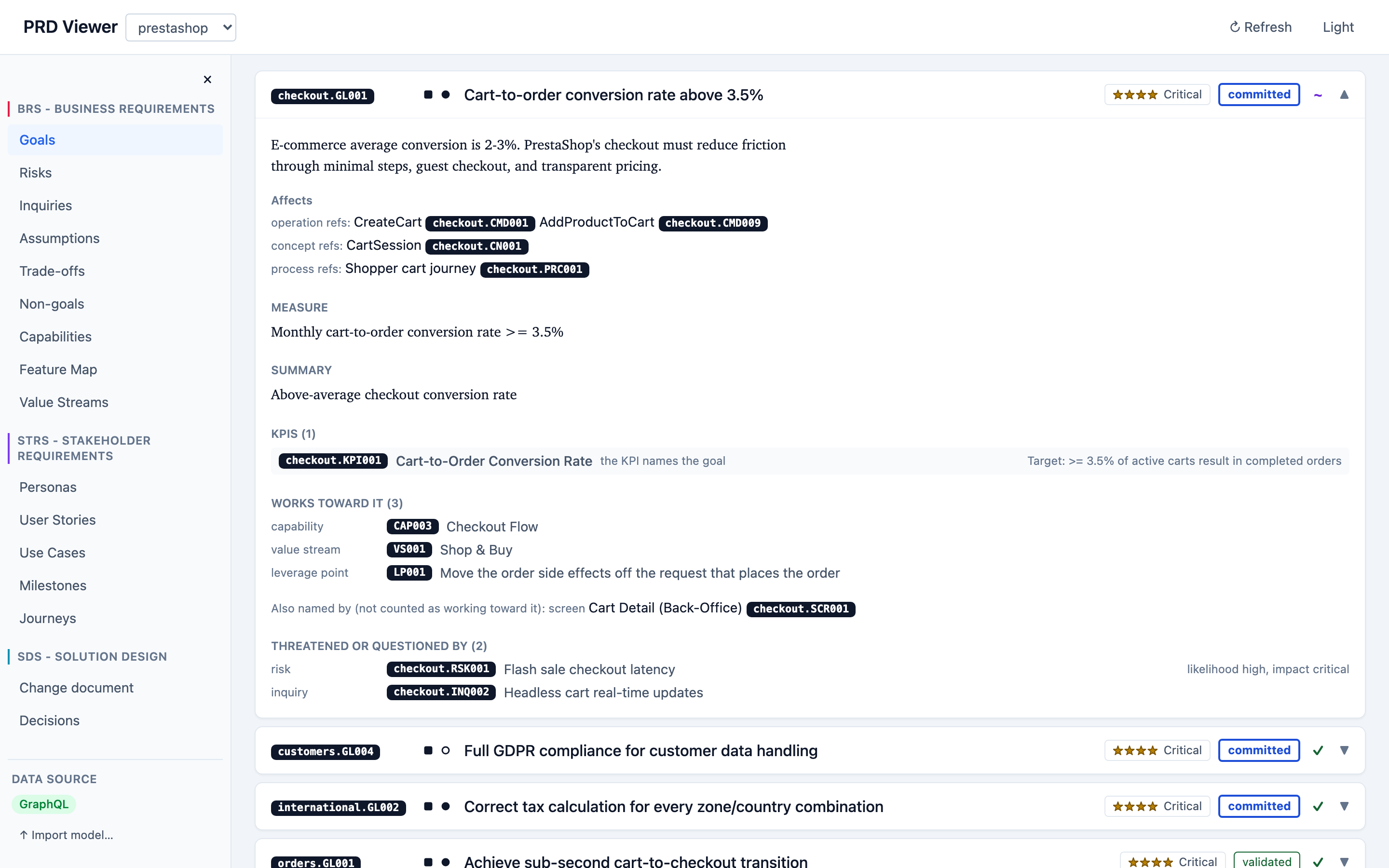
Each viewer shows the current state of the model and, within its recorded scope, the state of the system's context. Review that model against code, tests and runtime evidence.
Worked examples from public models
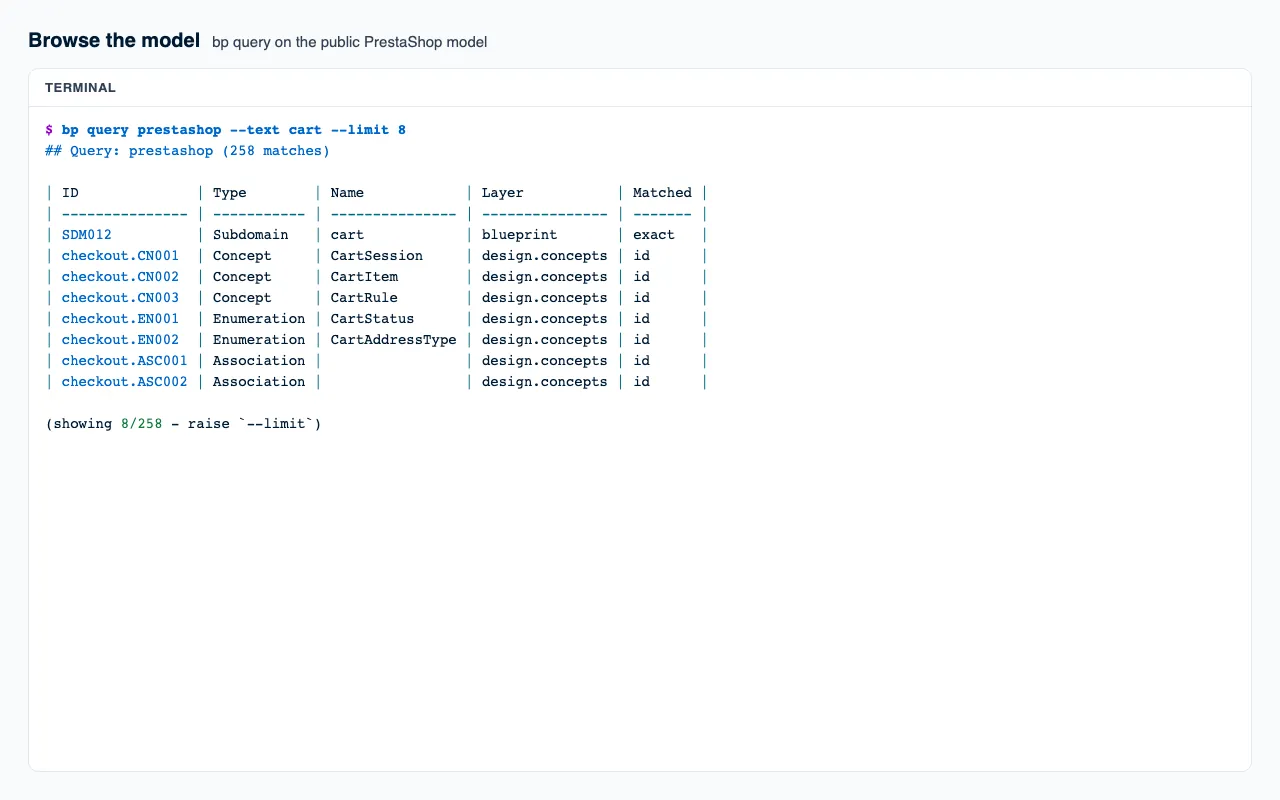
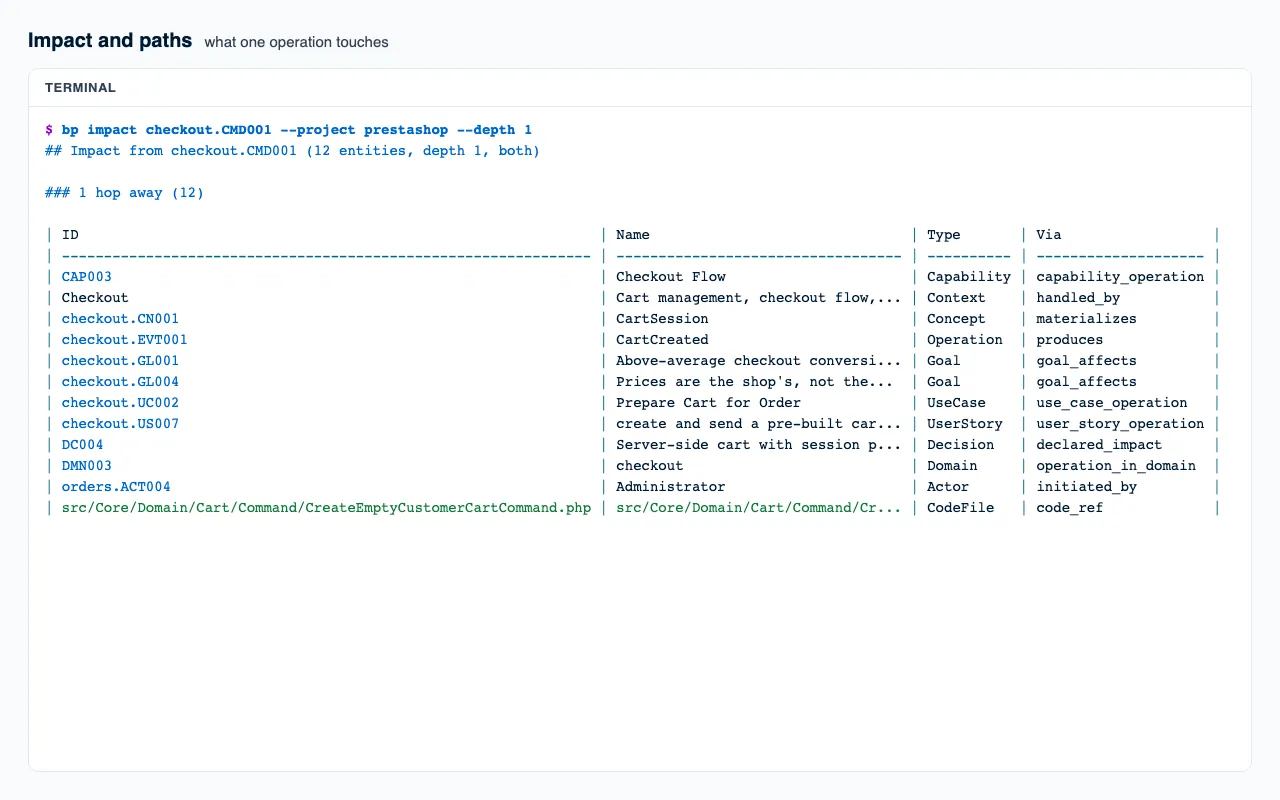
See the question, the exact request and an excerpt of the recorded result.
What order entities and relationships does this model record?
This Blueprint MCP answer reports the order relationships recorded in the ecommerce model.
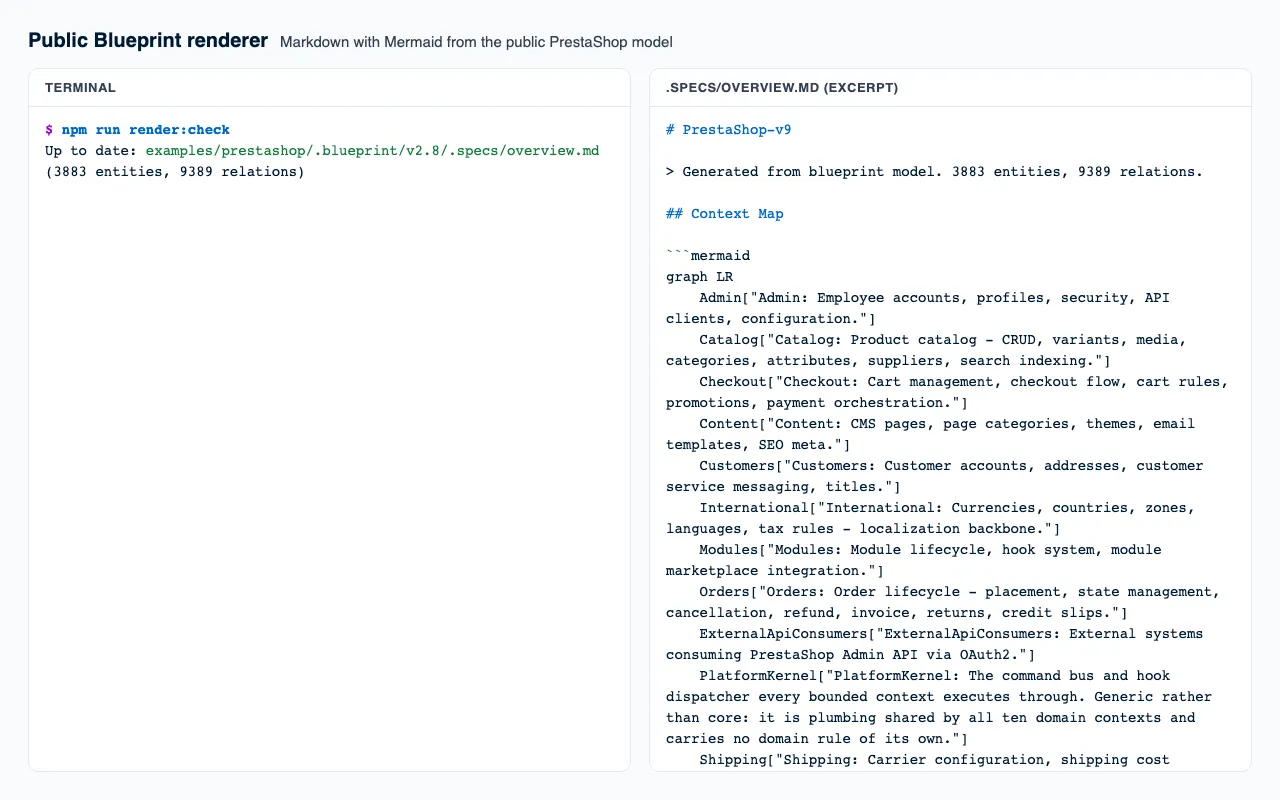
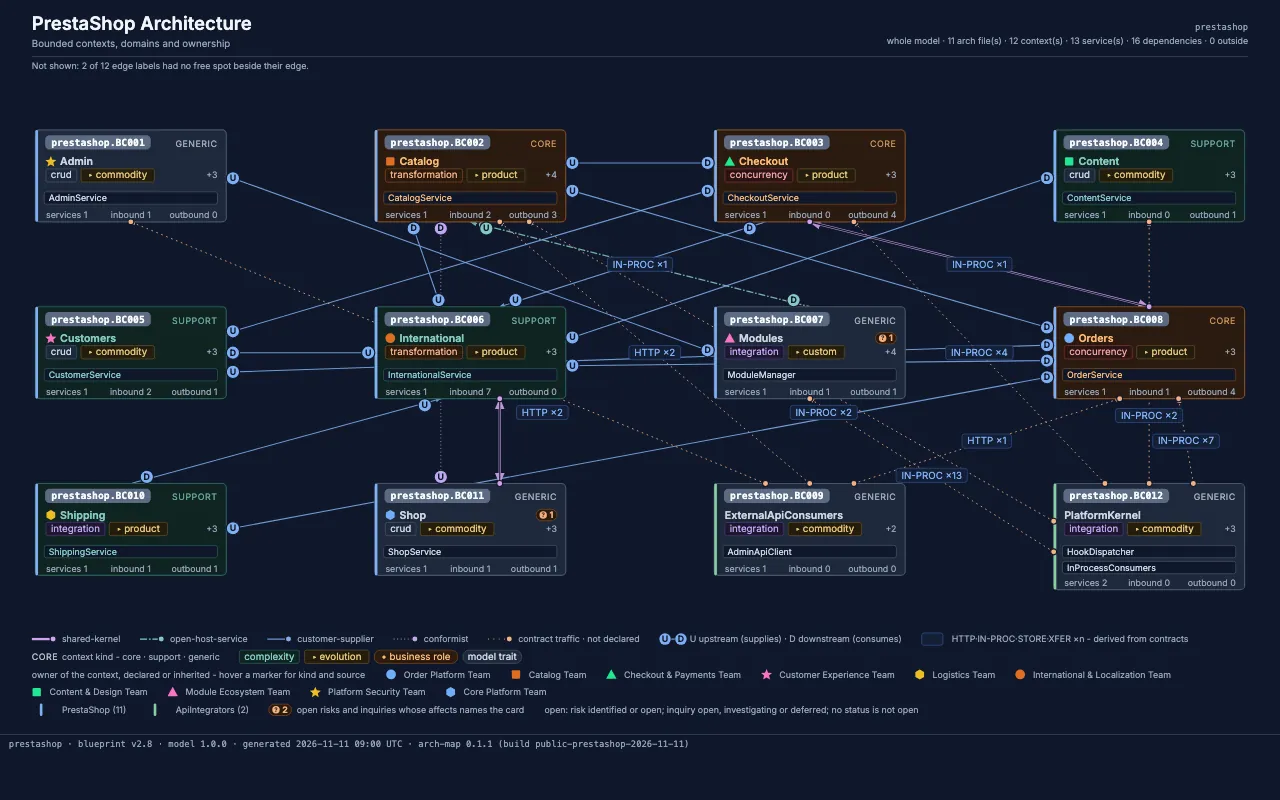
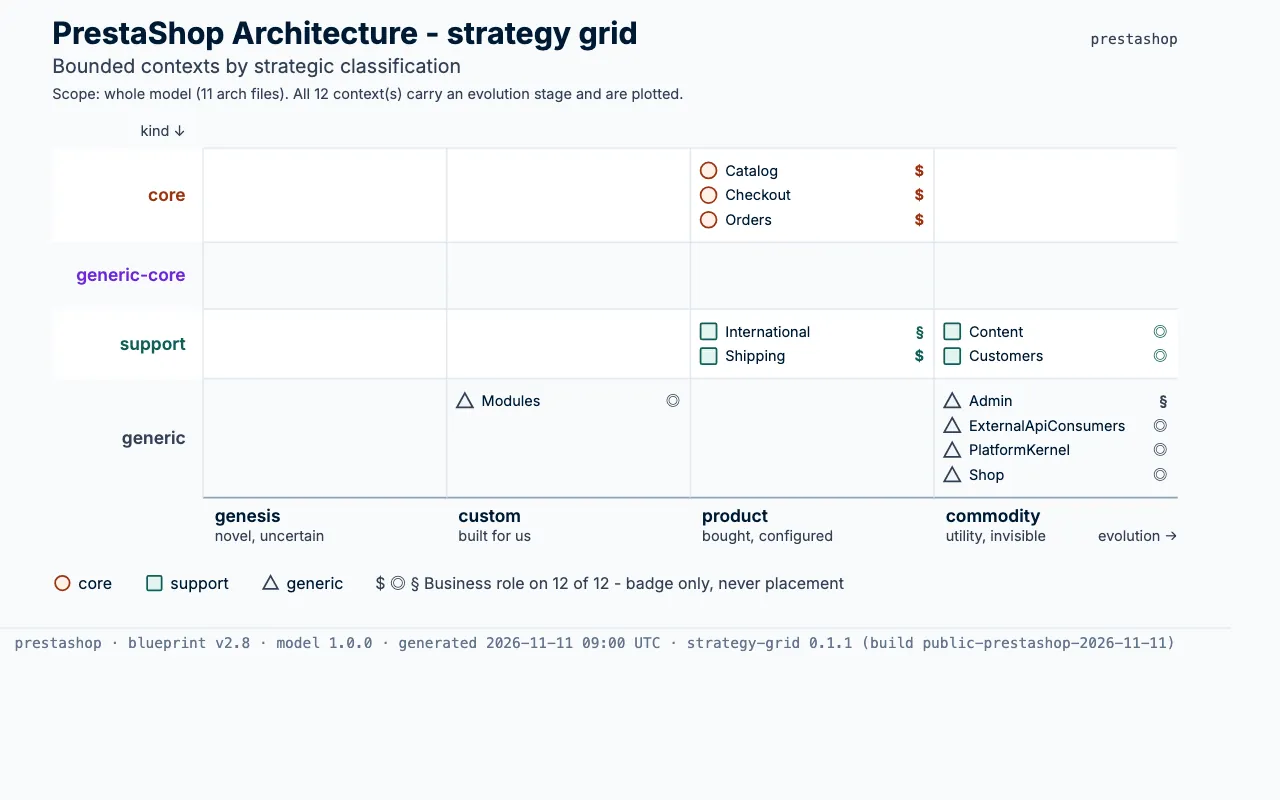
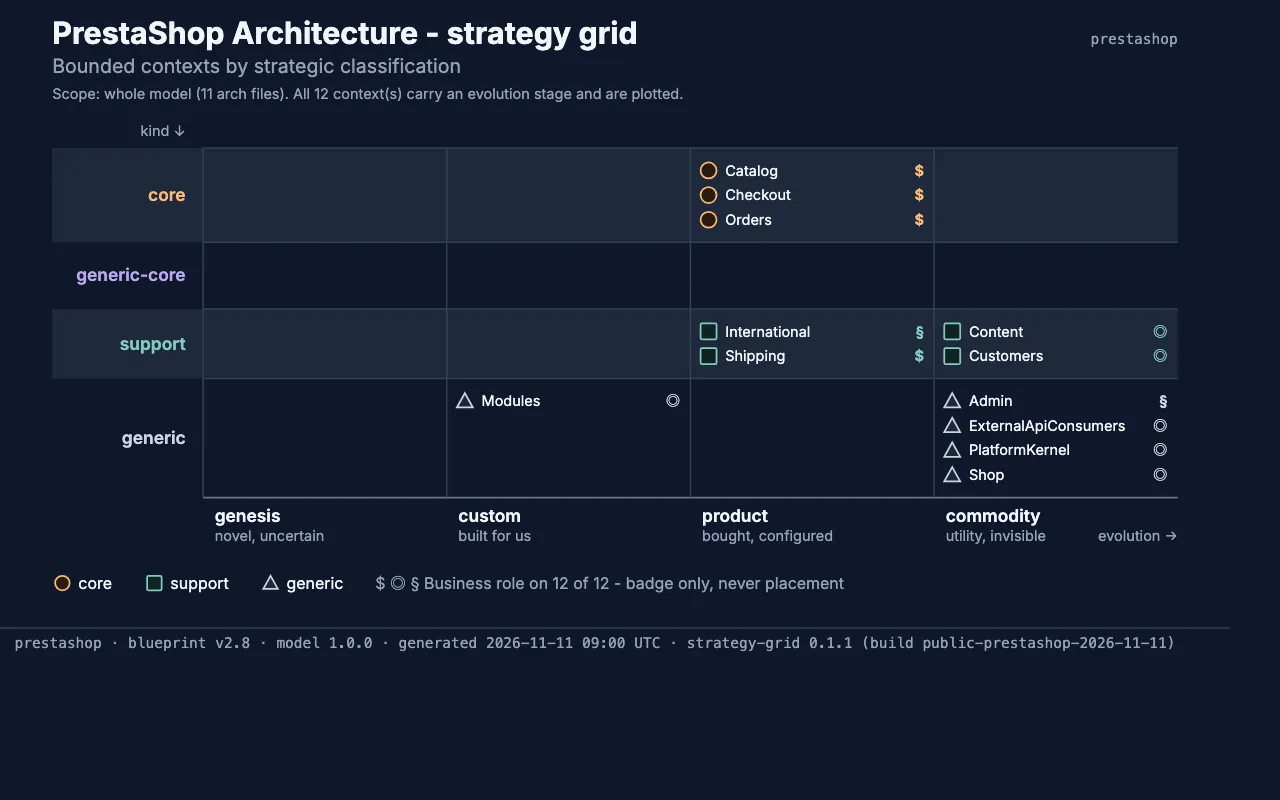
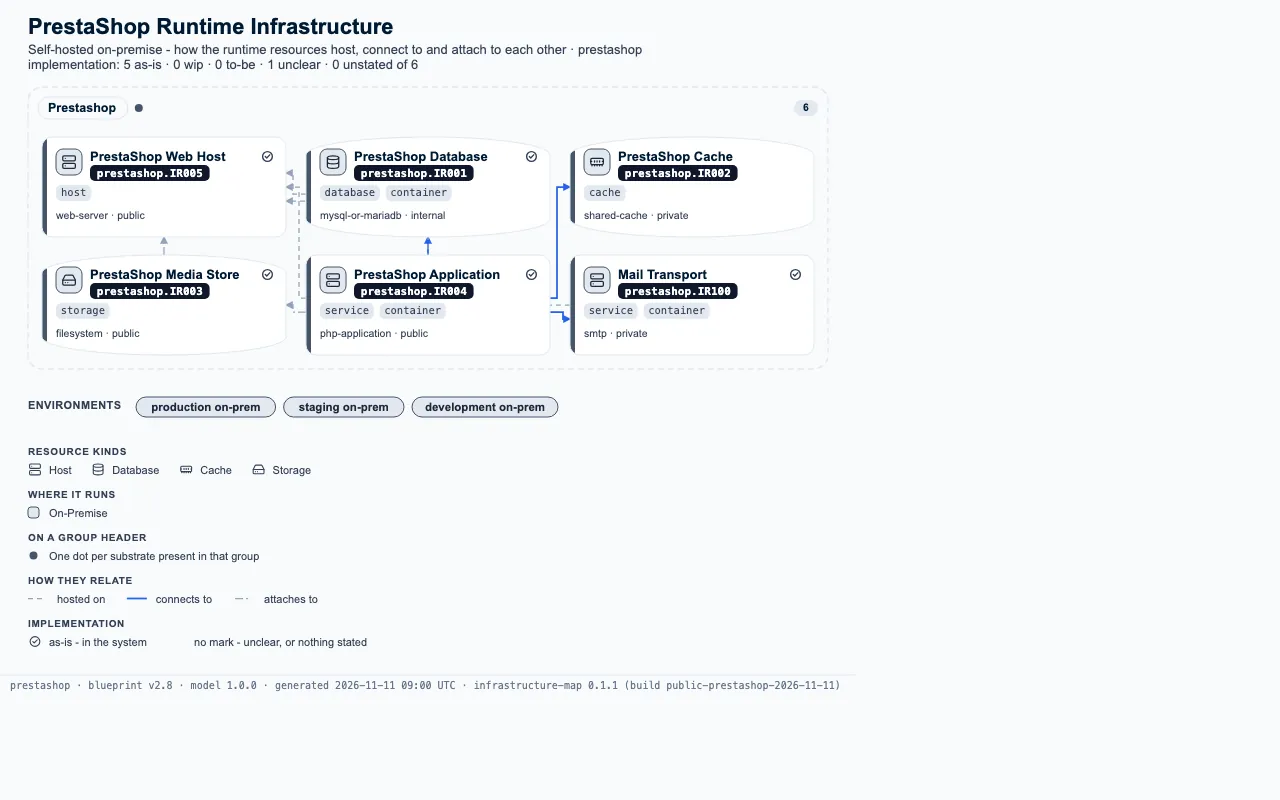
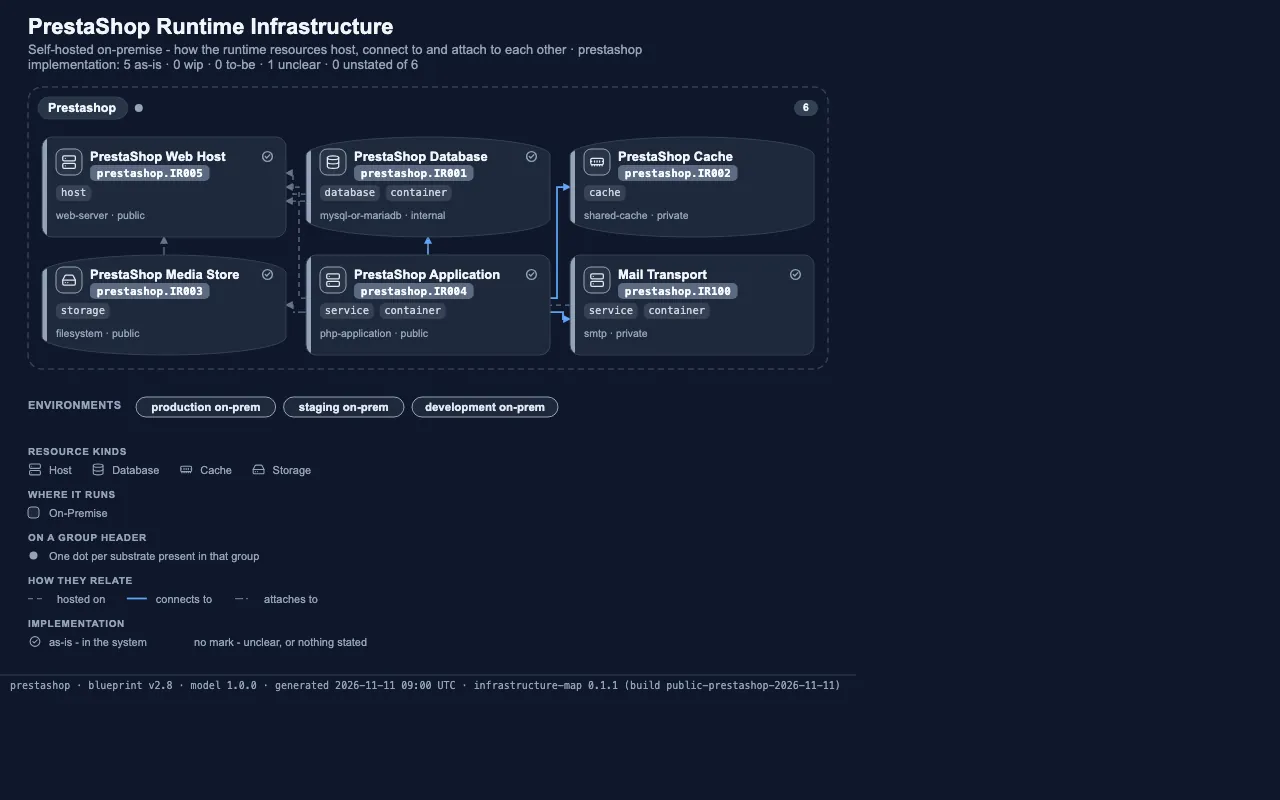
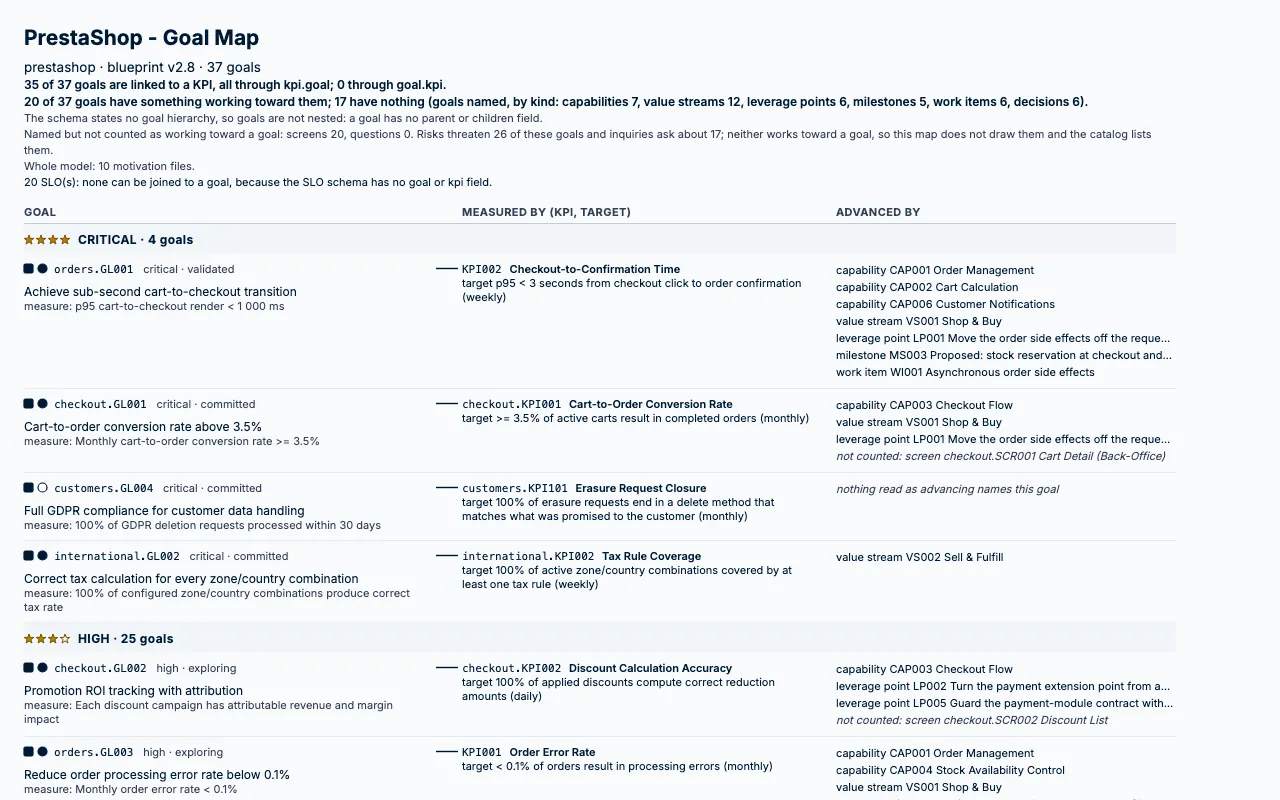
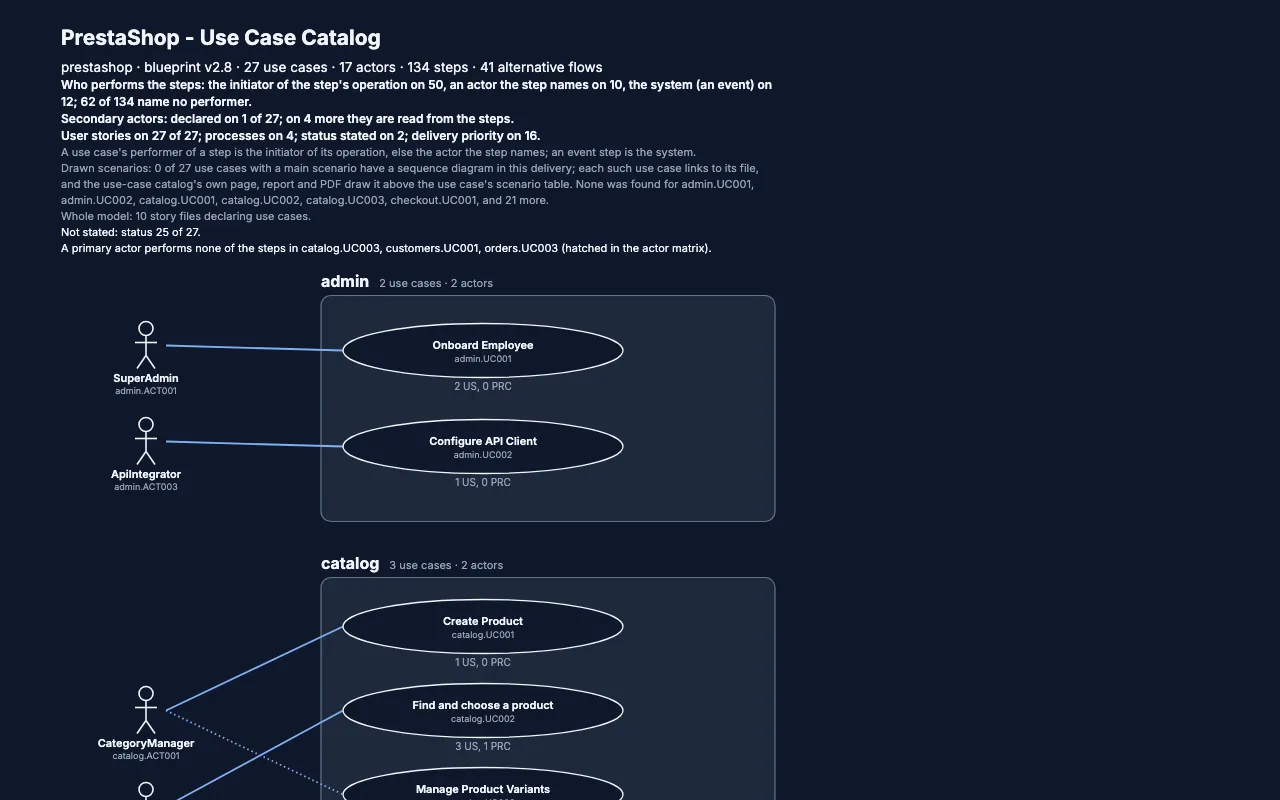
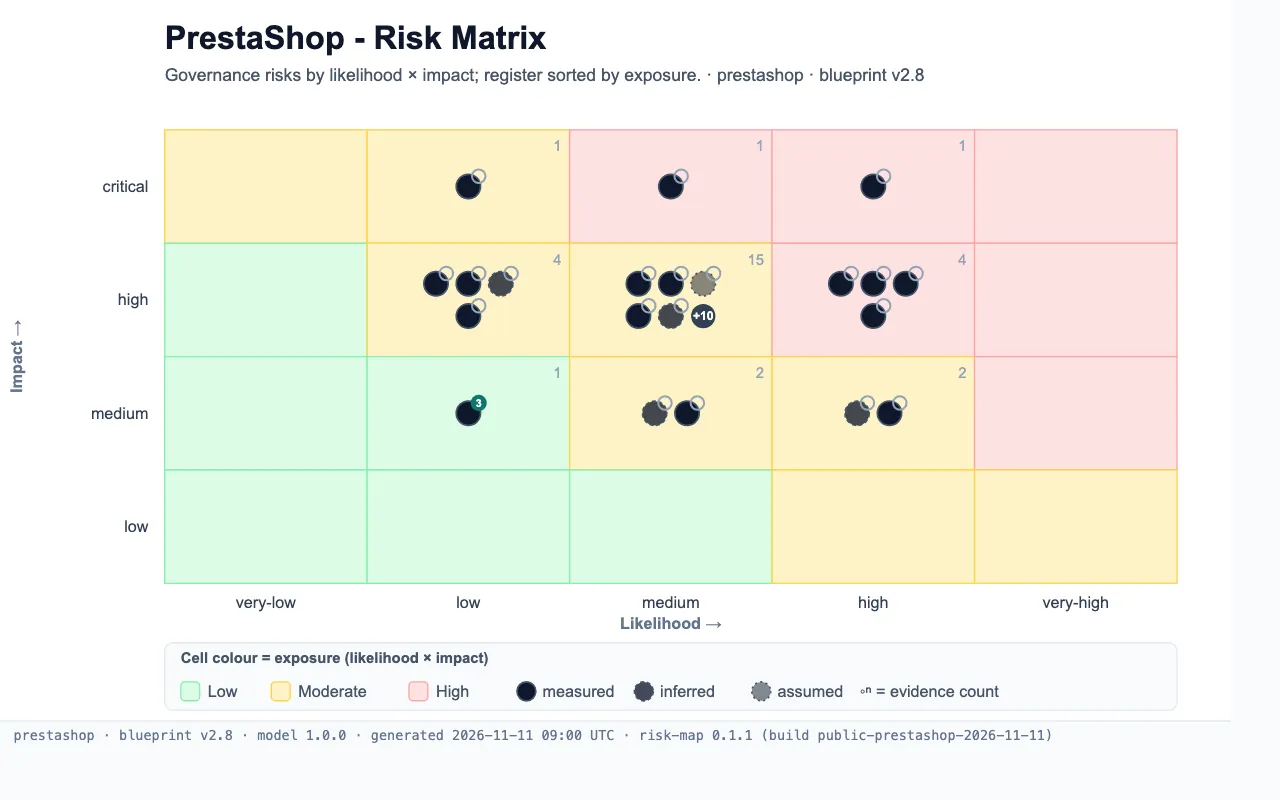
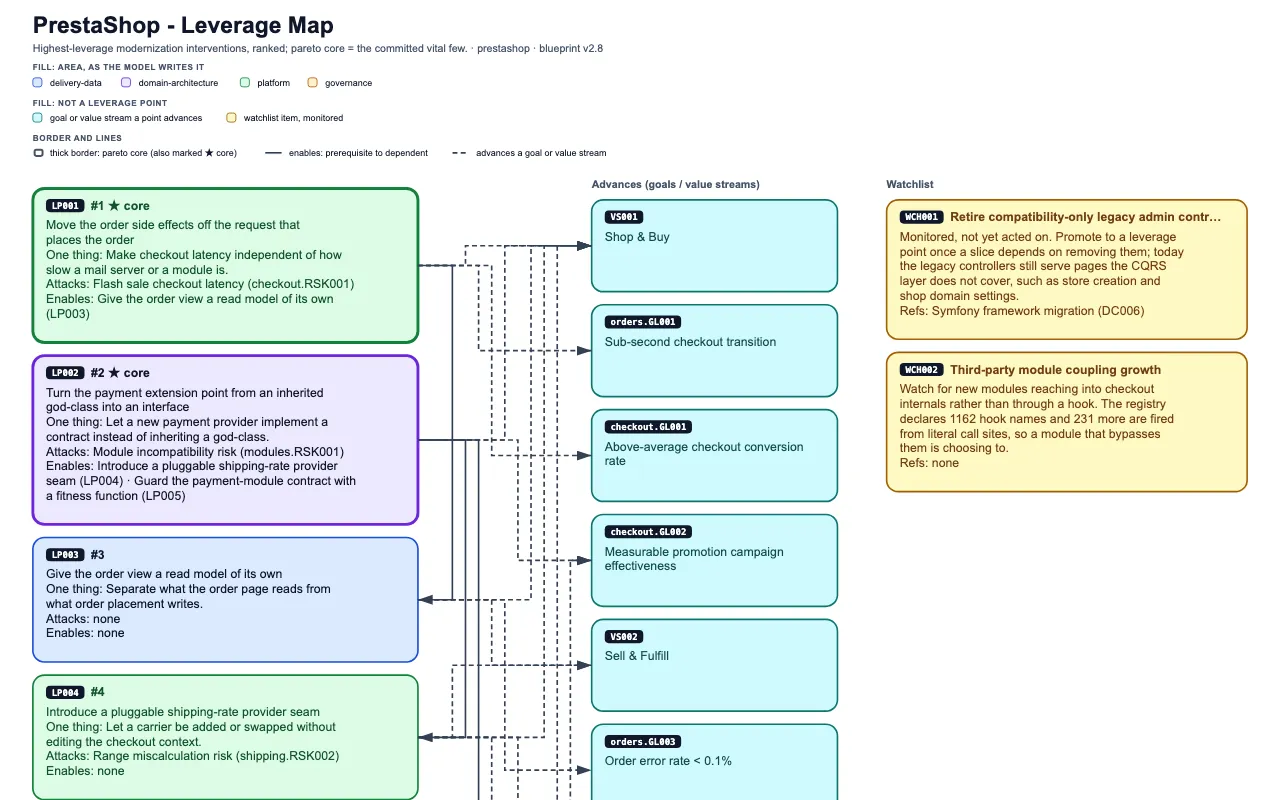
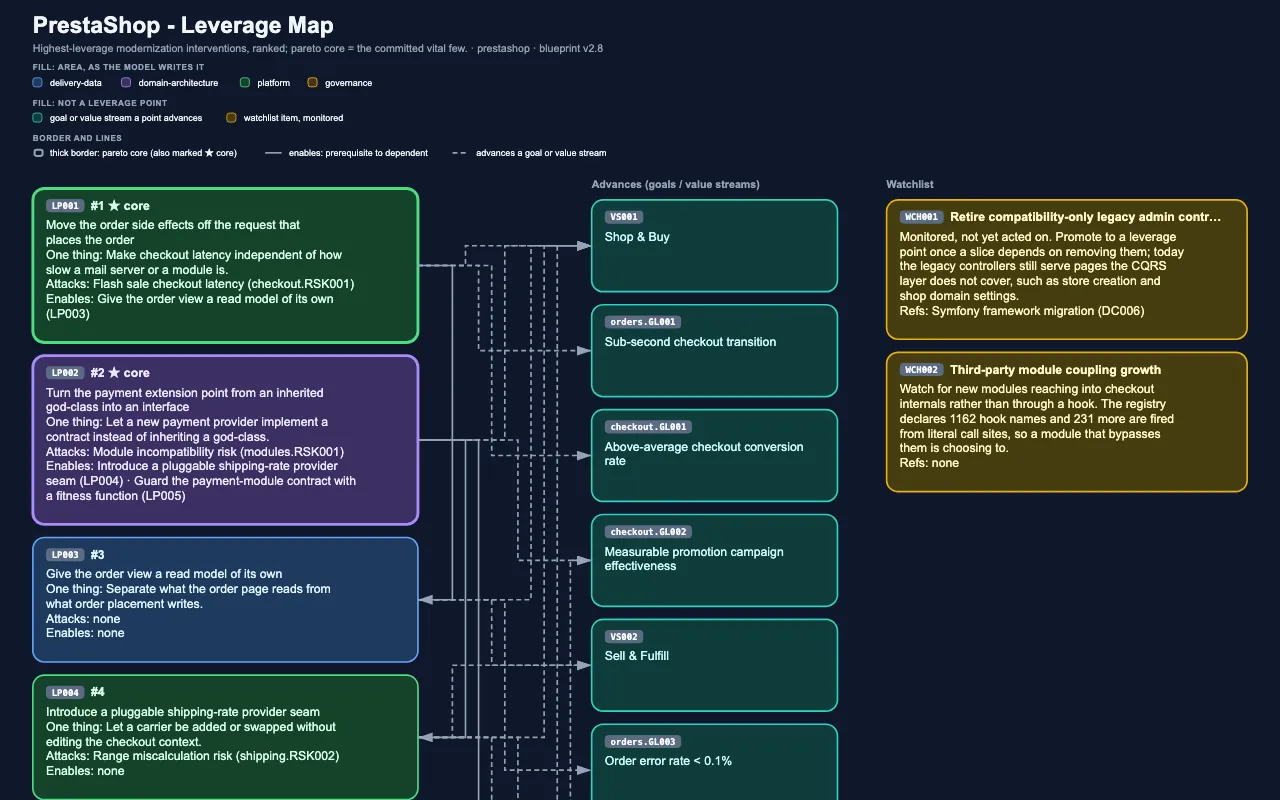
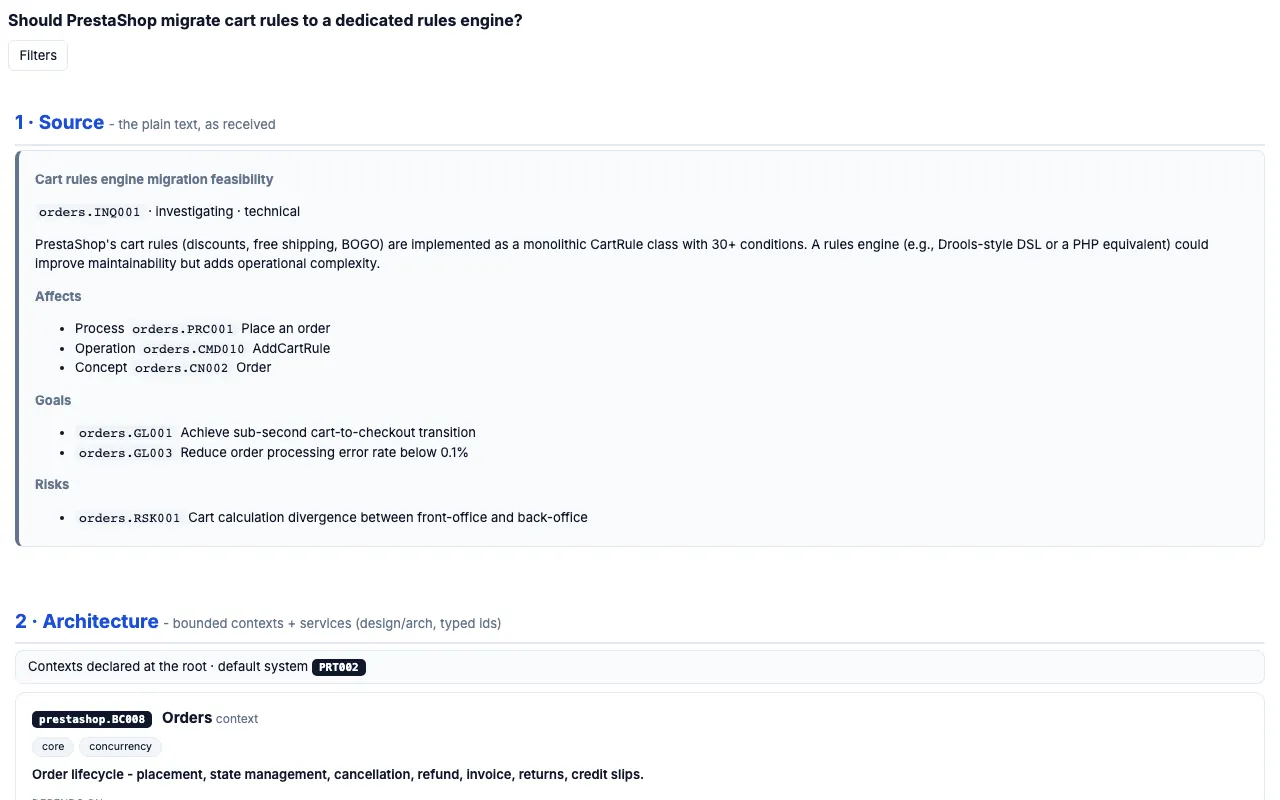
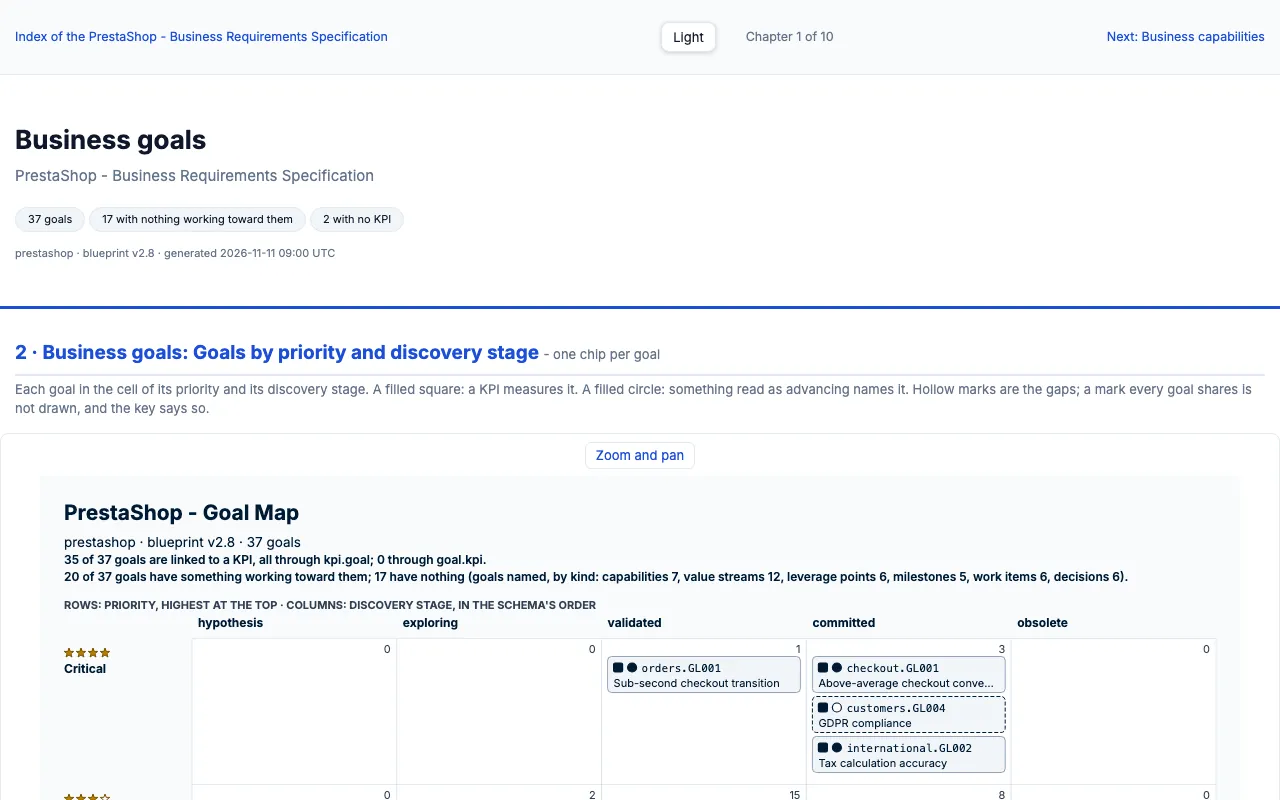
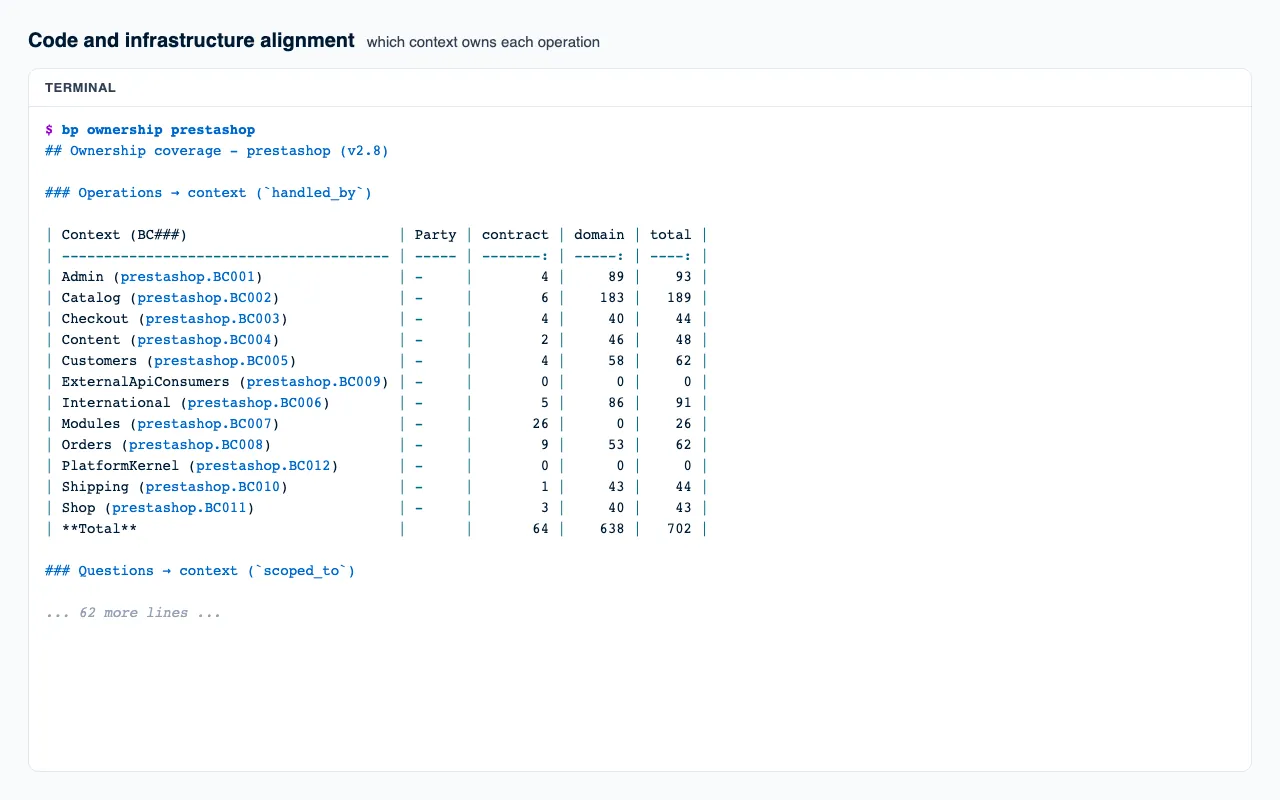
Text matching locates modeled order entities in ecommerce. It does not traverse dependencies or establish runtime failure. The PrestaShop render shows modeled bounded contexts and dependencies across the whole model in a Context Map SVG; it does not establish runtime behavior.
Start with one change initiative
We agree the scope and terms of a pilot individually, starting with one change initiative and one bounded context.
Agree the reader questions, source evidence, model, supported views, review responsibilities and handover in the proposal. Tool access, licences and adaptations are part of that agreement.
We use cookies for analytics to understand how visitors use our site. No advertising cookies. Privacy policy
 Open full-size picture