What it is
For the Blueprint architecture service, composition joins the YAML files of a declared model into a queryable graph. Scoped identifiers and typed references connect bounded contexts without requiring one giant file. Archally also has schemas for other domains; storing them together does not establish semantic federation. Meaningful cross-schema composition requires explicit semantic mappings and consumer adaptations. The supported Blueprint boundary here is file loading, references and identifier checks; conceptual-conflict detection still needs domain review.
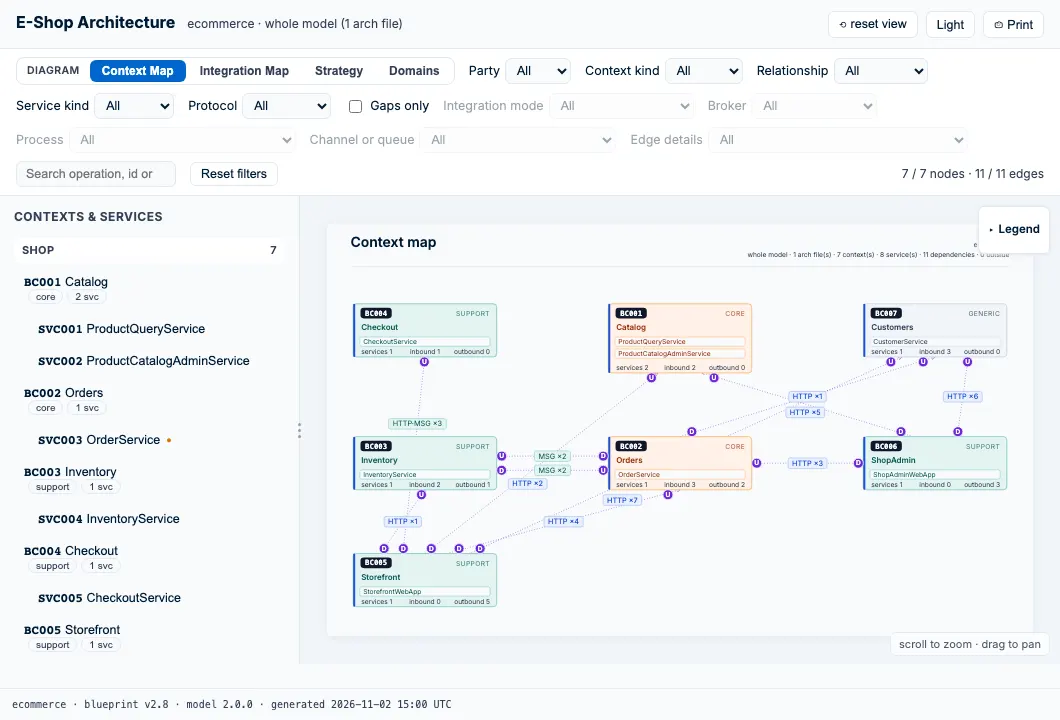
Built on
- YAML files grouped into a declared Blueprint model
- Scoped identifiers and typed cross-file references
- Schema checks, reference integrity and specified semantic rules
- Strategic classification of a bounded context's business role and modeling characteristics
- Explicit mappings and consumer adaptations when another schema is involved
How it works
Author the selected bounded contexts in YAML. Load the declared Blueprint model and run schema, reference and semantic checks. Duplicate identifiers and unresolved references are specified validation concerns; deciding whether two concepts mean the same thing still needs a domain review. Strategic context classification records business role, evolution and modeling characteristics. Compare supported baseline, proposed and historical model states separately from observed runtime behavior.
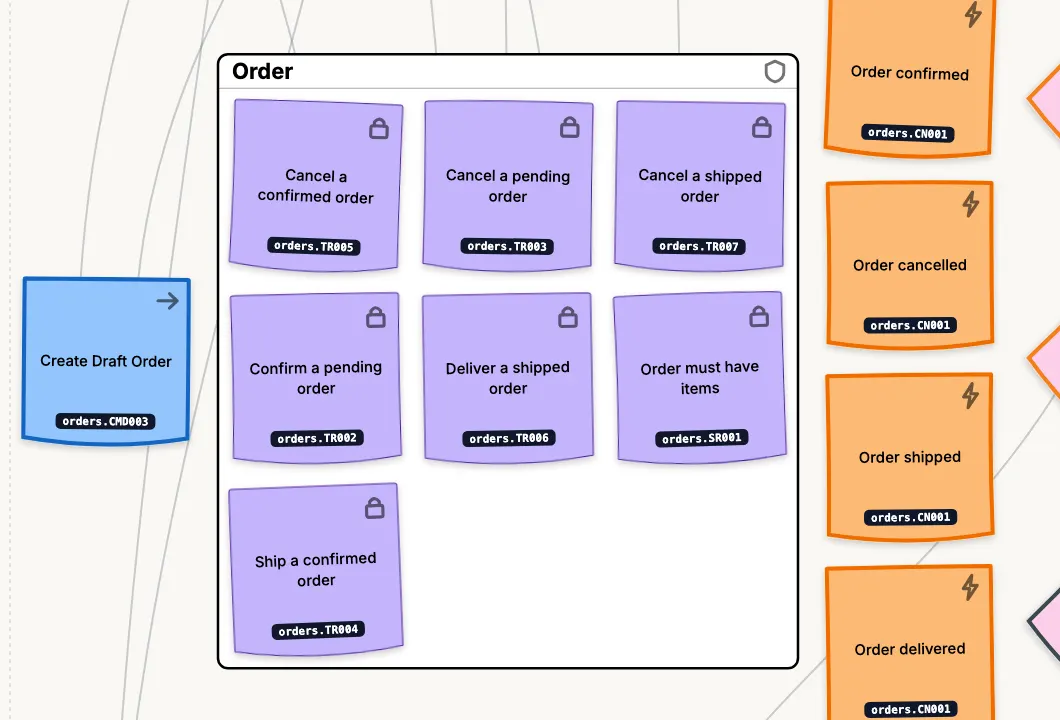
- YAML Current Blueprint input format Blueprint reference schema
- Scoped IDs Identifier checks within a declared model Public model-building tools
- Review Conceptual consistency and source alignment need people and evidence Methodology and static example